Clear Sky Science · en
Primary school characteristics in Sokoto State, Nigeria
Why these schools matter
In many parts of the world, going to primary school is taken for granted. In Sokoto State in north‑west Nigeria, however, poverty and weak public services mean that simply knowing whether schools are open, staffed, and serving children is a major question. This study offers a rare, on‑the‑ground look at what primary schools in this region actually look like in everyday life, using unannounced visits and detailed interviews. The resulting dataset is meant to help governments, aid groups, and local communities understand where schools are struggling and how to support them.
Looking closely at everyday school life
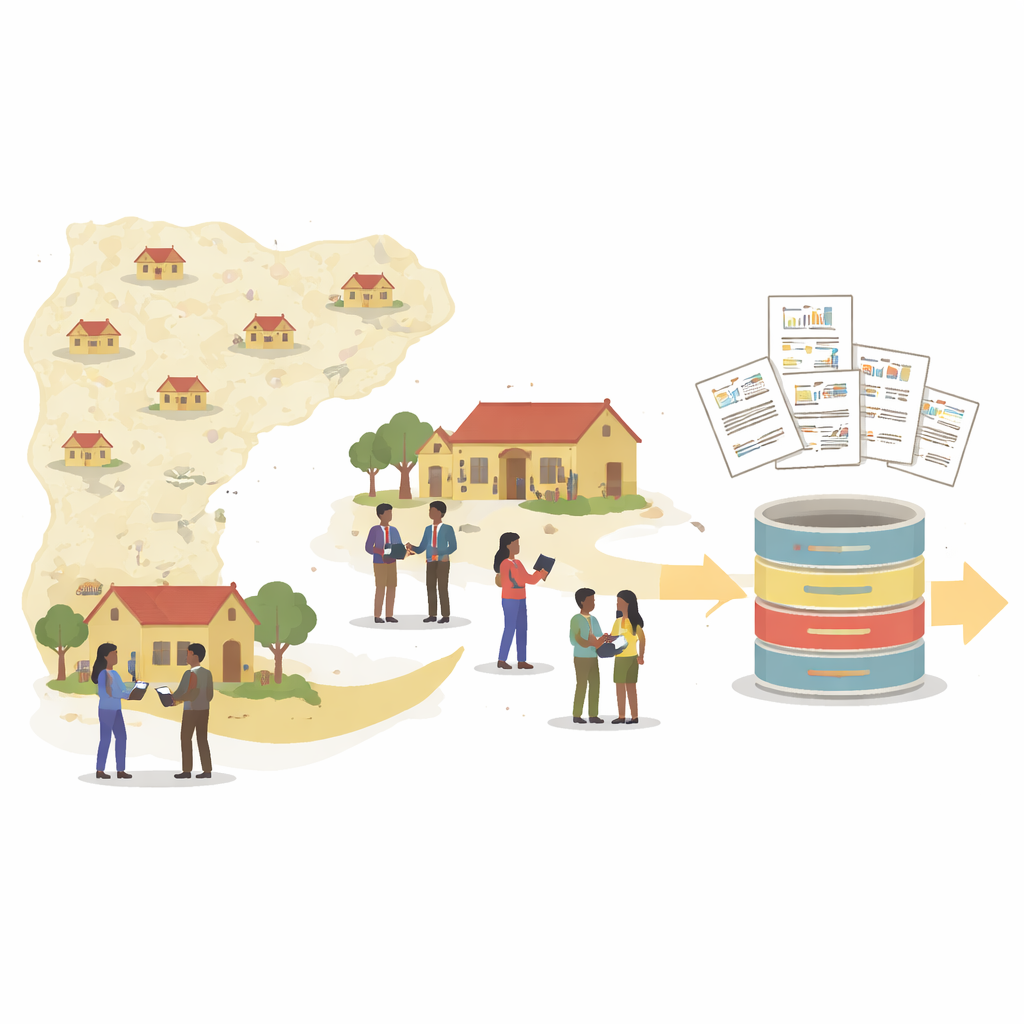
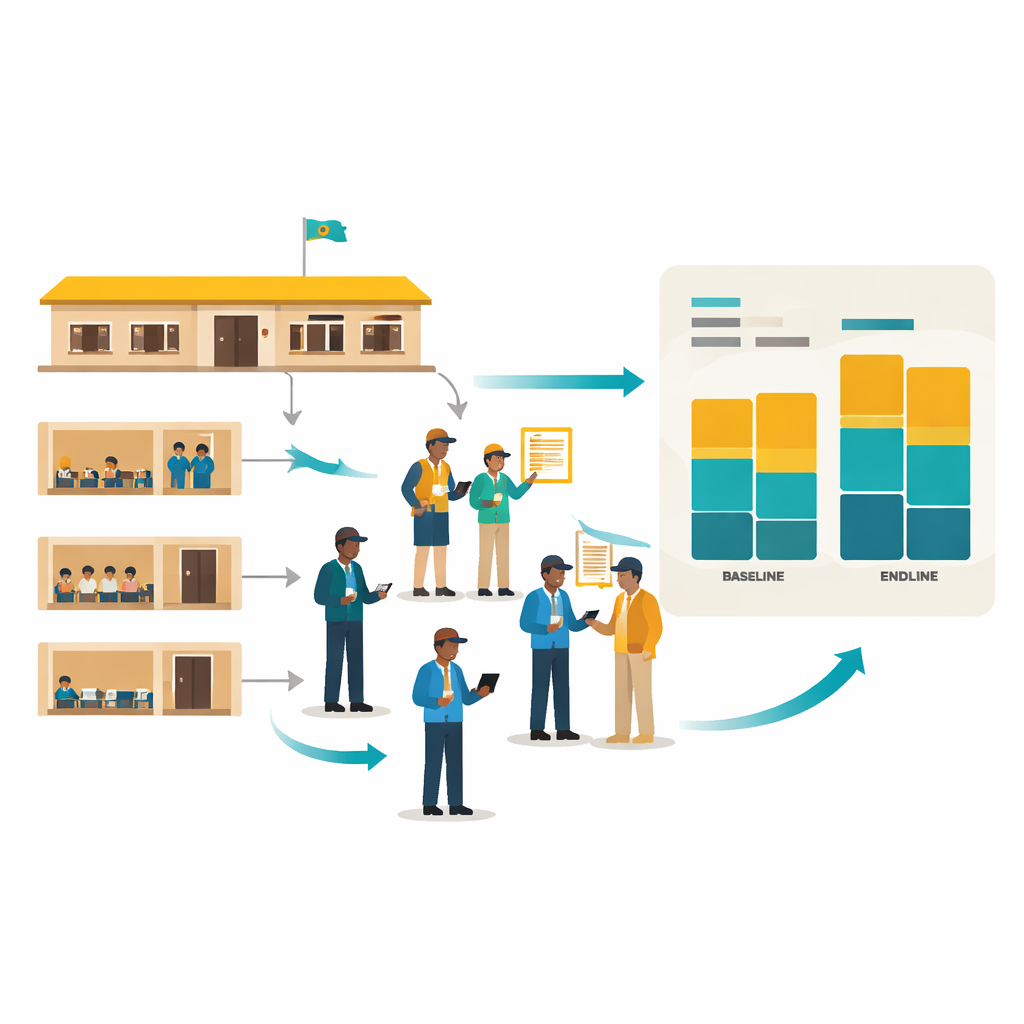
The researchers focused on 128 primary schools in Sokoto State in 2018 and 2019, a region where many families are poor and school attendance is low. Rather than relying only on official reports, they sent survey teams to visit schools without warning. During these visits, one part of the team walked through the school to see what was happening in classrooms at that moment: Were teachers present? Were children in class? What did the buildings and school yard look like? At the same time, other team members interviewed the head teacher, classroom teachers, and members of the school-based management committee, a group of community representatives meant to support each school.
What the teams asked and saw
The questions and observations went beyond simple headcounts. The teams noted how many teachers were employed and how many were absent, how many pupils were registered versus actually present, and what activities were going on when they arrived. They recorded features of the buildings, such as the number of classrooms and whether there were toilets. Interviews asked about how different groups at the school cooperate, how money is managed, what extra support programs the school takes part in, and how girls and boys are treated. They also collected information on training and the role of the school-based management committee, as well as opinions on why teachers and pupils might be absent.
Working in a difficult environment
Carrying out this work turned out to be challenging. Schools were often closed during the first visit, with no adults or children present at all. Even when schools were open, many classrooms were empty, and in a majority of schools at baseline no teacher was found in any classroom at the moment of arrival. By the second survey round, the teams adjusted their tools to capture the situation more quickly, but the pattern of closed or nearly empty schools remained common. When schools were shut, surveyors tried to locate teachers or committee members in the surrounding area and invite them to the school for interviews. This approach helped complete many questionnaires but also meant that not every school had all types of surveys finished, raising concerns about missing data.
Turning visits into shared data
All information from the visits was cleaned, checked, and brought together in a set of data files. These files include not only what was observed and reported at each school, but also basic administrative details such as whether the school is rural or urban, the type of school, the size of grade 2, and whether it had taken part in other support programs. The schools were part of a randomized trial of an education improvement project, so the dataset also marks which schools were assigned to receive grants and community trainings and which served as comparisons. For privacy, names and exact locations were removed, and identification codes were altered so that individual schools and people cannot be traced.
How this work can be used
To protect the schools and staff, access to the data is controlled. Interested users must agree to conditions on how the data will be used and stored, but there is no restriction on research topics. Once granted access, researchers can link these school records to a separate study of children’s learning in the same area. Taken together, the data offer one of the most detailed pictures available of how primary schools function in a very poor and fragile setting, from who shows up at school on a given day to how communities try to keep schools running. Although some quality problems remain, the authors argue that, given the difficult conditions, this is likely the best available data for understanding primary education in Sokoto State.
What it means in simple terms
For a general reader, the main message is straightforward: in this part of Nigeria, many primary schools exist on paper but often lack the people and resources to function well, and until now there has been very little solid information about them. By patiently visiting schools without warning and speaking with those responsible for them, the researchers have created a detailed map of how these schools actually operate. This map does not fix the problems by itself, but it provides a crucial starting point for anyone who wants to design, test, and improve efforts to give children in Sokoto State a real chance to learn.
Citation: Bogler, L., Ochmann, S., Owolabi, K.E. et al. Primary school characteristics in Sokoto State, Nigeria. Sci Data 13, 539 (2026). https://doi.org/10.1038/s41597-026-07167-6
Keywords: primary education, school absenteeism, Nigeria, school surveys, education data