Clear Sky Science · en
A Multi-Domain Physical Fitness Dataset of Central European Adults: Strength, Flexibility, Stability, and Aerobic Capacity
Why this fitness study matters to everyday life
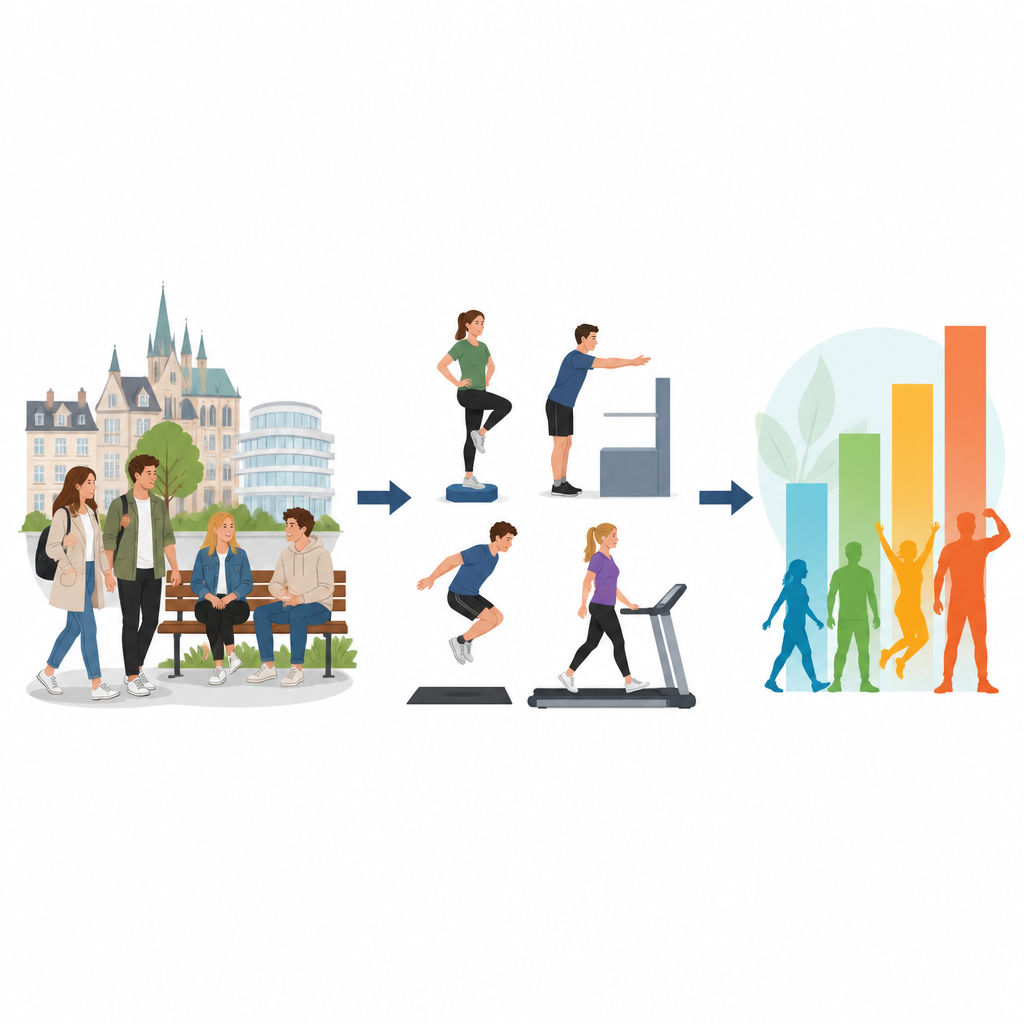
Most of us have a sense that being “fit” is good for health, confidence, and daily comfort, but it is hard to know what fitness really means or how one person compares with another. This study introduces a detailed public dataset of physical fitness in young and early midlife adults from Central Europe, offering a rare, multi-angle view of strength, flexibility, balance, body build, and stamina in ordinary people rather than elite athletes or patients.
Looking at fitness as more than one number
The researchers start from the idea that physical fitness is not a single trait but a bundle of abilities that support movement, health, and quality of life. Past research often relied on one simple test, such as handgrip strength or a short chair stand, or focused on special groups like soldiers, top athletes, or seniors. Those approaches are useful but miss the full picture and do not always apply to the wider public. This project aims to fill that gap by measuring several key aspects of fitness in the same group of adults, using lab methods that are common in sports science and clinical practice.
Who took part in the testing day
The team recruited 128 volunteers, 63 men and 65 women aged 18 to 40, mostly contacted through social media in Prague, Czechia. Participants came from the general public and varied in their training habits, reporting on the sports they practiced, how many hours they exercised per week, and how many years they had been active. On average, they exercised just under five hours per week and had nearly eight years of experience, but there was wide variety. Everyone visited the human movement laboratory for about two hours, gave consent, changed into standard sportswear, and completed questionnaires before moving through a fixed series of physical tests.
How the body and movement were measured
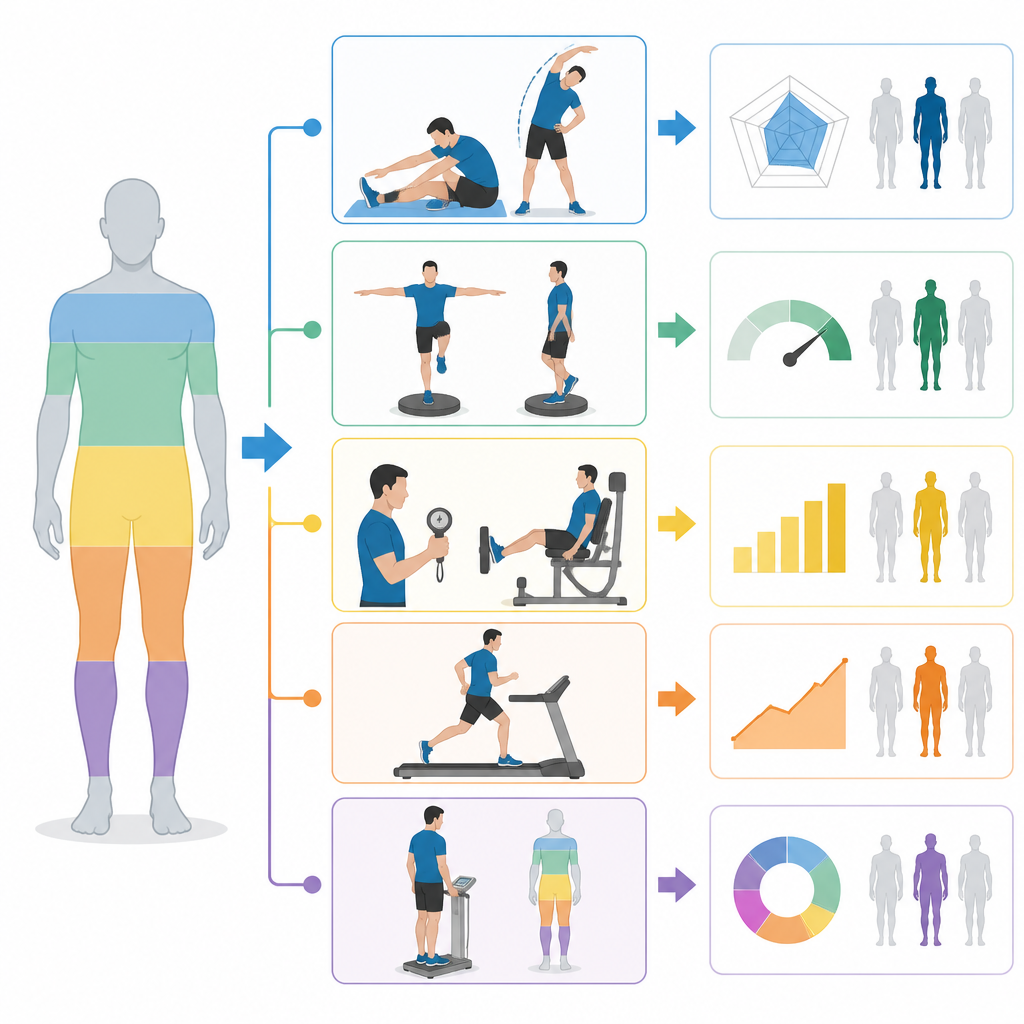
The assessment covered several domains. First, basic body size and shape were recorded, including height, body weight, and circumferences of shoulders, chest, waist, hips, thighs, calves, and arms, along with detailed body composition estimates of fat, muscle, water, and bone using a bioimpedance device. Flexibility of the shoulders and the back of the legs was checked with common reach tests. Postural stability was measured while participants stood quietly with feet together or on one leg on a pressure mat that tracked how much they swayed. Walking symmetry was examined on an instrumented treadmill that sensed forces under each foot at slow and faster speeds, revealing subtle left–right differences in gait.
Strength, power, and stamina under the microscope
To capture muscular abilities, the team used both simple and advanced tools. Handgrip strength was measured with a handheld device squeezed as hard as possible. A large dynamometer tested how strongly the knee and elbow muscles could bend and straighten the joints at controlled speeds, giving precise torque values for each side of the body. Explosive strength was assessed with vertical jumps and powerful push-up like movements on force plates that calculated jump height and force relative to body weight. Finally, aerobic capacity was measured with a treadmill running test in which the incline increased step by step until participants reached exhaustion, while a mask and sensors tracked how much oxygen they could use per minute, a key indicator of heart and lung fitness.
What the numbers can be used for
The resulting dataset includes raw and processed values for every test, along with clear descriptions of how they were collected. Reliability checks showed that repeated measures of strength and power were highly consistent. When compared with existing reference values from other countries and studies, the participants’ results fell within expected ranges for healthy young adults. Although the sample is limited to urban Central Europeans aged 18 to 40, it offers a carefully documented benchmark that others can match when designing new studies, fitness programs, or tools for assessing movement and health.
What this means for our understanding of fitness
For a non-specialist, the main message is that fitness can be described in many connected pieces rather than a single “fit or not” label. This public dataset shows how body build, muscle strength, balance, flexibility, walking pattern, and running stamina can be measured together in ordinary adults using standardized methods. Researchers, coaches, and health professionals can now use these shared numbers to compare groups, track changes after training or lifestyle programs, and explore how physical abilities relate to well-being and behavior. In short, the work provides a solid reference map of how healthy young adults move and perform, which others can build on in future research and practice.
Citation: Třebický, V., Třebická Fialová, J., Stella, D. et al. A Multi-Domain Physical Fitness Dataset of Central European Adults: Strength, Flexibility, Stability, and Aerobic Capacity. Sci Data 13, 776 (2026). https://doi.org/10.1038/s41597-026-07094-6
Keywords: physical fitness, aerobic capacity, muscle strength, postural stability, health data