Clear Sky Science · en
An online population-representative longitudinal cognitive dataset from the Understanding America Study
Why Your Brain and Daily Life Are Linked
As people live longer, questions about how our thinking skills change over adulthood—and what that means for health, work, and independence—have become more urgent. This article describes a powerful new resource: a large, ongoing online project that repeatedly tests how U.S. adults think, remember, and solve problems, and links those scores to many aspects of their everyday lives. The goal is to help researchers understand how brain-related abilities connect to money management, health, aging, and even risks for serious problems like dementia.
A Nationwide Snapshot of Thinking Skills
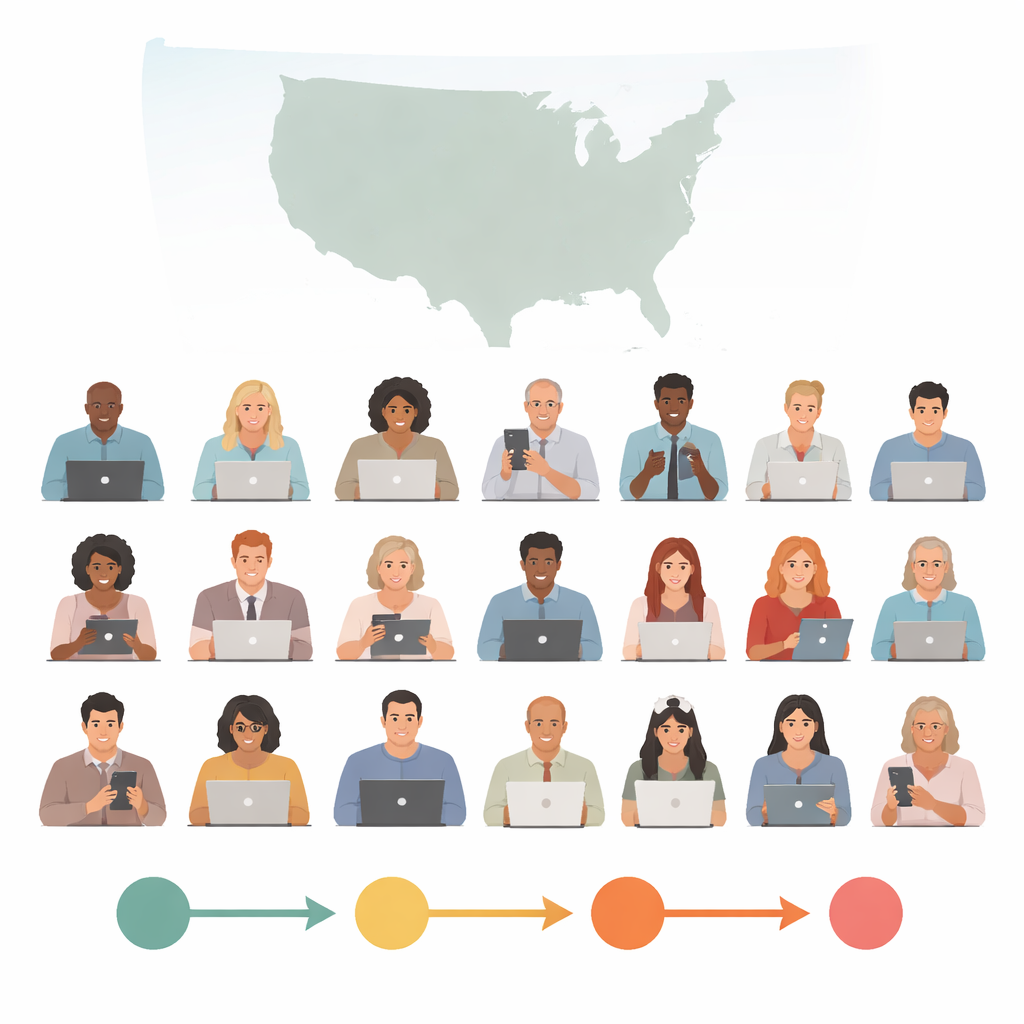
The dataset comes from the Understanding America Study, a long-running online panel that follows more than 21,000 adults aged 18 and older from across the United States. Unlike many earlier studies that focused mainly on older adults or relied on in-person testing, this panel was designed from the start to be internet-based and to reflect the U.S. population. People are recruited through address-based mailings, can answer in English or Spanish, and those without a computer or internet access are given a tablet and connectivity so that fewer people are left out.
How Online Brain Testing Works
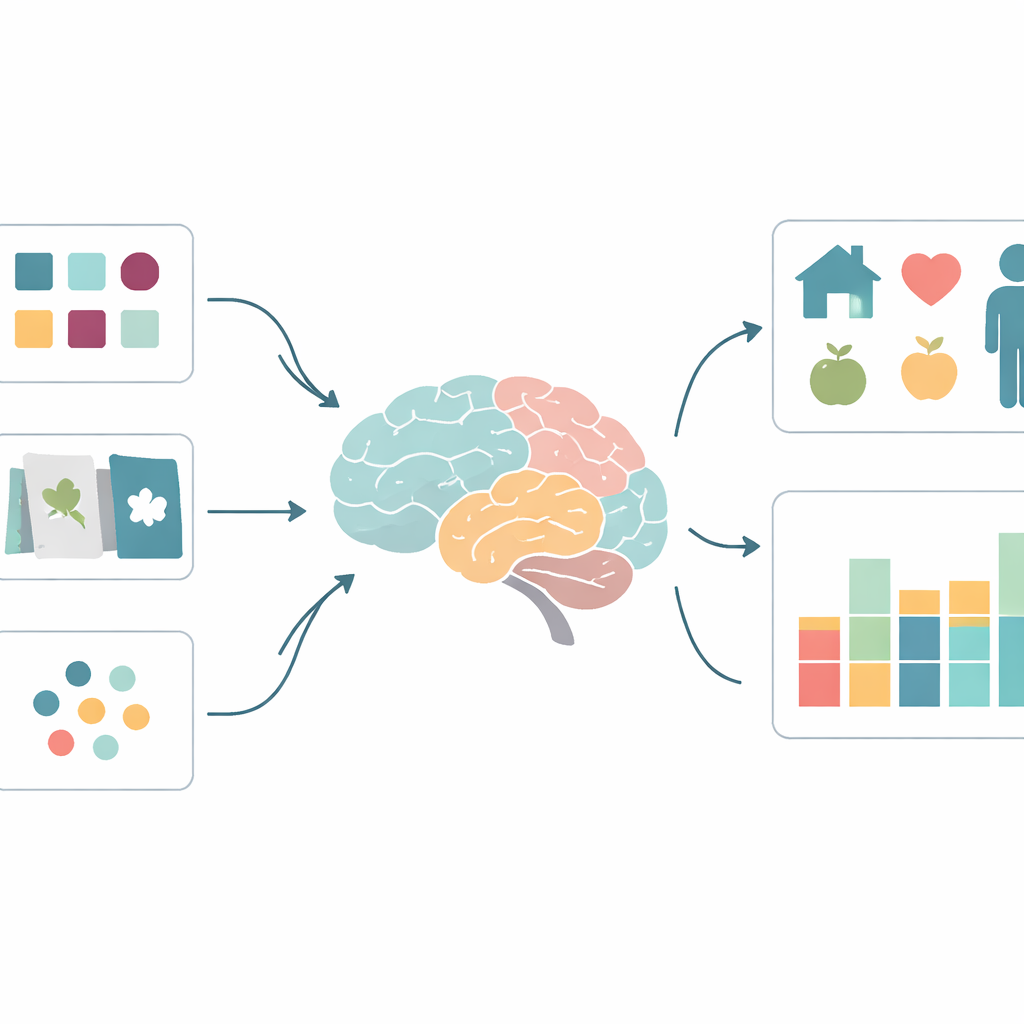
Participants complete a set of thinking and memory tests roughly every two years, alongside other regular surveys. All tests are taken on a computer, tablet, or smartphone using a standardized, user-friendly platform with clear instructions and built-in timing and scoring. The tests cover several key areas of mental functioning: understanding money concepts and numbers, spotting patterns, word knowledge, memory for word lists, speed of clicking and typing, and the ability to switch attention and follow changing rules. Some tests measure skills that usually stay strong or even improve with age, like general knowledge, while others probe abilities that tend to slow down, such as reaction speed and flexible thinking.
What the Dataset Contains
The resulting Cognitive Comprehensive File pulls together, for each person, scores from every testing session, the dates of those sessions, and related self-reports such as perceived memory problems, difficulties with daily tasks like shopping and paying bills, and a summary score that estimates the chance of cognitive impairment in older adults. Because all of this is tied, through anonymous study IDs, to a rich collection of other surveys in the same panel, researchers can connect thinking skills to income, job history, health conditions, mood, neighborhood quality, health behaviors, and much more. The file is updated nightly as new data come in, creating a living resource for tracking changes over many years.
Checking Quality and Reliability
To ensure that online testing is trustworthy, the team carefully adapted well-known clinical and laboratory tasks for self-guided use on the web. They piloted tests, collected participant feedback, and ran studies to check whether scores were stable over time, behaved as expected with age and education, and were robust to differences such as using a phone versus a computer. They also monitored how interruptions and distractions might affect performance and added questions so future users can filter out questionable data if needed. On average, scores on most tests showed moderate to substantial stability over two-year intervals, and patterns matched long-standing findings: for example, people with more education tended to score higher, and some abilities slowed modestly with age while knowledge-based skills rose.
Why This Matters for Everyday Life
In plain terms, this article introduces a public, privacy-protected data resource that lets scientists study how the way we think—our memory, speed, and problem-solving—relates to our finances, health, and independence across adulthood. Because it is large, national, and fully online, the dataset makes it easier to see who is at risk for cognitive decline, how life events and environments shape brain health, and which factors might help people stay mentally sharp longer. Over time, findings from this resource could inform policies and interventions that support healthy thinking and everyday functioning for millions of adults.
Citation: Gatz, M., Darling, J.E., Schneider, S. et al. An online population-representative longitudinal cognitive dataset from the Understanding America Study. Sci Data 13, 698 (2026). https://doi.org/10.1038/s41597-026-07050-4
Keywords: cognitive aging, online surveys, brain health, longitudinal data, everyday functioning