Clear Sky Science · en
A chromosome-level genome assembly of the Leschenault’s rousette (Rousettus leschenaultii)
Bats, Genes, and a Changing World
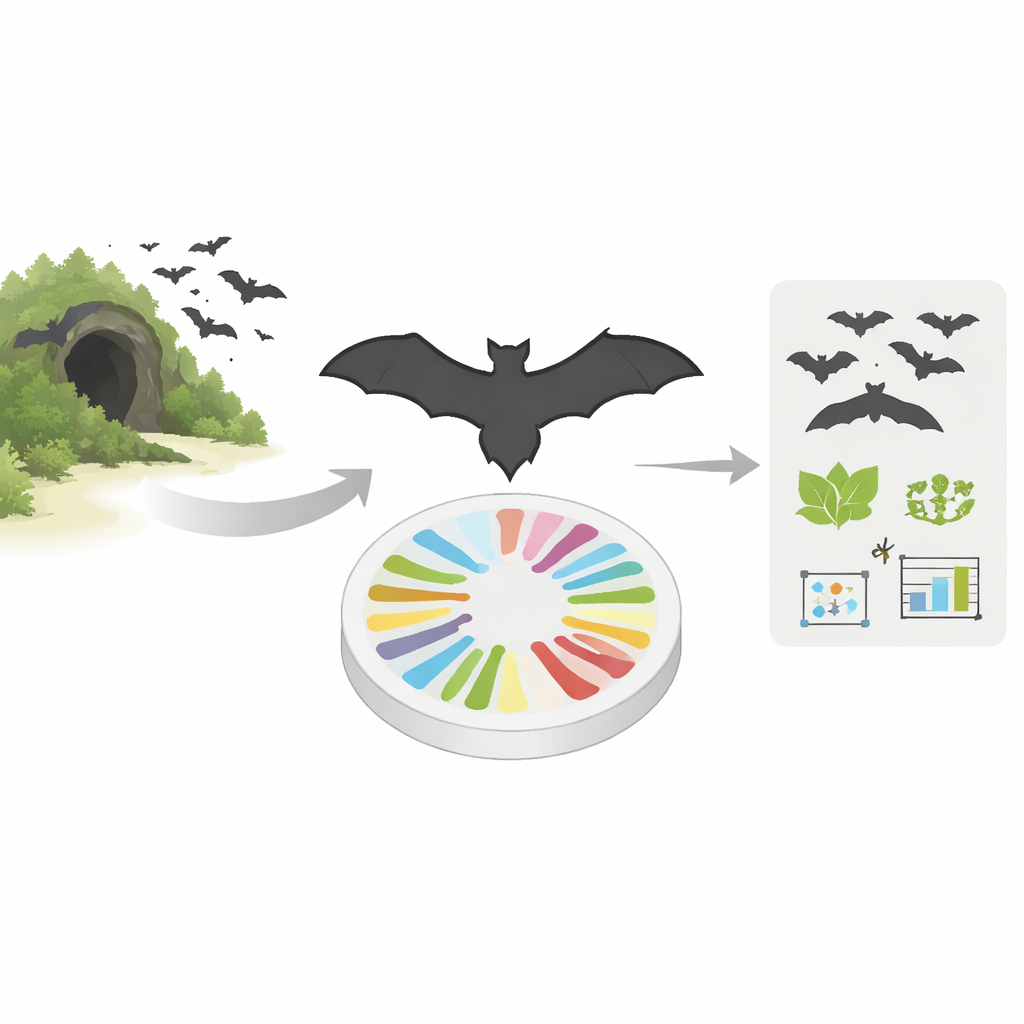
The Leschenault’s rousette is a fruit‑eating bat that roosts in caves, flits through city parks, and helps spread seeds across tropical landscapes. Its numbers, once considered secure, are now declining. To understand how this adaptable animal copes with environmental change—and how best to protect it—scientists need a detailed genetic blueprint. This study delivers exactly that: a high‑quality, chromosome‑level map of the bat’s DNA, opening a window into its evolution, health, and future.
Why This Cave Bat Matters
Leschenault’s rousette lives in huge colonies that can number in the thousands, ranging from Southeast Asian forests to urban areas. It plays a quiet but important role in ecosystems by dispersing seeds and pollinating plants as it feeds on fruits and flowers. It also shows unusual traits for a fruit bat, such as rapid wing growth after birth and a form of echolocation based on tongue clicks. Recent conservation assessments have shifted its status from “least concern” to “near threatened,” raising urgent questions: how has this bat adapted so broadly, and what hidden vulnerabilities might lurk in its genes?
Building a Genetic Blueprint
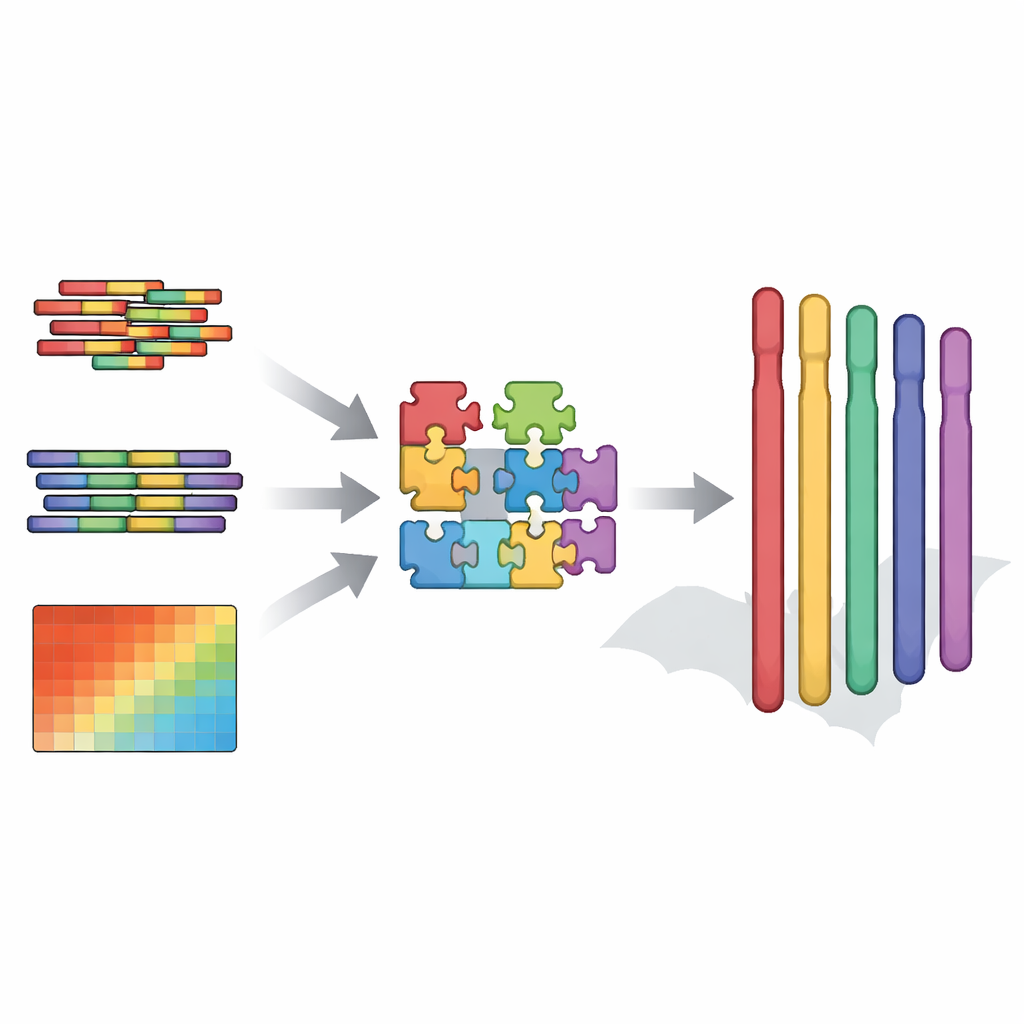
To answer these questions, the researchers first collected tissue from a bat that had died naturally in a cave in Yunnan, China. From this muscle sample they extracted DNA and read it using a combination of cutting‑edge sequencing methods. Short‑read sequencing provided many precise but small fragments of DNA, while long‑read sequencing captured much larger stretches that help bridge gaps. A third method, called Hi‑C, recorded which pieces of DNA sit near each other inside the cell nucleus, giving clues about how fragments should be arranged into full chromosomes.
From Fragments to Full Chromosomes
Computational tools then stitched these data together. Long reads formed the backbone of the assembly, while algorithms identified and removed duplicate pieces that arise because the animal has two copies of each chromosome. The Hi‑C contact patterns acted like a 3D puzzle guide, helping to order and orient the DNA pieces into entire chromosomes. The final result was a genome about 1.95 billion DNA letters long, neatly organized into 17 non‑sex chromosomes plus X and Y. Quality checks showed that more than 96% of expected mammal genes were present and correctly assembled, and nearly all sequencing reads could be mapped back to this reference, indicating high accuracy.
Repeats, Genes, and Hidden Patterns
The team went beyond simply lining up DNA letters. They cataloged repetitive sequences—stretches that copy and paste themselves around the genome—and found that these make up just over a third of the bat’s DNA. They then predicted 19,625 genes and matched almost 98% of them to existing protein and gene‑family databases. This extensive annotation shows which genes are likely involved in immunity, sense of smell, metabolism, and other functions, and it allows side‑by‑side comparisons with other bats and mammals. By aligning this new genome with a previously published Leschenault’s rousette genome and with a close relative, the Egyptian fruit bat, the authors confirmed that the overall chromosome structure is consistent and that key sex chromosomes are correctly identified.
A Strong Platform for Future Discoveries
This bat’s new genome assembly is more accurate and complete than earlier versions, making it a reliable reference for many lines of research. Scientists can now search for genetic signatures of how the species tolerates different climates, uses sound and smell to navigate, or responds to disease. Conservation biologists can track how populations are changing and whether harmful genetic changes are accumulating as habitats shrink. In short, the study provides a powerful genetic foundation for understanding an ecologically important bat at a time when its survival can no longer be taken for granted.
Citation: Chen, L., Yang, G., Hou, S. et al. A chromosome-level genome assembly of the Leschenault’s rousette (Rousettus leschenaultii). Sci Data 13, 673 (2026). https://doi.org/10.1038/s41597-026-07043-3
Keywords: bat genomics, chromosome assembly, fruit bat conservation, genome sequencing, evolutionary adaptation