Clear Sky Science · en
Chromosome-level genome assembly and annotation of the termite Reticulitermes chinensis Snyder
Why a termite’s DNA matters to you
Termites are usually noticed only when they eat our homes, but these tiny insects are also master recyclers that break down dead wood in forests and fields. The species Reticulitermes chinensis is a particularly destructive pest in southern China. In this study, scientists pieced together the complete genetic blueprint of this termite at the level of individual chromosomes. This new map of its DNA opens the door to better ways to protect buildings, discover new enzymes for green energy, and explore how complex insect societies evolve.
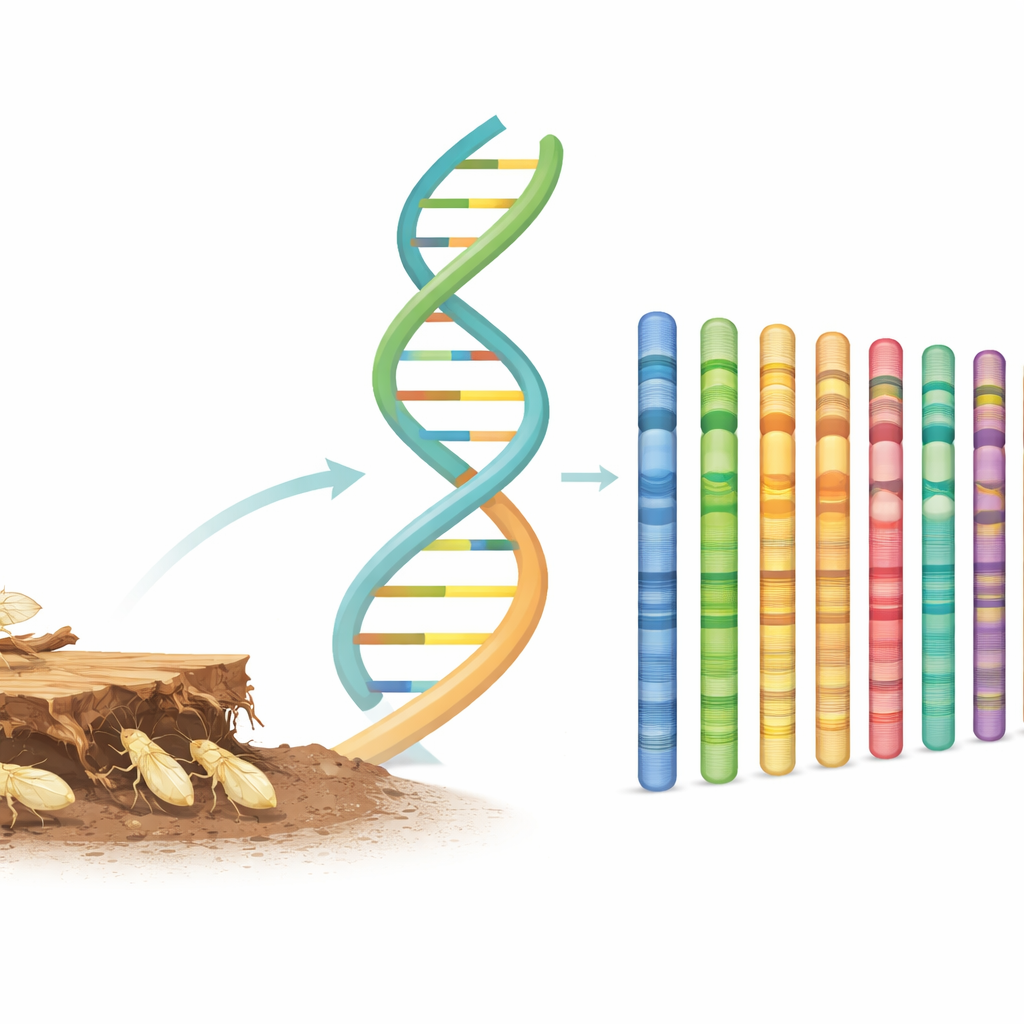
Getting termites ready for the lab
To build such a detailed genetic map, the team first needed very clean DNA. They collected termites from a single underground colony, which helped keep genetic variation low because this species can reproduce without mating. The insects were kept without food for two days to clear their guts, washed, frozen, and ground into a fine powder. Using a series of chemical steps, the researchers isolated long, intact strands of DNA and carefully checked their quality. Only after confirming that the DNA was pure, concentrated, and largely unbroken did they move on to large-scale sequencing.
Reading the genome in different ways
The researchers combined several cutting-edge sequencing technologies, each offering a different view of the termite genome. Short DNA fragments were read many times over to measure genome size and spot errors. Long, highly accurate reads from a PacBio machine provided the backbone for assembling long stretches of sequence. A third technique, known as Hi-C, captured which pieces of DNA tend to sit near each other inside the cell nucleus, giving clues about which fragments belong on the same chromosome. In parallel, they sequenced RNA—molecules copied from genes—to help identify which parts of the DNA actually code for proteins.
Building chromosomes from genetic pieces
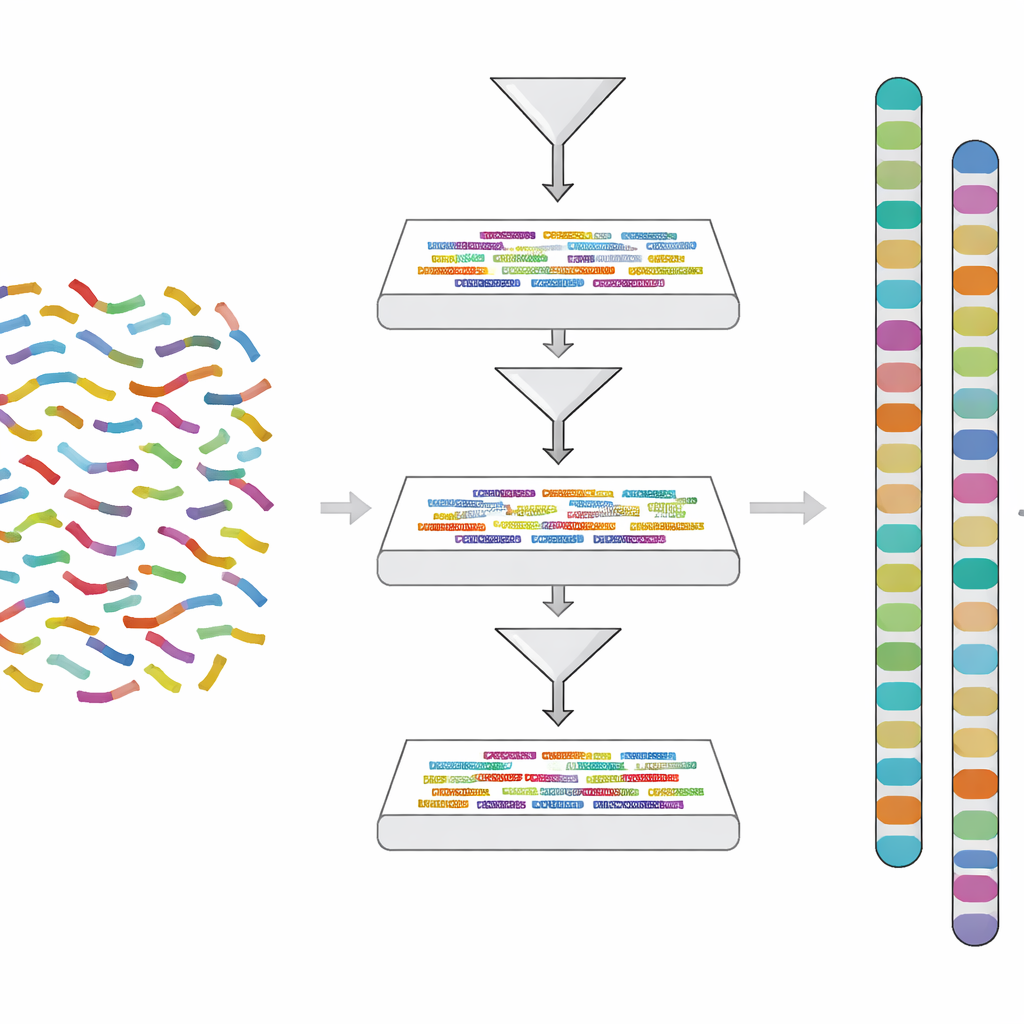
Using computer tools designed for large, complex genomes, the team stitched together the long reads into continuous stretches and then used the Hi-C contact patterns to arrange these into full-length chromosomes. The finished genome contains 21 pseudochromosomes, matching what is known about related termite species, and spans about 1.02 billion DNA letters. Tests using standard sets of core insect genes showed that more than 97 percent of expected genes are present and intact, indicating a very complete and reliable assembly. Most of the total sequence—94 percent—could be confidently placed onto these chromosomes, a hallmark of a high-quality genome map.
Hidden repeats and working genes
Termite DNA, like that of many animals, is packed with repeated sequences and mobile elements that can copy and move around the genome. Nearly half of the R. chinensis genome is made up of such repeats, including several types of jumping DNA and long stretches of simple, tandem repeats. The team compared these patterns with those in other termites and a cockroach, revealing both shared features and species-specific expansions. On top of this repetitive backdrop, they predicted over 30,000 protein-coding genes and were able to assign likely functions to about 86 percent of them by matching their sequences to multiple international databases. These genes are spread across all 21 chromosomes in a way that is broadly similar to close relatives.
What this termite genome means for the future
By delivering a chromosome-level view of the R. chinensis genome and making all raw data publicly available, this work provides a powerful reference for scientists worldwide. For non-specialists, the key message is that we now have a detailed parts list and wiring diagram for a major termite pest. This will help researchers pinpoint genes involved in wood digestion, social behavior, growth, and reproduction—traits that matter both for understanding the evolution of insect societies and for designing safer, more targeted pest control methods. It could also guide the discovery of new enzymes that turn tough plant waste into useful biofuels, linking an unwanted house guest to more sustainable technologies.
Citation: Yue, Z., Xin, P., Wang, J. et al. Chromosome-level genome assembly and annotation of the termite Reticulitermes chinensis Snyder. Sci Data 13, 655 (2026). https://doi.org/10.1038/s41597-026-07026-4
Keywords: termite genome, Reticulitermes chinensis, chromosome assembly, social insects, lignocellulose digestion