Clear Sky Science · en
Genome assembly and annotation of the naked mole rat Heterocephalus glaber reared in Japan
A small underground mammal with big secrets
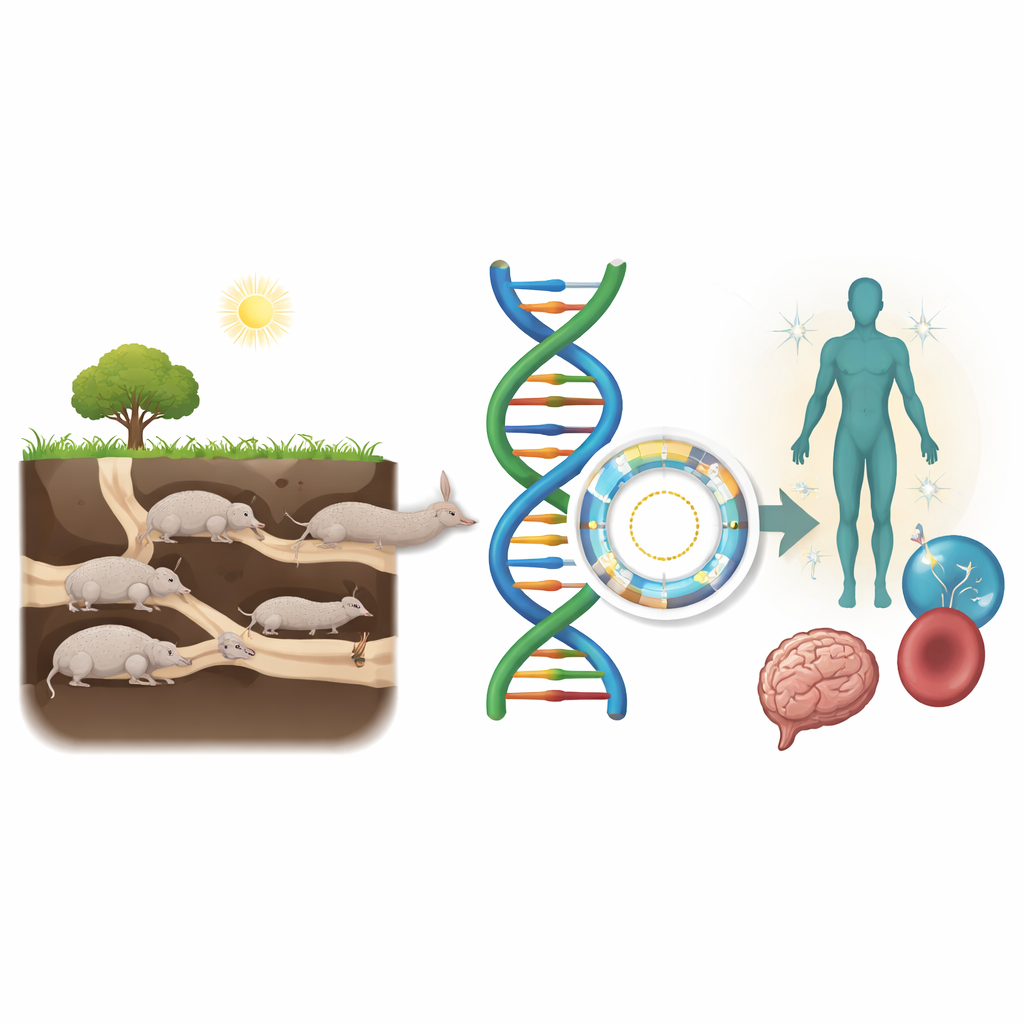
The naked mole-rat may look like a wrinkled, pink oddity, but it has captured scientists’ imaginations because it ages slowly, resists cancer, and survives in stuffy underground tunnels with little oxygen. To understand how this animal pulls off these feats, researchers need not just one genetic blueprint, but multiple versions from different populations. This study presents a new, high-quality map of the naked mole-rat’s DNA from a colony reared in Japan and compares it with existing maps to reveal subtle genetic differences that may underlie its unusual lifestyle and long, healthy life.
Why one genetic map is not enough
Until now, most work on the naked mole-rat’s DNA has relied on a single reference genome, treated as the standard for the entire species. But individuals and populations can differ in important ways, and those differences are missed when only one example is used. Earlier work hinted that naked mole-rats living in different parts of East Africa can be as genetically distinct from each other as closely related species, and rivers may separate populations and limit mating. Yet there were not enough complete genomes to see how their DNA actually varies along chromosomes or within specific genes.
Building a new genome from a Japanese colony
The team focused on a long-running laboratory colony in Japan that traces back to animals collected in northeastern Africa decades ago. They carefully extracted DNA from the muscle of a single male animal and used two modern sequencing approaches: very long reads from one platform to span big stretches of DNA, and large numbers of shorter reads from another to correct errors. Specialized software stitched these pieces together into a genome 2.56 billion “letters” long—similar in size to the human genome—and tests showed that more than 95% of standard mammalian genes are present in full. The researchers then used a combination of existing RNA data and protein databases to predict 26,714 protein-coding genes and to assign likely functions to almost all of them.
Finding genes that were missed before
Armed with this new map, the scientists asked a simple question: which genes show up here that were not properly captured in the earlier naked mole-rat reference genome? By comparing their predicted proteins with those from humans, mice, guinea pigs, and two previous naked mole-rat genomes, they found 417 gene models that had clear counterparts in other mammals but were missing or incomplete in the older naked mole-rat annotation. Most of these regions did exist in the earlier sequence but had not been recognized as full genes, meaning the new work fills in gaps rather than overturning the previous map. In total, 417 previously undetected gene models were catalogued, expanding the toolkit for anyone studying naked mole-rat biology.
Subtle DNA changes and what they might mean
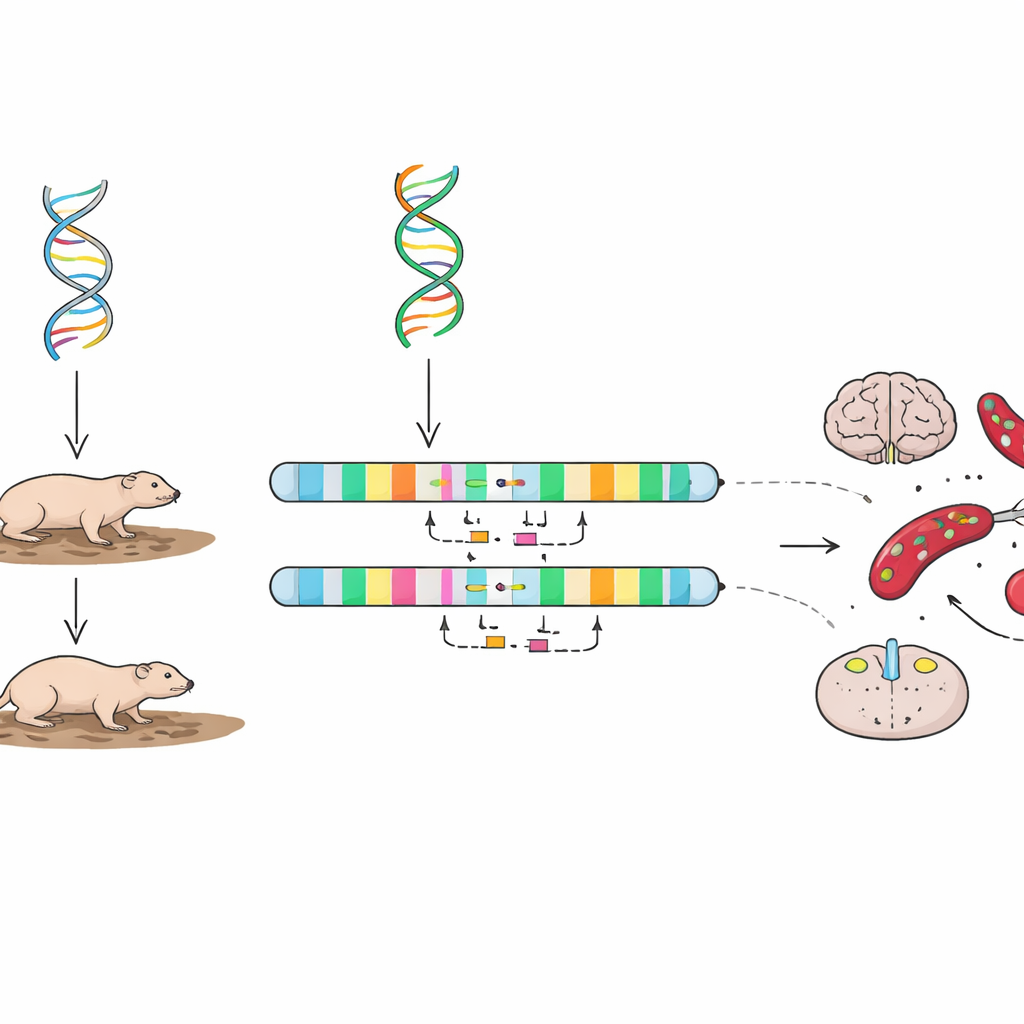
The study then zoomed out to the level of whole chromosomes to see how the new genome compares with older ones. Using graphical “dot plots” that line up matching stretches of DNA, the authors saw mostly straight, clean diagonals—evidence that the overall genome structure is very similar between individuals. A handful of apparent flips and rearrangements did appear, but closer inspection showed that many of these sit near gaps in the earlier assembly, suggesting technical artifacts rather than true biological changes. When they looked at smaller structural changes, such as short insertions and deletions, the number of differences between naked mole-rat genomes was far lower than those commonly seen between laboratory mouse strains, implying that this captive population is relatively uniform at the structural level.
Gene tweaks tied to behavior, oxygen, and aging
Beyond large-scale structure, the researchers examined changes in the actual protein sequences coded by genes. They transferred their gene annotations onto the older reference and identified 177 transcripts with especially strong sequence differences. Comparing these with similar analyses in mice highlighted 77 genes whose variation seems distinctive to naked mole-rats. Many of these genes are involved in how cells sense and respond to chemical messengers, including receptors for serotonin, a mood-related brain signal, and for L-DOPA, a chemical related to movement and reward. Others affect hormone signaling that controls red blood cell production and metabolism. These differences may influence social interactions in crowded colonies, help the animals cope with low oxygen, or contribute to their unusual response to aging and cell damage.
A new foundation for decoding a remarkable animal
In the end, this work does not claim to pinpoint the exact genes that make naked mole-rats long-lived, cancer-resistant, or tolerant of suffocating tunnels. Instead, it offers a much more complete and carefully checked genome from a well-documented colony, details the ways it agrees with and differs from earlier maps, and highlights a focused set of genes whose subtle changes may shape the animal’s distinctive biology. This richer genetic reference will allow future studies to connect specific DNA changes to behavior, disease resistance, and lifespan, bringing us closer to understanding—and perhaps one day harnessing—the secrets of healthy aging hidden beneath the surface of these underground rodents.
Citation: Toga, K., Oka, K., Tanaka, H. et al. Genome assembly and annotation of the naked mole rat Heterocephalus glaber reared in Japan. Sci Data 13, 705 (2026). https://doi.org/10.1038/s41597-026-06996-9
Keywords: naked mole-rat genome, healthy aging, hypoxia tolerance, social behavior in animals, genetic variation