Clear Sky Science · en
Chromosome-level genome assembly of Chirolophis japonicus Herzenstein, 1890 (Stichaeidae, Perciformes)
A Hidden Resident of Cold Rocky Shores
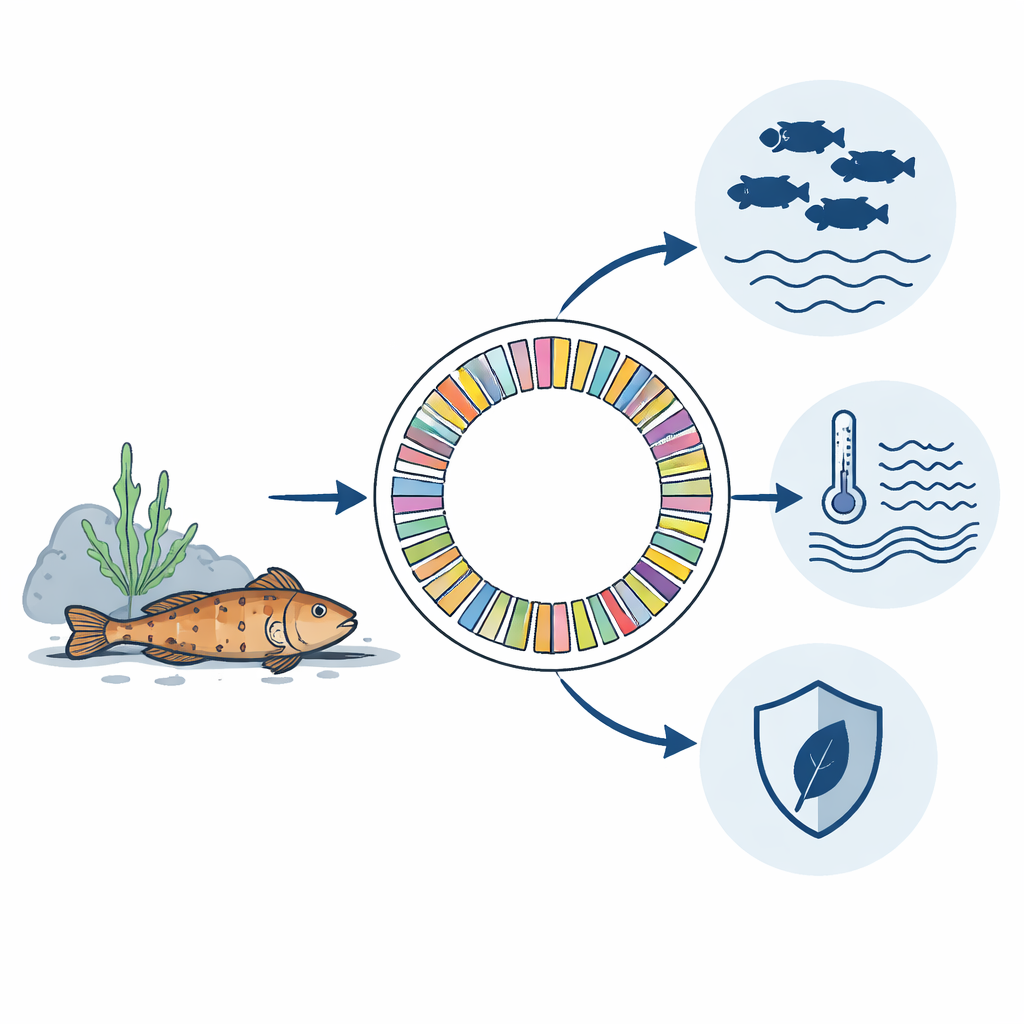
Along the chilly coasts of the northwestern Pacific lives Chirolophis japonicus, a slender fish with quirky fringes on its head that help it blend into rocky reefs. Although it looks unassuming, this species plays an important role in coastal food webs and is feeling the pressure from overfishing, pollution, and habitat loss. To understand how this fish lives, adapts to cold waters, and how best to protect it, scientists have now decoded its DNA at the level of whole chromosomes, creating a detailed genetic blueprint that was previously missing.
Why This Shoreline Fish Matters
Chirolophis japonicus spends its life close to the seafloor on shallow rocky reefs, where it feeds on small fish, algae, and shellfish. It matures quickly, breeding at about two years of age, and spawns in autumn. In recent decades, however, local populations have dropped in some regions, echoing broader declines in marine fisheries. Despite its ecological importance and vulnerability, this species had no high-quality reference genome, making it hard to study how different populations are related, how they cope with cold-temperate seas, or how human impacts might be eroding their genetic health.
Building a Complete DNA Blueprint
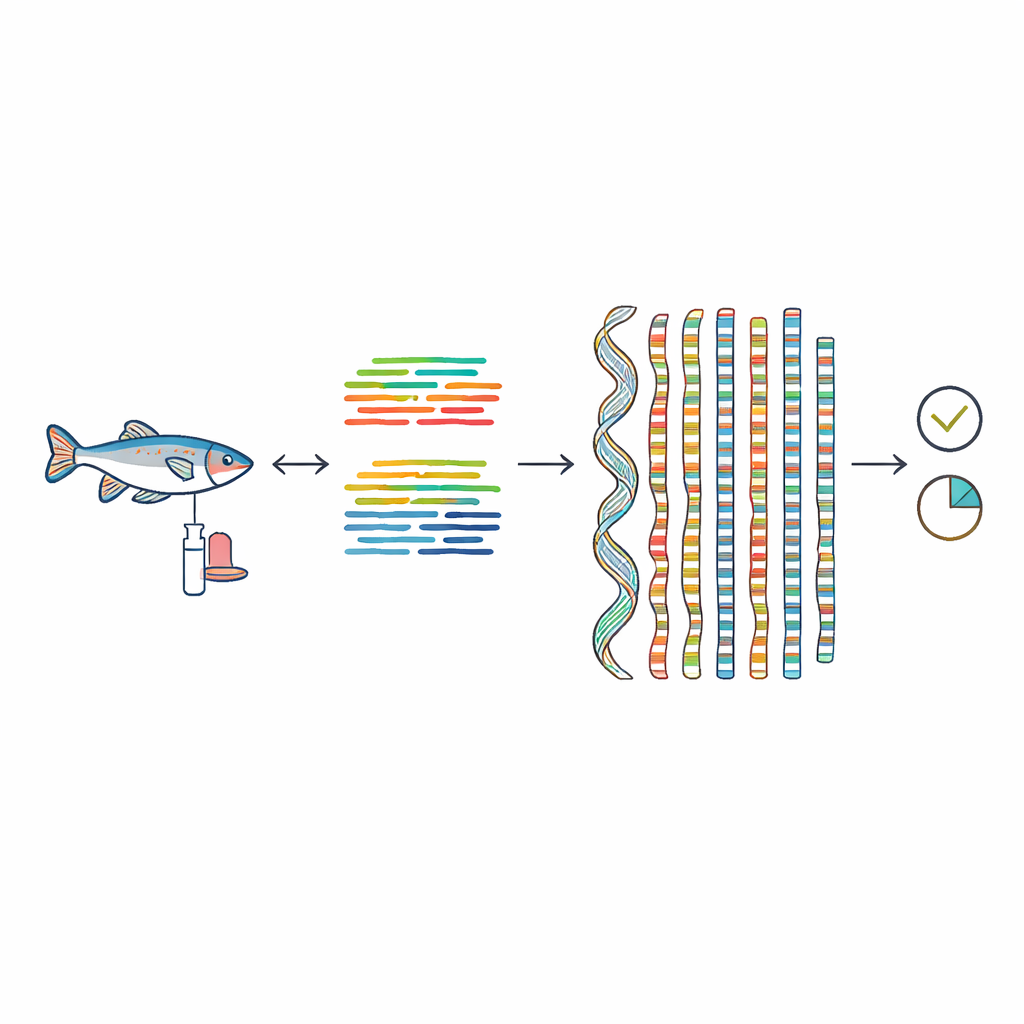
To fill this gap, the researchers collected a single male fish from the coast of Qingdao, China and carefully preserved multiple tissues. From its muscle they extracted long, intact DNA molecules and ran them through a PacBio HiFi sequencer, which reads very long stretches of DNA with high accuracy. They complemented this with massive numbers of shorter DNA reads from an Illumina sequencer, plus specialized Hi-C data that captures which pieces of DNA are physically close inside the cell nucleus. Together, these different streams of information allowed them to piece the genome together like a highly detailed jigsaw puzzle.
From Pieces to Chromosomes
Using modern assembly software, the team first stitched the long DNA reads into large continuous sections, then used depth-of-coverage and alignment steps to remove redundant fragments. The Hi-C data then acted as a kind of 3D map, showing which DNA stretches sit on the same chromosome and in what order. With additional manual checks, this process produced a genome about 618 million DNA letters long, with almost all of it (98.51%) assigned to 28 chromosomes. Many of these chromosomes extend all the way to one or both natural ends, known as telomeres, indicating that the assembly reaches very close to the true physical edges of the chromosomes.
Genes, Repeats, and Genome Quality
Once the basic structure was in place, the scientists turned to identifying what the DNA actually encodes. They first masked out repetitive elements—stretches of DNA that appear many times in the genome and make up nearly 39% of its length, dominated by DNA transposons and other mobile elements. On the cleaned sequence, they combined three sources of evidence to predict genes: computer models, comparison to known proteins from related fishes, and RNA sequences captured from five tissues of the same individual. This multi-pronged approach yielded 22,165 protein-coding genes, and more than 98% of them could be matched to known protein or functional databases. They also cataloged thousands of non-coding RNA genes, such as microRNAs and transfer RNAs, which help regulate and run the cell’s basic machinery.
Putting the Genome to the Test
To make sure this new blueprint is reliable, the team ran a series of quality checks. They examined how often standard reference genes expected in ray-finned fishes appeared in the assembly and found that more than 98% were present and nearly all were complete. Independent tools that estimate error rates gave the genome a high consensus quality score, and both long and short DNA reads mapped back to the assembly almost perfectly. Hi-C contact maps showed strong, clean chromosome-scale patterns, further confirming that the large-scale structure is sound.
What This Means for Coasts and Conservation
For non-specialists, the key takeaway is that scientists have created a highly detailed, chromosome-level map of the DNA of Chirolophis japonicus. This resource turns a once-obscure reef fish into a genetic model for exploring how coastal species adapt to cold, changing seas and how human activity affects their long-term survival. With this genome now publicly available, researchers can investigate population structure, identify genes linked to temperature tolerance or reproduction, and design better strategies to manage and conserve this distinctive inhabitant of northern rocky shores.
Citation: Liu, K., Liu, Q., Qu, Y. et al. Chromosome-level genome assembly of Chirolophis japonicus Herzenstein, 1890 (Stichaeidae, Perciformes). Sci Data 13, 577 (2026). https://doi.org/10.1038/s41597-026-06893-1
Keywords: marine genomics, cold-temperate fish, chromosome-level assembly, rocky reef ecosystems, conservation genetics