Clear Sky Science · en
REST, Exploring Sleep Patterns and Influencing Factors in Elite Female Football Athletes
Why Sleep Matters for Top Players
Elite footballers may look unstoppable on the pitch, but their performance hinges on something very ordinary: a good night’s sleep. This study peeks behind the stadium lights into the bedrooms and daily routines of 21 elite female football athletes from a Norwegian club. By tracking their movements around the clock, asking about their screen time, caffeine habits, mood, and even testing their morning grip strength, the researchers assembled a detailed picture of how modern life, training, and rest fit together. The resulting open dataset is meant to help coaches, scientists, and eventually athletes themselves fine-tune training and recovery so that hard work leads to progress, not burnout.
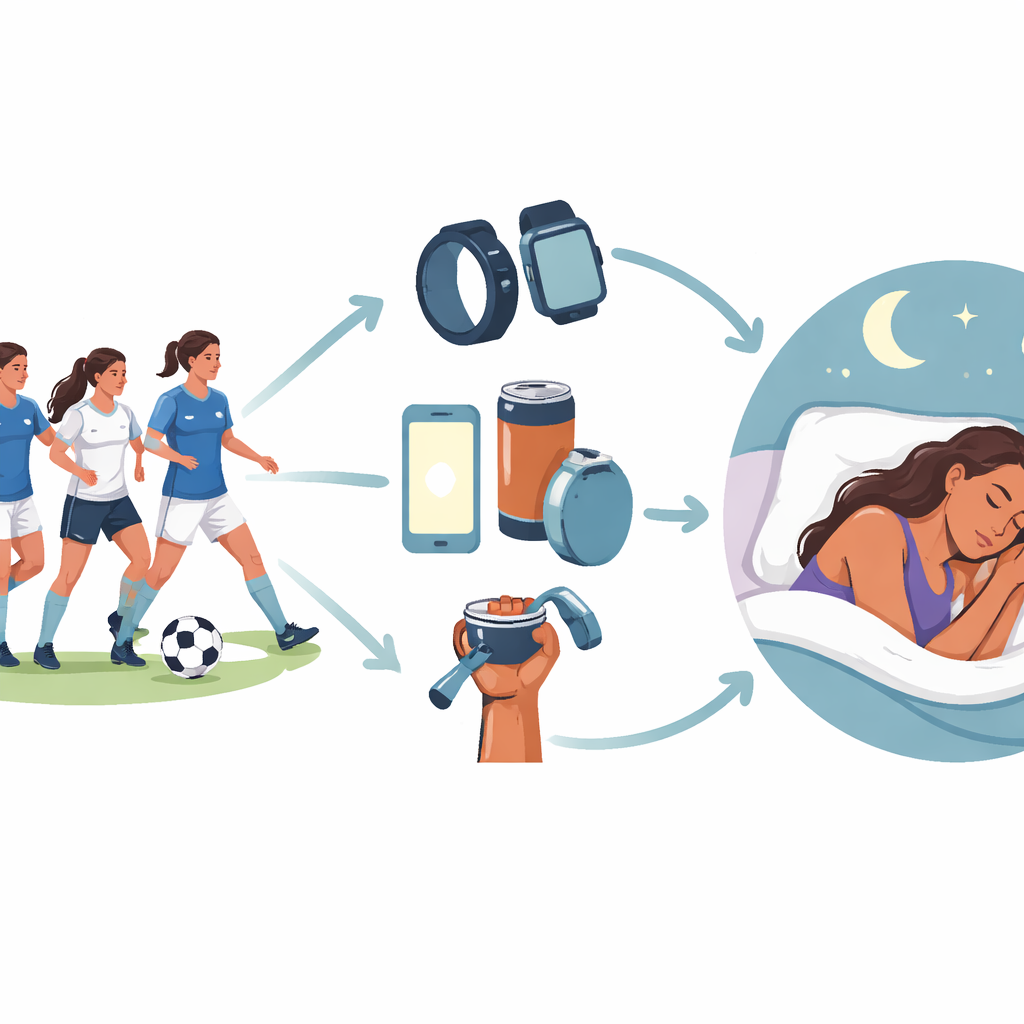
Inside the Daily Lives of Elite Players
For 17 days during the spring season, every player wore a small wrist device that recorded how much they moved, second by second, throughout day and night. At the same time, they filled in an initial questionnaire about their sleep habits and general lifestyle, followed by a short daily survey each morning. These daily questions asked how long and how well they felt they had slept, how much time they spent looking at screens before bed, what kinds of caffeinated drinks they had consumed and when, and how tired, sore, and ready to train they felt. The team also logged match days and wellness ratings in their usual performance-tracking system, and the players measured their handgrip strength each morning as a simple indicator of physical readiness.
Turning Motion into a Sleep Story
The wrist sensors captured tiny accelerations in three dimensions at high speed, which the researchers then processed into 30-second “activity” blocks across the entire study period. From these blocks, several tried-and-tested computer rules—originally developed by sleep scientists—were used to decide whether a player was likely asleep, awake, or not wearing the device. In addition, a modern machine-learning model, trained on another large study where sleep had been measured in a sleep laboratory, was used to generate extra sleep labels. The end result is a rich timeline for each player, showing when they were active or resting, how long their main sleep period lasted, how fragmented it was, and how calm or restless their movements were during the night.
What the Patterns Reveal
When the researchers averaged activity across the day, clear personal rhythms emerged. Most players started to move more around eight in the morning and peaked around midday, but some athletes showed longer or later low-activity periods that hinted at different sleep schedules. Short bursts of movement during usual sleep hours suggested awakenings that could chip away at recovery. By lining up this objective picture of movement and sleep against the daily questionnaires, the team could begin to see how perception and reality matched. Players who said they slept longer generally did log more sleep according to the sensor data, though the relationship was not perfectly straight: at some point, “better” reported sleep quality did not always mean much more time asleep. Morning handgrip strength also tended to be higher when a player had longer, less fragmented sleep, hinting that how well they rest at night may show up in how strong and ready they feel the next day.
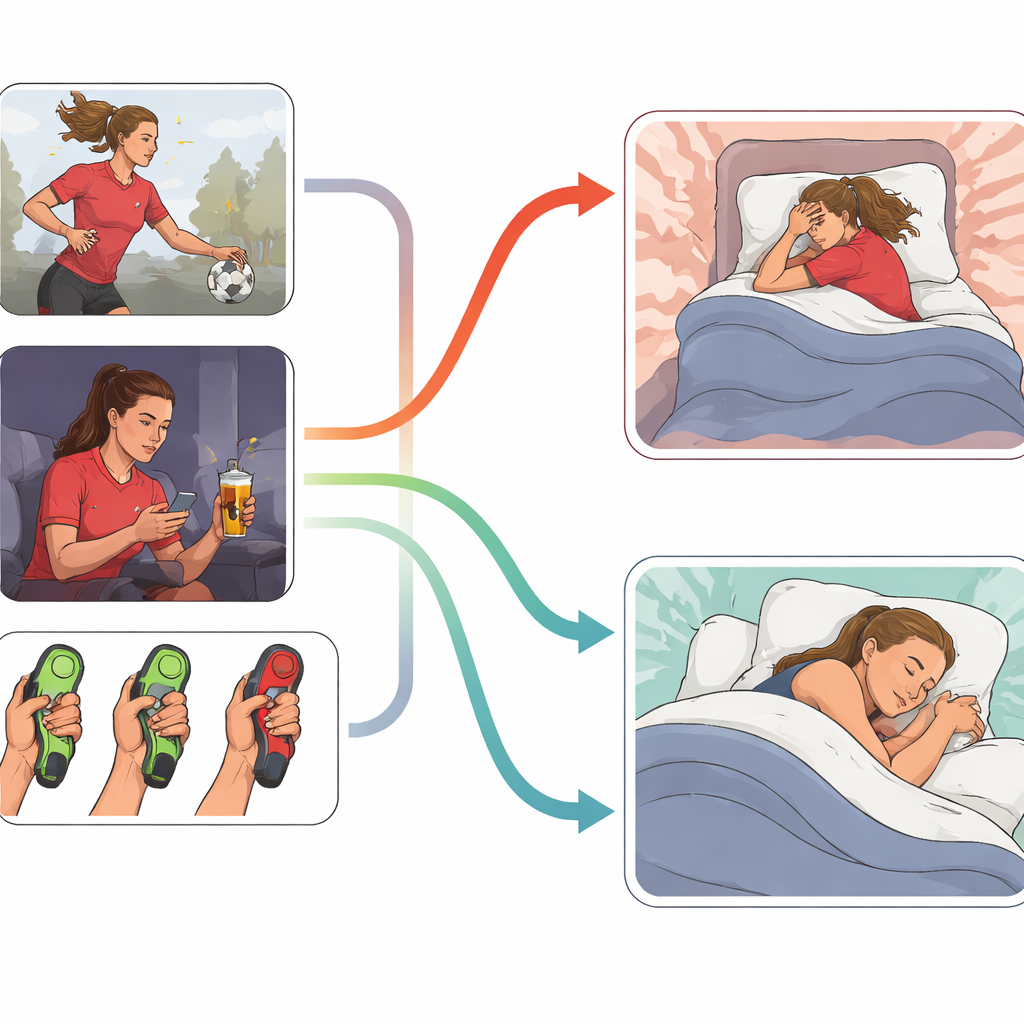
Why Caffeine, Screens, and Match Days Matter
The dataset also captures two key features of modern athlete life: caffeine and screens. Players recorded how many coffees, energy drinks, teas, or similar drinks they had, and when during the day they drank most of them. They also reported how long they spent in front of a phone, computer, or TV in the hour before bed. These details are crucial because blue light from screens can delay the body’s natural sleep signal, and caffeine can mask feelings of sleepiness while quietly disrupting sleep later on. The data further distinguish regular training days from official match days, which were strongly linked with how ready players felt to train and may come with higher stress, excitement, and irregular schedules—all factors that can reshape sleep.
What This Means for Sport and Health
Rather than delivering a single magic sleep rule, this work offers a finely detailed map. It shows that elite female footballers differ widely in how they sleep, how their days are structured, and how their habits around caffeine and screens might interact with rest. By making the full anonymised dataset and analysis code openly available, the authors invite other researchers and performance staff to dig deeper: for example, to design training loads that respect individual sleep patterns, or to test whether adjusting evening screen use and caffeine timing really improves recovery. For everyday readers and athletes alike, the message is simple: paying attention to when you move, what you drink, and how you wind down before bed can make a real difference to how well you recover and how ready you are to perform.
Citation: Boeker, M., Alexandersen, A., Thambawita, V. et al. REST, Exploring Sleep Patterns and Influencing Factors in Elite Female Football Athletes. Sci Data 13, 546 (2026). https://doi.org/10.1038/s41597-025-06331-8
Keywords: athlete sleep, female football, caffeine and sleep, wearable activity tracking, sports recovery