Clear Sky Science · en
Acetylcholine demixes heterogeneous dopamine signals for learning and moving
Why this matters for everyday behavior
Every time you learn that a sound means “treat is coming” or feel a burst of energy to move quickly, tiny chemical signals in your brain are at work. Two of the most important are dopamine, often linked to reward, and acetylcholine, a lesser-known but powerful modulator. This study shows that it’s not just how much of these chemicals are released that matters, but precisely when they appear relative to each other—timing that can decide whether you learn from an experience or simply move faster.
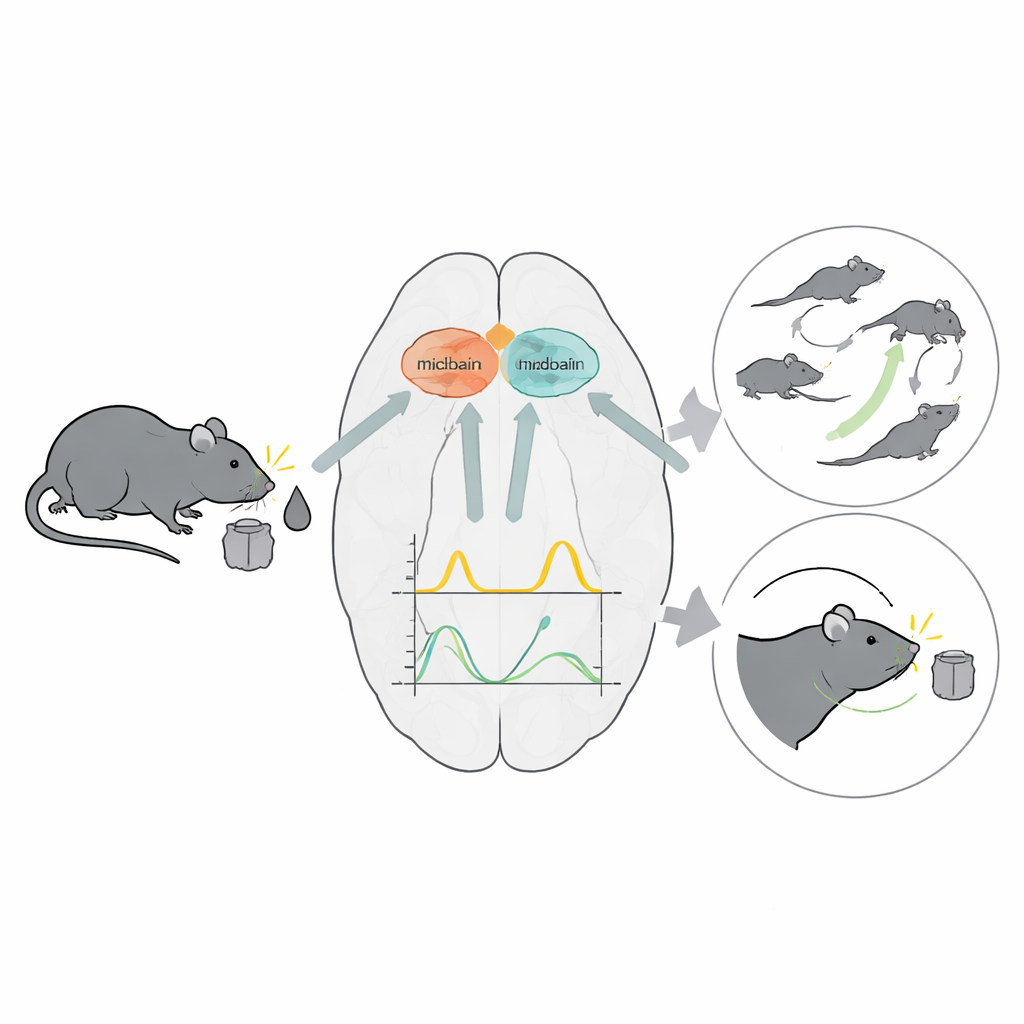
Two brain messengers with different jobs
Dopamine-producing neurons deep in the midbrain send wide-reaching fibers into the striatum, a brain region crucial for learning actions that lead to rewards and for controlling movement. For years, researchers have known that dopamine can both teach animals which choices are valuable and invigorate their movements. The puzzle has been how the same chemical signal can carry information about both learning and movement without confusing the neurons that receive it. Acetylcholine, released by a rare class of striatal cells called cholinergic interneurons, was suspected to help sort or “demix” these overlapping messages, but this idea had not been rigorously tested during real behavior.
A task that separates learning from moving
To tackle this, the researchers trained rats to perform a self-paced “temporal wagering” task that neatly separated reward-related events from movement-related ones. On each trial, a sound signaled how much water was on offer; later, a light indicated which side port might deliver it, after an unpredictable wait. Rats could either keep waiting or abandon the trial and start a new one, effectively revealing how they valued the current offer versus future ones. This design produced moments when the animal updated its expectations about reward and other moments when it made quick, orienting head movements, allowing the scientists to compare dopamine and acetylcholine signals across these distinct contexts.
How timing decides between learning and speed
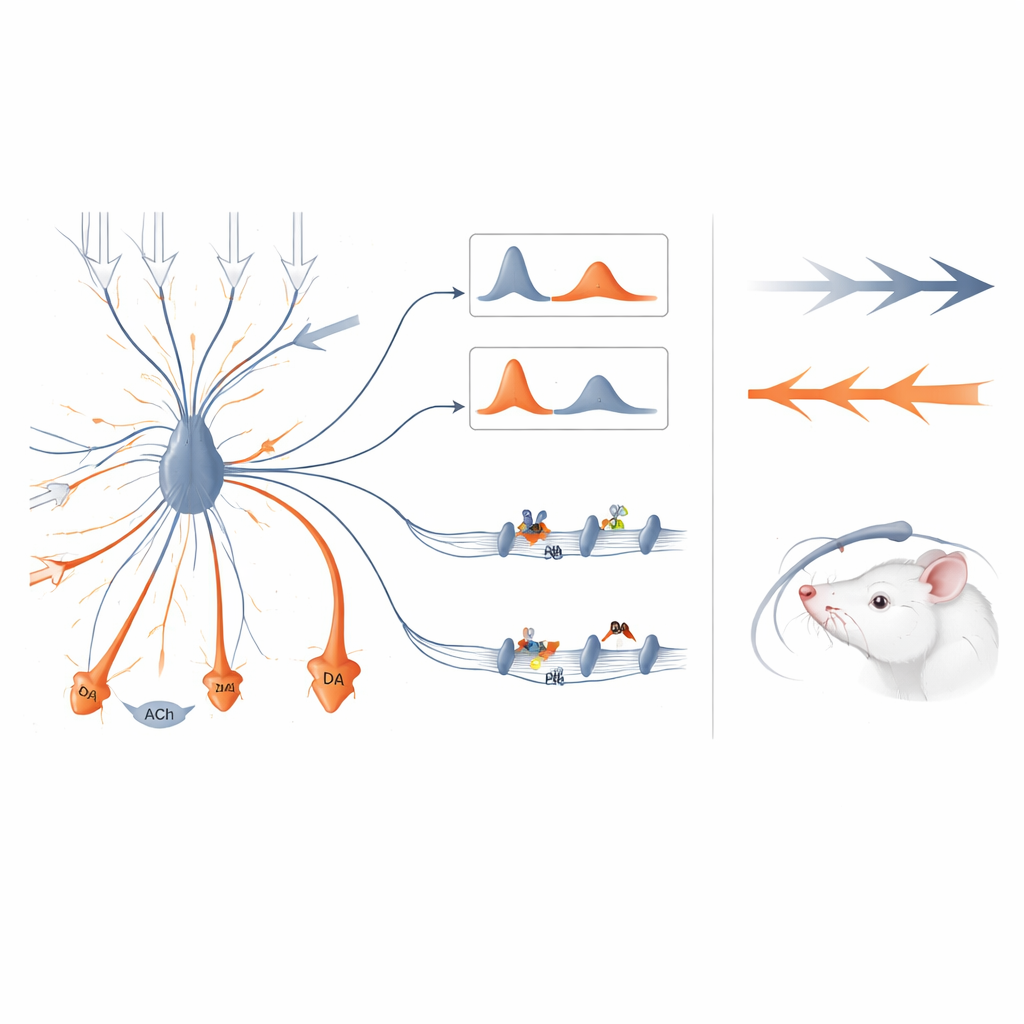
Using light-based sensors, the team measured rapid changes in dopamine and acetylcholine in the dorsomedial striatum while rats performed the task. When sounds first announced how big a reward might be, dopamine showed brief bursts that matched classic “prediction error” signals—the difference between what was expected and what was received. At these same moments, acetylcholine dipped, and crucially, the dip slightly preceded the dopamine burst. Under this timing pattern, larger dopamine bursts forecasted how the rats would adjust their behavior on the next trial, such as starting faster when the environment had recently been rewarding. Neurons recorded with fine electrodes changed their firing patterns from trial to trial in a way consistent with lasting synaptic plasticity, suggesting that these dopamine surges, arriving just after acetylcholine pauses, were driving learning-related changes in the circuit.
When the same dopamine no longer teaches
The story flipped at another key event: when the waiting period ended and reward became available after a short or long delay. Here, dopamine bursts again reflected prediction errors—larger when the delay was unusually long—but now they came just before, rather than after, acetylcholine dips. Despite looking like textbook learning signals, these dopamine surges did not predict any measurable change in the rats’ future behavior. The animals did not systematically wait longer, poke sooner, or alter their trial-start times after long delays. In other words, the same style of dopamine signal, when shifted slightly earlier relative to acetylcholine, no longer produced observable learning.
Switching from teaching to boosting movement
A different pattern emerged at moments dominated by movement. When a side light turned on and the rat whipped its head toward the potential reward port, dopamine signals in the striatum were strongest for movements directed to the side opposite the recording site and grew larger when the orienting movement was faster. At these times, acetylcholine did not dip; it burst in near synchrony with dopamine. The strength of the dopamine signal predicted how vigorous the upcoming movement would be, but did not leave the kind of lasting imprint on neuronal activity seen during learning events. In essence, when dopamine and acetylcholine rose together, dopamine appeared to act more like a “go faster” signal than a “update your expectations” signal.
What this means for learning, movement, and disease
Taken together, the results suggest that acetylcholine acts like a timing gate on dopamine’s influence. When acetylcholine briefly pauses and dopamine follows close behind, dopamine is most effective at reshaping connections in the striatum, supporting learning about which actions are valuable. When dopamine leads or coincides with acetylcholine bursts, the same chemical is steered away from long-term change and toward energizing ongoing movements instead. This fine-grained control may help the brain keep learning and movement signals from interfering with each other, and it offers new insight into disorders such as Parkinson’s disease, where both dopamine and acetylcholine systems are disrupted.
Citation: Jang, H.J., McMahon Ward, R., Golden, C.E.M. et al. Acetylcholine demixes heterogeneous dopamine signals for learning and moving. Nat Neurosci 29, 840–850 (2026). https://doi.org/10.1038/s41593-026-02227-x
Keywords: dopamine, acetylcholine, reinforcement learning, striatal plasticity, movement vigor