Clear Sky Science · en
The NPR1 agonist antibody XXB750 in heart failure: a phase 2 randomized trial
When Help for Failing Hearts Backfires
Many people live with hearts that pump too weakly to keep up with the body’s needs. Doctors are eager for new medicines that ease strain on the heart and prevent hospital stays. This study tested a novel antibody drug, meant to boost a natural heart-protective system, in people with long-term heart failure. Instead of helping, the drug unexpectedly worsened signs of heart stress and was linked with more episodes of deteriorating heart failure, offering a cautionary tale about how complex the body’s signaling systems can be.
The Body’s Built-In Heart Relief System
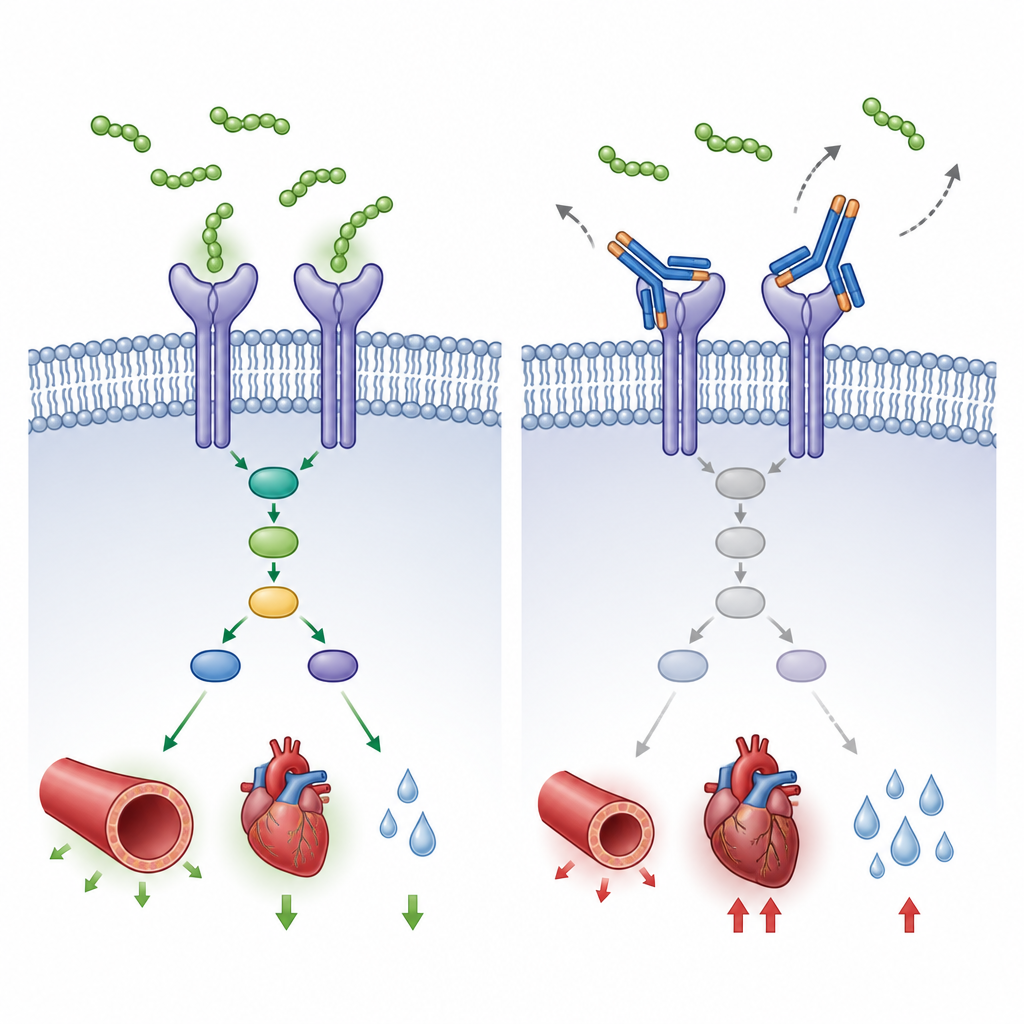
The heart and blood vessels produce small hormones that help the body shed salt and water and relax blood vessels. In heart failure, levels of these hormones rise as the body tries to counter fluid buildup and high pressure. Current treatments such as sacubitril/valsartan work partly by slowing the breakdown of these helpful hormones, allowing them to act longer. Researchers hoped that directly stimulating the same pathway with a long-acting antibody, called XXB750, might provide steadier, stronger relief for patients whose hearts do not pump efficiently.
A Trial of a New Antibody Treatment
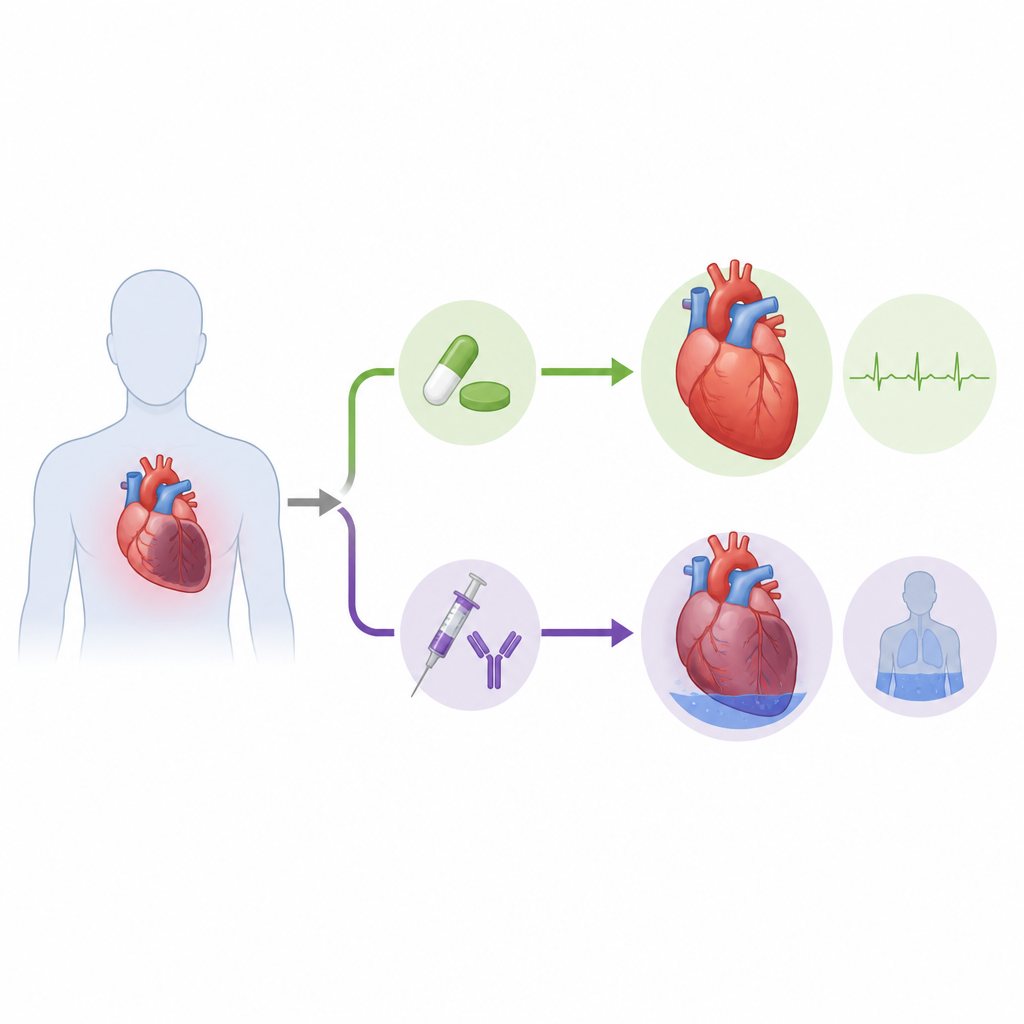
In this phase 2 international trial, 136 adults with symptoms of heart failure and a reduced pumping function of the left ventricle were enrolled. All were already receiving standard therapies, including drugs that block harmful hormone systems and, in many cases, sacubitril/valsartan. Participants were randomly assigned to get one of two doses of XXB750 by injection every four weeks, a placebo injection, or open-label sacubitril/valsartan pills. The main yardstick of success was the change over 16 weeks in a blood marker called NT-proBNP, which reflects how hard the heart is working. The study also tracked another chemical signal, cGMP, that indicates activation of the protective pathway the new antibody was meant to boost.
Signals Moving in the Wrong Direction
Over the 16 weeks, patients taking sacubitril/valsartan showed the expected pattern: their NT-proBNP levels tended to fall, and their cGMP levels rose, consistent with less strain on the heart and better activation of the helpful hormone system. Among patients on placebo, these markers stayed roughly stable. In stark contrast, those given XXB750 showed a rise in NT-proBNP and a fall in cGMP. The higher dose produced a stronger shift in this unfavorable direction. These changes were most pronounced in patients who were already on sacubitril/valsartan before entering the study, suggesting that adding the antibody on top of an already stimulated hormone system might interfere with its normal function.
Real-World Consequences for Patients
The worrying laboratory signals were mirrored by what happened to patients. People treated with XXB750 experienced more episodes of worsening heart failure, including more hospital admissions, than those who received sacubitril/valsartan or placebo. Deaths and serious side effects were also more frequent in the XXB750 groups. Because of this clear pattern of harm, an independent safety committee recommended that the trial be stopped early, and the development of this particular antibody for heart failure was discontinued.
What This Means for Future Heart Drugs
To a lay observer, it may seem puzzling that a drug designed to switch on a helpful pathway could make people worse. The authors suggest that constantly and strongly activating the same receptor with a long-acting antibody may cause the receptor to become less responsive, effectively blocking the body’s own protective hormones. This study shows that even treatments built on solid biological ideas can behave very differently in sick hearts than in healthy volunteers. While the findings discourage further use of XXB750 in heart failure, they also guide future research toward shorter-acting or more finely tuned approaches to harnessing the body’s own heart-protective systems.
Citation: Solomon, S.D., McMurray, J.J.V., Felker, G.M. et al. The NPR1 agonist antibody XXB750 in heart failure: a phase 2 randomized trial. Nat Med 32, 1694–1700 (2026). https://doi.org/10.1038/s41591-026-04313-w
Keywords: heart failure, natriuretic peptides, sacubitril valsartan, monoclonal antibody, clinical trial