Clear Sky Science · en
A structure-based mRNA vaccine for Nipah virus in healthy adults: a phase 1 trial
Why This New Vaccine Matters
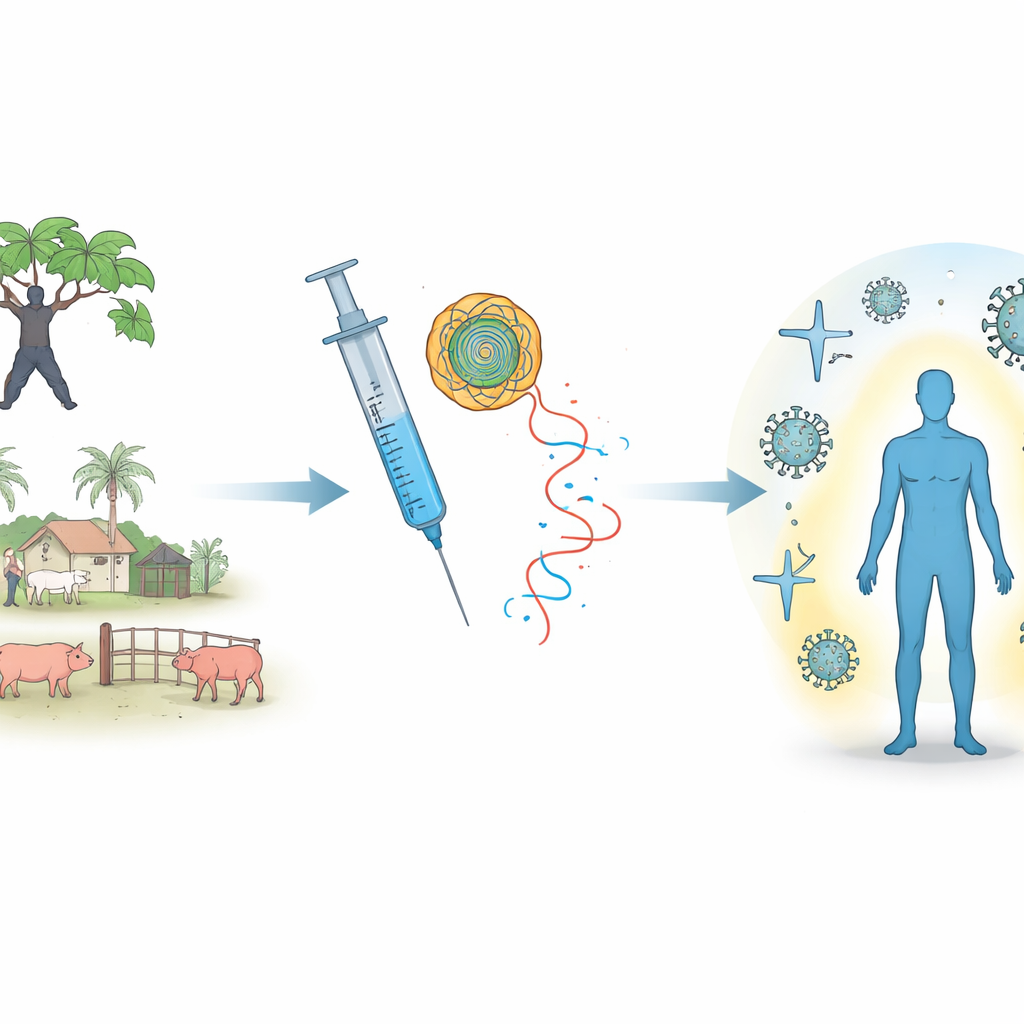
Nipah virus is a deadly infection that jumps from bats and farm animals to people and can cause severe brain and lung disease. With fatality rates that can reach three out of four patients and no licensed vaccine, it sits high on the list of viruses that could spark the next global health emergency. This study reports the first human trial of an experimental Nipah vaccine that uses the same kind of messenger RNA (mRNA) technology that helped turn the tide against COVID-19, testing whether it is safe and whether it can wake up the immune system in a lasting way.
A Stealthy Virus on the Watch List
Nipah virus belongs to a family of viruses carried mainly by fruit bats, which live across large parts of Asia, the Pacific and Africa—regions home to billions of people. Outbreaks have already appeared in Malaysia, Bangladesh, India and other countries, often starting when bats contaminate fruit or animal enclosures, and sometimes spreading from person to person. Because past clusters have been small and scattered, classic large vaccine trials that directly measure protection are unlikely to be feasible. Public health agencies therefore place special importance on early studies that show a strong and durable immune response in volunteers, as a key step toward emergency use during future outbreaks.
A Tailor-Made mRNA Shot
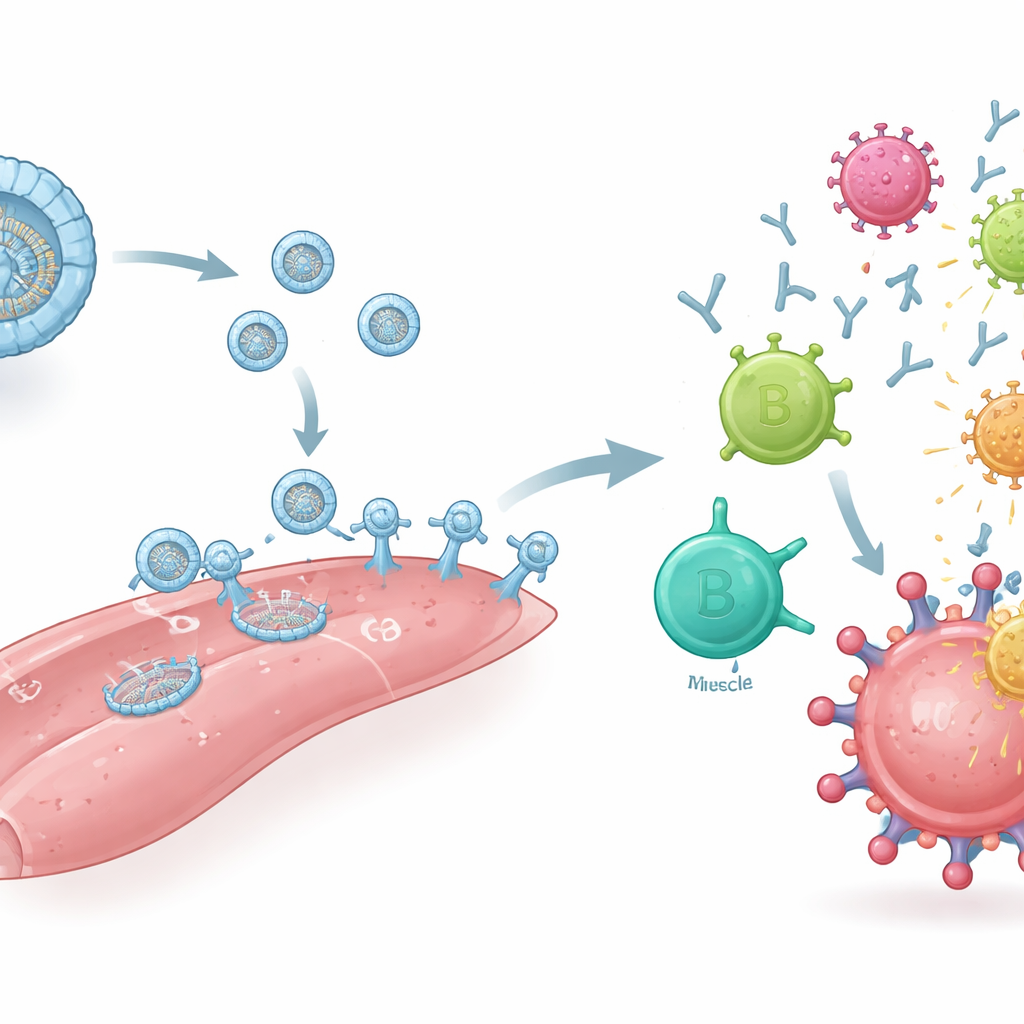
The vaccine tested here, called mRNA-1215, delivers genetic instructions for making two key pieces of the Nipah virus outer coat. One is the “fusion” protein, which allows the virus to merge with human cells; the other is the “attachment” protein, which latches onto cells in the first place. Scientists locked the fusion protein into its pre-attack shape, a form known from other viruses to be especially good at provoking neutralizing antibodies. These instructions are packaged inside tiny fat bubbles similar to those used in COVID-19 mRNA vaccines, which carry the message into muscle cells after an injection in the upper arm.
Testing Safety in Healthy Volunteers
Forty healthy adults in the United States received two injections four weeks apart, at one of four dose levels ranging from very low (10 micrograms) to higher (100 micrograms). Researchers closely tracked side effects for days and monitored health and blood tests for more than a year. Most participants experienced only mild, familiar symptoms: soreness at the injection site, a sense of tiredness or feeling unwell, headache or muscle aches. These tended to be slightly more common at higher doses and after the second shot, but usually faded within a week. A few participants had temporary changes in white blood cell counts or rashes; one person developed a prolonged hive-like skin reaction that responded to antihistamines. No serious vaccine-related medical problems, hospitalizations or new long-term illnesses were seen.
Strong and Lasting Immune Responses
The central question was whether this vaccine could train the immune system to recognize Nipah virus quickly and powerfully. Within two weeks of the first shot, all dose groups began to show antibodies that bound tightly to the fusion and attachment proteins, and many also developed antibodies that neutralized the virus in laboratory tests. Levels rose sharply after the second shot, peaking around week six and then slowly declining, yet remaining well above starting levels for at least a full year. Even the lowest dose generated responses, though antibody levels at 10 micrograms began to fall sooner than at higher doses. In parallel, the vaccine activated memory B cells and T cells that recognize Nipah components, suggesting the body would be primed to respond rapidly if it ever encountered the real virus.
Protection That Reaches Related Viruses
An important bonus is that the immune responses did not stop at a single strain. Antibodies from vaccinated volunteers were able to neutralize a Nipah strain responsible for repeated outbreaks in Bangladesh as well as a cousin virus, Hendra, which threatens horses and people in Australia. These cross-reactive responses are especially valuable for a family of viruses that circulates in wildlife over large areas and could evolve or spill over in different forms. The combination of the two viral proteins in the vaccine and the choice of the pre-attack shape of the fusion protein appear to help broaden this protective reach.
What This Means Going Forward
For a virus that kills many of the people it infects and has no approved countermeasure, these early results are encouraging. In this small phase 1 study, the mRNA-1215 vaccine was generally well tolerated and sparked strong, long-lasting immune responses that can recognize multiple Nipah strains and a related virus. While this trial cannot prove that the vaccine prevents disease—larger studies and animal challenge experiments will be needed—it shows that a carefully designed mRNA shot can quickly generate the kind of immunity public health officials hope to rely on if Nipah sparks larger outbreaks. In short, it is a promising candidate to be stockpiled and refined as part of the world’s preparedness toolkit against emerging viral threats.
Citation: Ploquin, A., Mason, R.D., Holman, L.A. et al. A structure-based mRNA vaccine for Nipah virus in healthy adults: a phase 1 trial. Nat Med 32, 1401–1410 (2026). https://doi.org/10.1038/s41591-026-04265-1
Keywords: Nipah virus, mRNA vaccine, emerging infections, viral spillover, vaccine preparedness