Clear Sky Science · en
Citywide premarital genomic screening in a Middle Eastern population
Why this matters for families
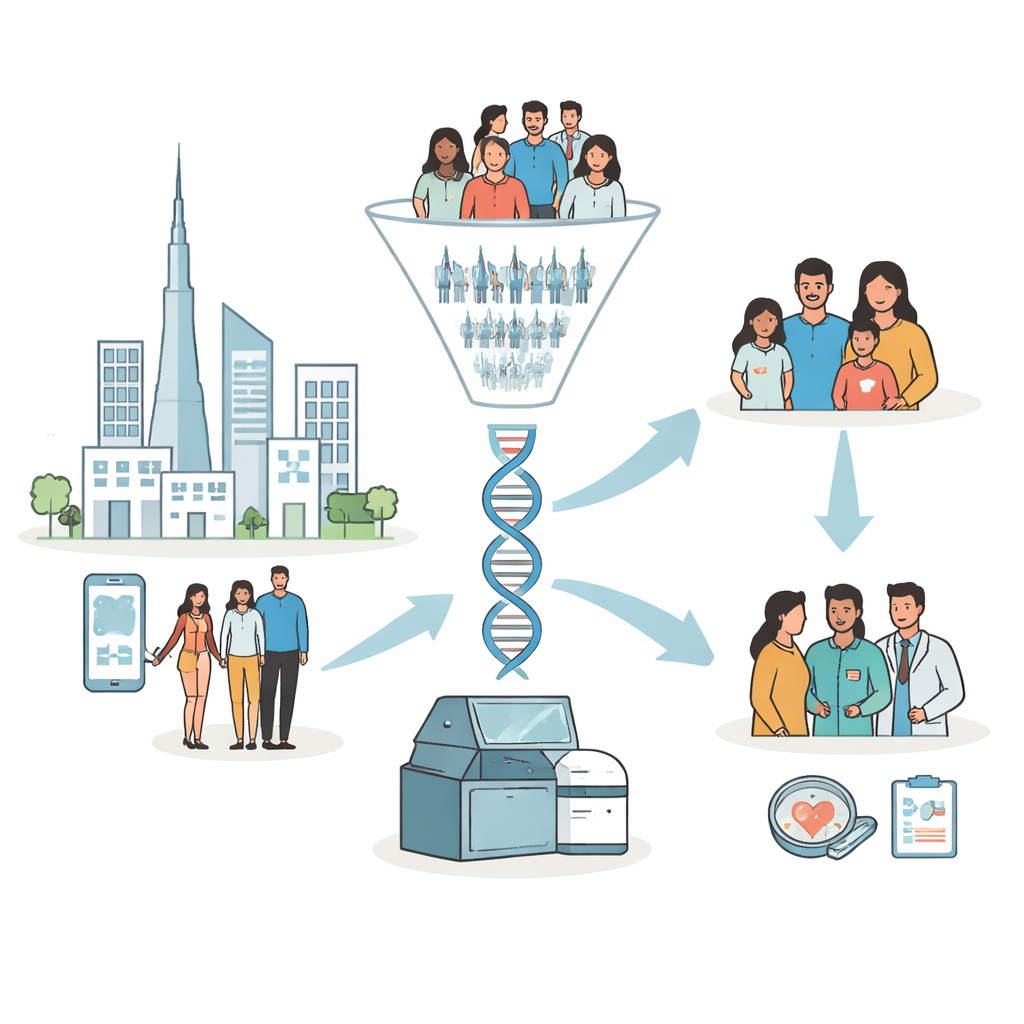
For many couples, planning a family comes with both excitement and worry: will our children be healthy, and is there anything we can do in advance to lower the risk of serious inherited disease? This study from Dubai shows how a citywide premarital genetic screening program can answer some of those questions before pregnancy, giving couples information and options that were previously available only after a child became ill.
A new citywide health check before marriage
The emirate of Dubai has introduced a mandatory premarital genetic screening program for Emirati couples. Before marriage, partners can visit any of 18 primary healthcare centers or use a city app to enroll. A small blood sample from each person is analyzed in a central genomic medicine center. Instead of looking for just one or two conditions, the lab reads through hundreds of genes known to be linked to serious illnesses that appear when a child inherits faulty copies from both parents. The goal is simple: find couples who quietly carry the same harmful change in a gene, long before a pregnancy, so they can make informed decisions.
How the gene test works behind the scenes
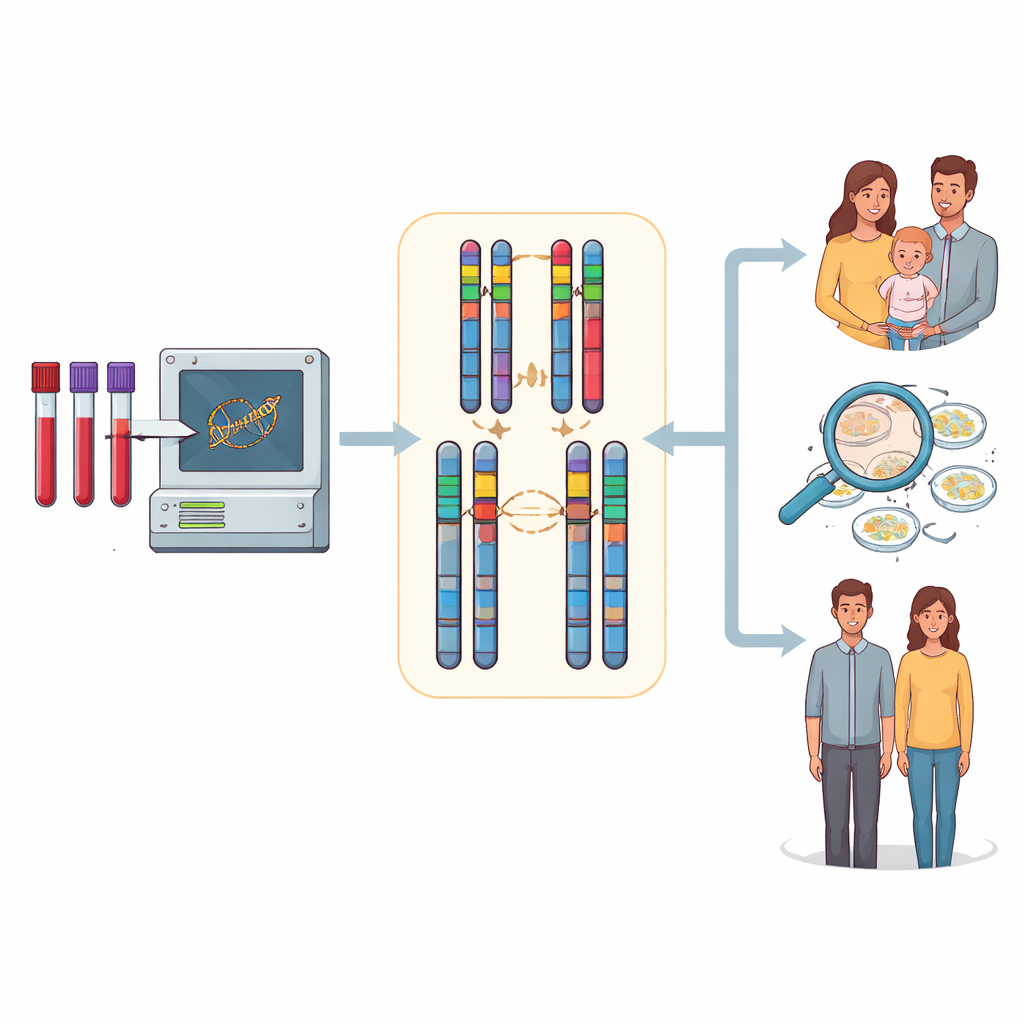
In this program, DNA from both partners is sequenced, focusing on 782 genes tied to severe childhood and lifelong disorders. The technology searches for changes that experts already know are disease-causing, as well as brand-new disruptions likely to break a gene’s function. Only when both partners carry a harmful change in the same gene are they labeled an “at-risk couple,” because they then have a one-in-four chance of having a child affected by that specific condition. Couples without such a shared finding receive a “low-risk” report, although the researchers stress that no test can remove all risk.
What the first 1,000 couples revealed
Between January and July 2025, 1,000 Emirati couples—2,000 individuals—took part. The lab successfully processed nearly every sample, and most couples received results within two weeks. The findings were striking: 79 couples (about 8%) were classified as at risk of having children with a serious recessive disease, a much higher rate than reported in a similar large study in Australia. Blood disorders such as thalassemia were the single biggest contributor, but more than half of the at-risk couples had changes in dozens of other genes linked to conditions affecting sight, hearing, brain development, metabolism and other body systems. In a few people, the test even uncovered that they themselves already had two faulty copies of a gene, explaining unexplained health problems or warning of future issues.
Choices couples made after learning their risk
At-risk couples were invited to meet a genetic counselor or trained doctor to discuss what their results meant. They were also told about government-funded options, including in vitro fertilization combined with testing of embryos, so that only embryos without the disease in question are implanted. Of the 79 at-risk couples, 63 (about four in five) chose to go ahead with marriage, often planning to use these reproductive services. Sixteen decided not to marry based on the information. Surveys showed that most couples valued the program and felt it helped them make better family-planning decisions, although many also reported anxiety and confusion—highlighting how essential clear explanations and emotional support are when sharing genetic risk.
Building a roadmap to fewer rare diseases
The authors conclude that large-scale premarital genetic screening is both practical and useful in a population where marriage between relatives is common and the risk of rare inherited diseases is high. By identifying at-risk couples early and pairing results with accessible reproductive support, the program has the potential to prevent many severe conditions and reduce long-term medical and emotional burdens. At the same time, the project exposes gaps—such as genetic changes that current databases miss and technical blind spots in certain genes—that will require continual updates to the testing panel and methods. Overall, the Dubai experience suggests that thoughtfully designed premarital screening, anchored in counseling and public education, can become a powerful tool for healthier future generations.
Citation: Alblooshi, K., Sharaf, R., Shenbagam, S. et al. Citywide premarital genomic screening in a Middle Eastern population. Nat Med 32, 1511–1518 (2026). https://doi.org/10.1038/s41591-026-04251-7
Keywords: premarital genetic screening, autosomal recessive disorders, consanguinity, Emirati population, reproductive counseling