Clear Sky Science · en
Bispecific T cell engagers for treatment-refractory autoimmune connective tissue diseases
New Hope for Stubborn Immune Diseases
Some autoimmune diseases attack the body’s own muscles, lungs and skin so relentlessly that even the strongest available medicines cannot keep them in check. This study explores a new way to rein in two such conditions—antisynthetase syndrome, which can weaken muscles and scar the lungs, and systemic sclerosis, which hardens the skin and damages internal organs—by borrowing a powerful cancer therapy and redirecting it against misbehaving immune cells. For patients who have run out of options, these early results hint at a possible lifeline, while also raising careful questions about safety and long-term effects.
Why These Illnesses Are So Hard to Treat
In both antisynthetase syndrome and systemic sclerosis, the immune system produces "autoantibodies"—proteins that latch onto the body’s own tissues instead of invading germs. These autoantibodies are made by B cells and their descendants, plasma cells. Beyond making antibodies, B cells also release inflammatory signals and help activate other immune cells, creating a self-sustaining cycle of damage. Standard drugs, including steroids and B‑cell‑depleting antibodies such as rituximab, often cannot fully shut this process down, especially once serious lung, heart or skin damage has developed. The patients in this report had all failed several such treatments and still had active, progressive disease.
Re-Tooling Cancer Drugs for Autoimmune Disease
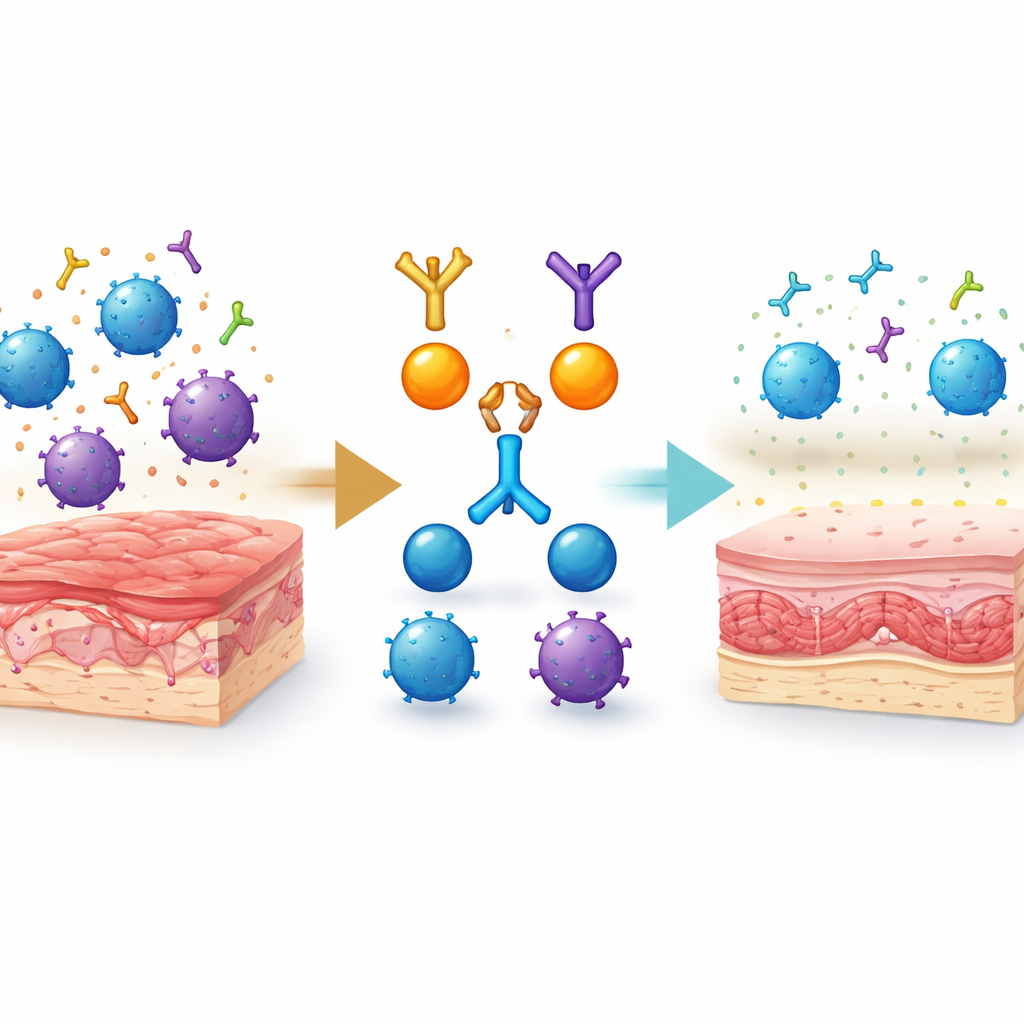
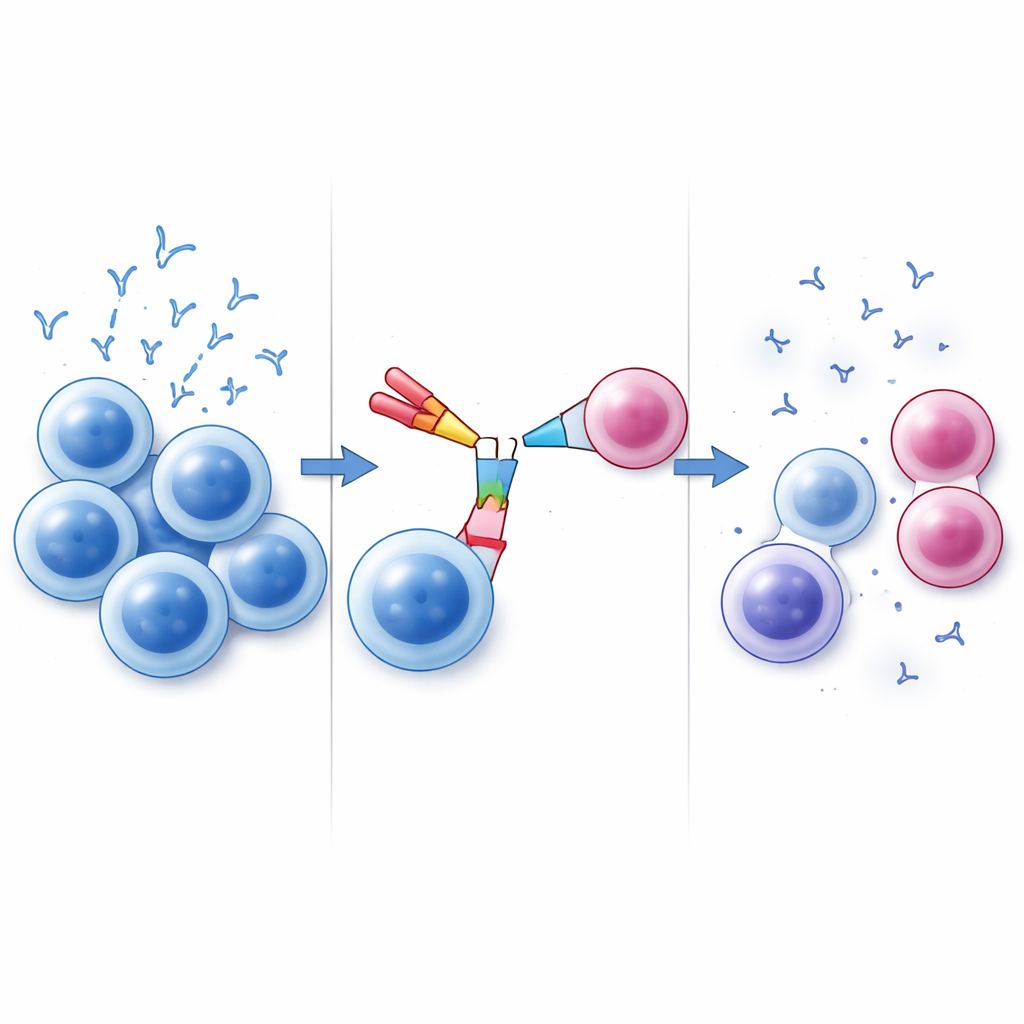
The researchers tested a class of drugs known as bispecific T cell engagers, originally designed to hunt down cancer cells. These engineered antibodies have two "arms": one grabs T cells—the immune system’s killers—while the other grabs cells carrying a chosen target marker. In this study, patients with antisynthetase syndrome received blinatumomab, which directs T cells against B cells marked by the molecule CD19. Patients with systemic sclerosis received teclistamab, which homes T cells to plasma cells marked by BCMA. The idea is to bring T cells and harmful B‑lineage cells into close contact so that the T cells eliminate them, cutting off the supply of autoantibodies at its source. After this intensive "induction" phase, all patients received rituximab every few months to prevent the B cell population from growing back.
What Happened to Patients’ Symptoms and Tissues
Among the five antisynthetase patients, blinatumomab quickly wiped out circulating B cells and sharply lowered a key blood enzyme that signals muscle damage. Most patients walked farther in six minutes, breathed more easily and, when present, showed stabilization of lung function. Detailed muscle biopsies before and after treatment revealed that inflammatory cells, immune attack markers and dying muscle fibers largely disappeared over time, replaced by signs of tissue repair. In systemic sclerosis, five patients treated with teclistamab experienced softer and more flexible skin, fewer painful tendon friction rubs and mostly stable or slightly improved lung measurements. Skin biopsies from these patients showed a marked loss of BCMA‑positive plasma cells, supporting the idea that the drug was reaching its intended targets in the tissue.
Antibodies, Infections and Side Effects
Beyond visible symptoms, the team tracked blood antibodies. In all patients, disease‑specific autoantibodies fell, though the drop was generally deeper and more consistent with teclistamab than with blinatumomab, reflecting broader plasma cell depletion. Interestingly, some antisynthetase patients improved clinically even while their autoantibodies remained detectable, suggesting that removing B cells also helps by curbing their inflammatory roles. Ordinary protective antibodies against past infections and vaccines stayed largely intact after blinatumomab, but declined after teclistamab, leaving those patients more vulnerable to infections and requiring regular immunoglobulin infusions. The most notable acute side effect was cytokine release syndrome—a burst of inflammatory symptoms—which appeared in two antisynthetase patients and all systemic sclerosis patients, but resolved with standard treatments. No serious brain toxicity was observed. A number of respiratory infections and a few unexpected problems, such as new pulmonary hypertension and a lung tumor in one patient, underline the need for close monitoring.
What This Could Mean for Patients
For people living with severe, treatment‑resistant antisynthetase syndrome or systemic sclerosis, these ten compassionate‑use cases show that redirecting the immune system’s own T cells against rogue B cells can bring meaningful improvements in muscle strength, skin softness and lung stability, even when older drugs have failed. At the same time, the approach comes with real risks, including strong immune reactions and weakened defenses against infection, and the optimal schedule for follow‑up B‑cell‑blocking therapy is not yet known. Larger, carefully controlled studies will be needed to confirm how well this strategy works, who is most likely to benefit and how to balance benefit against harm. Still, this early experience suggests that bispecific T cell engagers, combined with maintenance therapy, may open a new chapter in treating some of the toughest autoimmune connective tissue diseases.
Citation: Düsing, C., Györfi, AH., Stütz, A.N. et al. Bispecific T cell engagers for treatment-refractory autoimmune connective tissue diseases. Nat Med 32, 1530–1542 (2026). https://doi.org/10.1038/s41591-026-04238-4
Keywords: autoimmune connective tissue disease, bispecific T cell engager, B cell depletion therapy, antisynthetase syndrome, systemic sclerosis