Clear Sky Science · en
Deleterious coding variation associated with autism is shared across ancestries
Why this research matters for families everywhere
Families around the world want to know why autism appears in some children and not others—and whether answers discovered in one group of people hold true for everyone. This study tackles a long-standing blind spot in autism genetics: most past research has focused on people of European ancestry. By deeply analyzing DNA from thousands of Latin American families, the researchers asked a simple but crucial question: is the genetic "code" that contributes to autism essentially the same across different ancestries?
Looking at autism genes beyond Europe
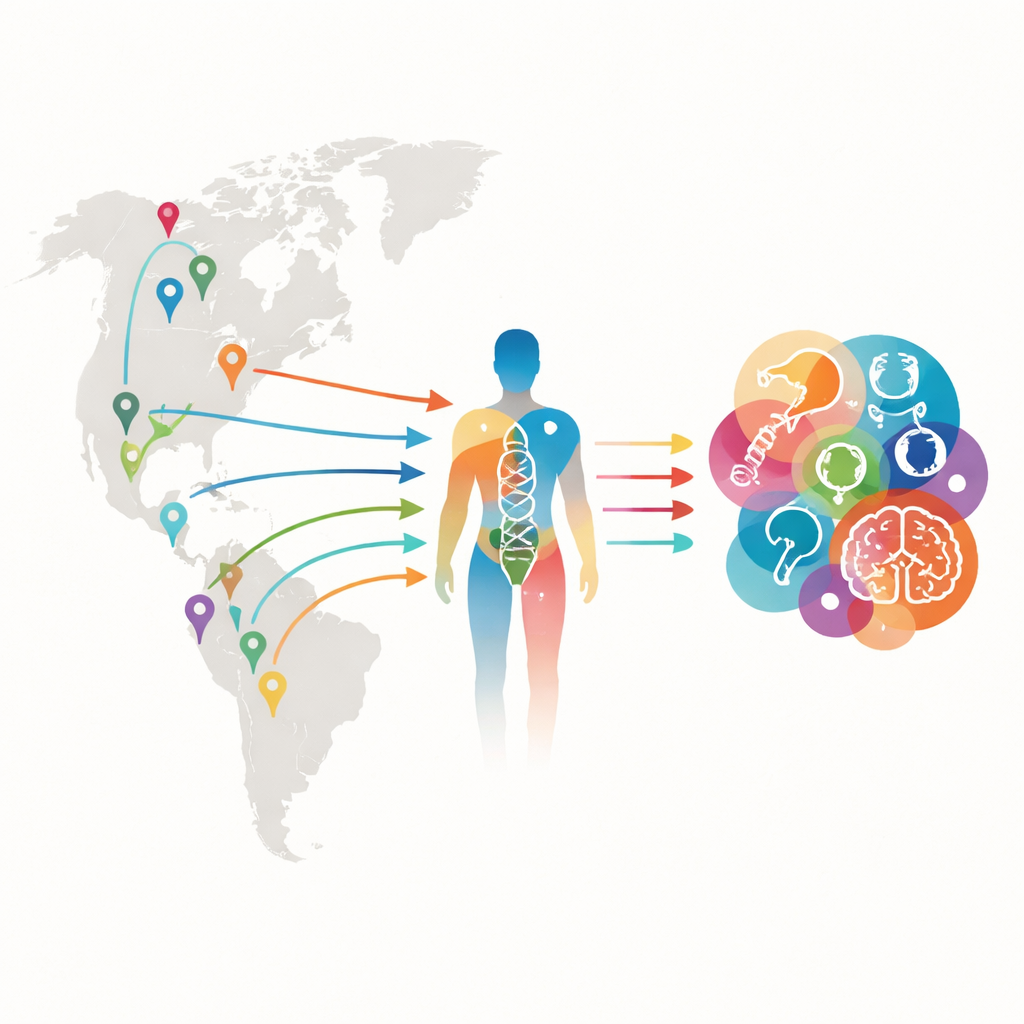
The team formed the Genomics of Autism in Latin American Ancestries (GALA) Consortium, bringing together clinics and research centers across the Americas, from Brazil and Colombia to Costa Rica, Peru, Mexico and the United States. They collected genetic data from more than 15,000 people, including 4,717 individuals diagnosed with autism spectrum disorder (ASD) and their family members. Many of these families contributed both parents’ DNA as well as unaffected siblings, allowing scientists to spot brand-new genetic changes that arise in a child but are not present in either parent.
Hunting for rare, powerful genetic changes
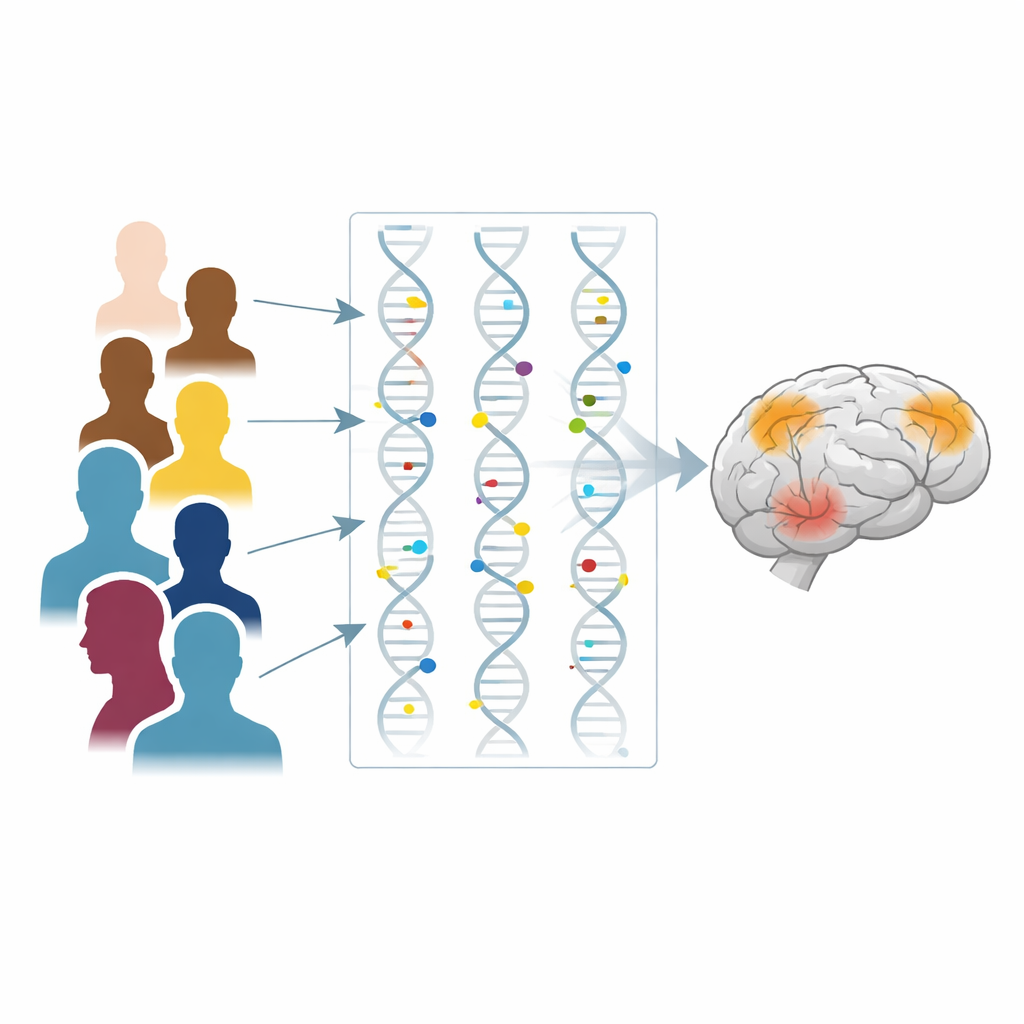
While most autism risk comes from many common genetic differences acting together, this study focused on rare, often one-off changes in the DNA that can have large effects. The researchers looked for disruptive changes in the parts of genes that code for proteins—particularly in genes that nature tends to protect strongly over evolution, suggesting they are crucial for brain and body function. They found more of these damaging new mutations in children with autism than in their unaffected brothers and sisters, mirroring what earlier studies had seen in largely European groups. Using statistical models that combine new mutations, inherited changes and small deletions or duplications of DNA, they identified 35 genes strongly linked to autism in Latin American individuals.
Same key genes across different ancestries
A central question was whether the same important genes show up in people of different backgrounds. When the team compared their 35 autism-linked genes from Latin American participants to results from large studies dominated by European ancestry, they saw substantial overlap. Many of the same genes—often involved in how brain cells communicate, build connections, or control which other genes turn on and off—appeared again and again. The study also showed that widely used measures of how intolerant a gene is to damaging changes are reliable for the most sensitive genes across ancestries. In other words, the DNA "hotspots" where harmful changes can strongly increase autism likelihood appear to be shared globally.
What this means for genetic testing and equity
The researchers then asked how well current clinical genetic tools work for people from different populations. Using two independent systems for classifying whether a variant is likely to cause disease, they found that rare, clearly harmful variants could be identified in Latin American individuals at rates not far from those seen in other groups. However, people from less-studied ancestries often carried more rare variants that could not yet be confidently labeled as harmful or harmless, leading to slightly lower rates of firm answers from testing. This gap reflects how existing databases are still heavily skewed toward European ancestry, and it highlights the importance of including diverse populations when building reference maps of human genetic variation.
Shared biology, urgent need for inclusive research
Overall, the study concludes that the underlying biology of autism—at least for the rare, strongly acting genetic changes examined here—is remarkably consistent across ancestries. The same sets of highly conserved genes, when disrupted, contribute to autism in Latin American and non-Latin American individuals alike, and they often overlap with genes involved in other developmental conditions. For families, this means that genetic findings and emerging gene-based therapies discovered in one population are likely to be relevant in others. At the same time, the work underscores an ethical and scientific imperative: to reduce uncertain test results and ensure equitable access to genetic insights, large-scale studies must continue to include people from all backgrounds, not just those of European descent.
Citation: Natividad Avila, M., Jung, S., Satterstrom, F.K. et al. Deleterious coding variation associated with autism is shared across ancestries. Nat Med 32, 1519–1529 (2026). https://doi.org/10.1038/s41591-026-04228-6
Keywords: autism genetics, Latin American ancestry, rare variants, neurodevelopmental disorders, genomic diversity