Clear Sky Science · en
Exome sequencing and analysis of 44,028 British South Asians enriched for high autozygosity
Why This Research Matters for Everyday Health
Most of what we know about how genes influence disease comes from people of European ancestry. This paper turns that imbalance on its head by deeply studying the DNA of more than forty thousand British adults of Pakistani and Bangladeshi background. Because many people in these communities have parents who are related, they are more likely to carry “off” switches in both copies of a gene, creating natural human “knockouts.” By pairing this rare genetic situation with rich medical records, the researchers reveal new links between genes and disease and even offer clues about which drug targets are likely to be both effective and safe.
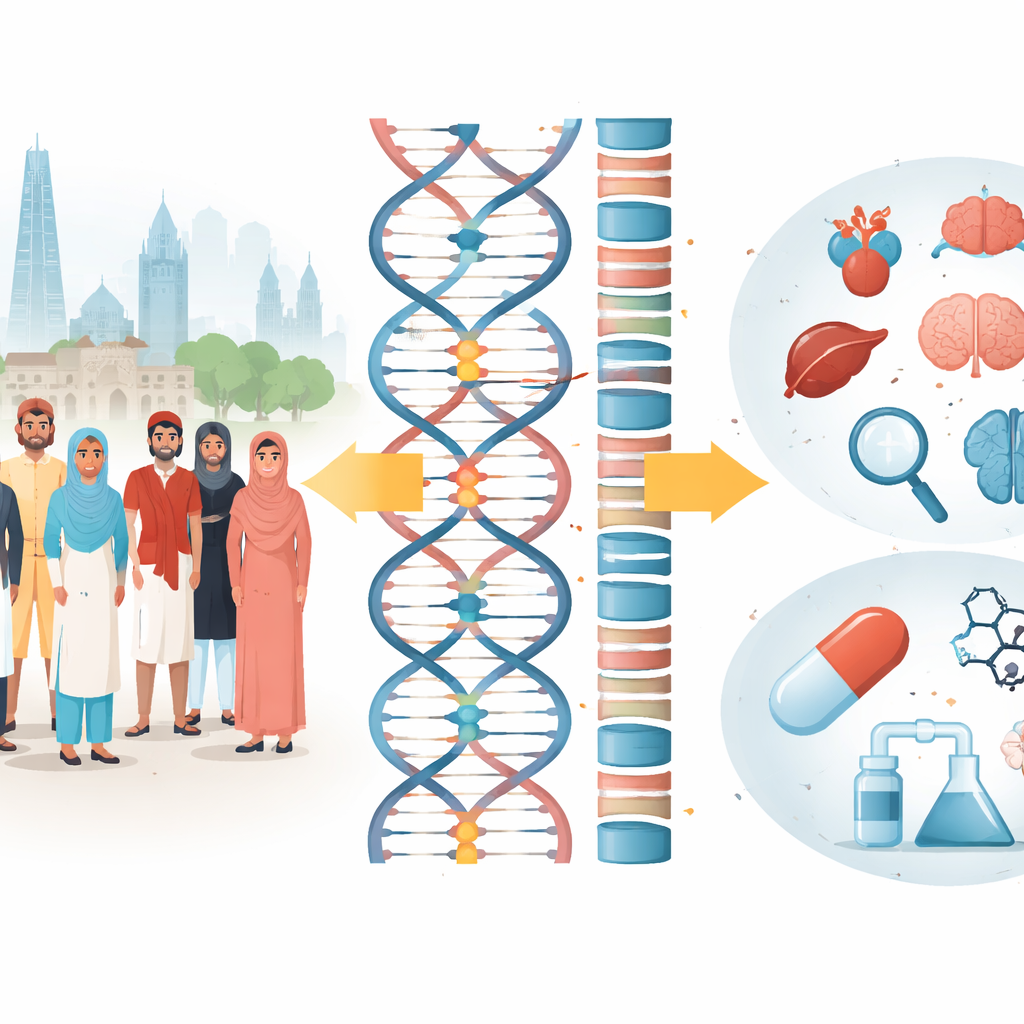
Who Was Studied and What Was Sequenced
The work is based on the Genes & Health project, an ongoing study of British South Asians living mainly in East London. The team analyzed the protein-coding portion of the genome—the exome—in 44,028 adults and linked these data to their lifetime electronic health records from the UK National Health Service. Compared with large public genetic databases, over a quarter of the DNA changes they observed had never been seen before, and many more were far more common in this community than in Europeans. Because parental relatedness is relatively frequent in this group, long stretches of DNA are inherited identically from both parents, increasing the chance that rare gene-disrupting variants appear in double dose.
Unearthing Hidden Gene–Health Connections
Using this exome resource, the researchers scanned 645 different health-related traits, from blood tests to hospital diagnoses, to find rare variants that strongly influence health. They uncovered thousands of significant associations, including more than 100 gene–trait links not previously reported. Many of these involved ultra-rare changes that are absent from standard reference datasets but happened to be more common in this South Asian cohort. For example, rare variants in a gene involved in moving vitamin B12 inside cells showed clear effects on vitamin B12 levels in the blood. By combining their results with those from the much larger UK Biobank study, they showed that including ancestrally diverse groups can boost discovery power, particularly for heart and circulation diseases where certain impactful variants are more frequent or have stronger effects in South Asians.
Living “Gene Knockouts” as Windows into Biology
A standout feature of this study is the systematic catalog of people who completely lack the function of a gene because both copies carry damaging changes. The authors identified 2,991 such genes with at least one adult “knockout” carrier, adding more than 500 genes not previously known to be tolerable in humans. Some of these genes are already implicated in recessive genetic diseases; by carefully examining medical records of knockout carriers, the team could clarify whether uncertain variants are truly harmful. In several cases, individuals with two damaged copies of a gene showed classic disease-related lab results and diagnoses, helping to upgrade those variants toward a disease-causing status. In other genes, adults with complete loss showed surprisingly mild or no major health problems, suggesting that blocking those genes might be relatively safe.
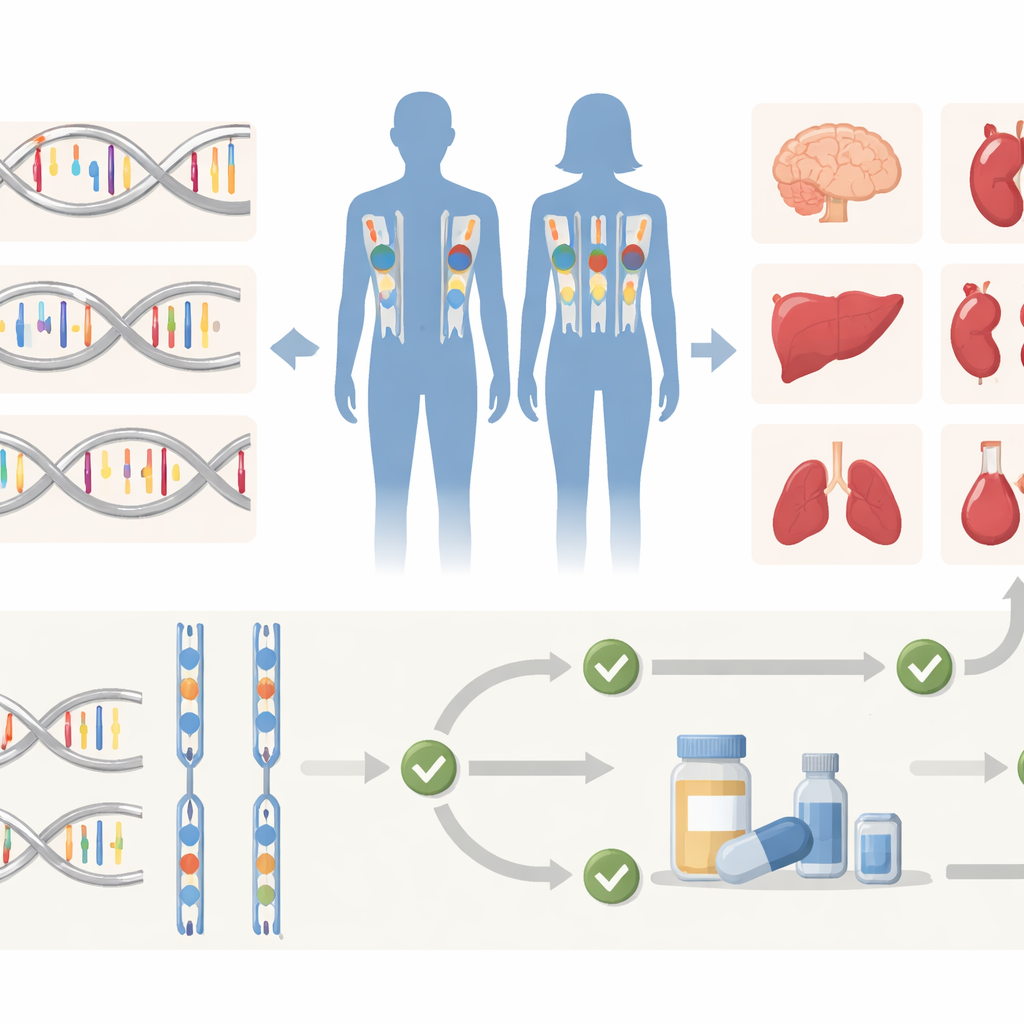
Clues for Designing Safer and More Effective Medicines
Because many modern drugs work by partially blocking a gene’s activity, naturally occurring human knockouts act as living test cases for what long-term, strong inhibition might do. The researchers cross-referenced their knockout gene list with drug-development data. They found that drugs aimed at genes with known adult knockouts were more than twice as likely to pass early safety testing in phase 1 clinical trials compared with drugs targeting genes without such evidence. Case studies underline this point: individuals lacking a bile acid transporter gene had markedly lower “bad” cholesterol, mirroring the benefits seen when that gene is targeted by experimental medicines, and a person missing a fat-regulating gene had dramatically reduced blood triglycerides, again in line with ongoing therapies. In contrast, a knockout in a growth factor receptor gene was associated with very high blood sugar, echoing the risk of raised glucose levels seen when that pathway is blocked in cancer trials.
What This Means for the Future of Health
By building a large, richly described genetic resource in an underrepresented community, this study broadens our picture of how human genes shape disease and drug response. It shows that studying populations with higher rates of relatedness can reveal many more natural gene “off” switches, which in turn illuminate both the risks of rare inherited conditions and the promise or pitfalls of new medicines. As Genes & Health expands beyond 100,000 participants and layers in deeper molecular readouts, it is poised to yield many more discoveries that benefit not only British South Asians but people worldwide.
Citation: Kim, H.I., DeBoever, C., Walter, K. et al. Exome sequencing and analysis of 44,028 British South Asians enriched for high autozygosity. Nat Genet 58, 821–830 (2026). https://doi.org/10.1038/s41588-026-02553-7
Keywords: human knockouts, South Asian genomics, rare genetic variants, drug target validation, autozygosity