Clear Sky Science · en
Genomic analyses implicate hormonal and metabolic dysregulation in polycystic ovary syndrome
Why this condition matters to many people
Polycystic ovary syndrome, or PCOS, affects up to one in ten women of reproductive age and can cause irregular periods, excess hair growth and difficulty becoming pregnant. It is also linked to weight gain and higher risk of diabetes and heart disease. This study uses the power of modern genetics and blood protein measurements in more than half a million people to untangle why PCOS develops, how it connects to hormones and metabolism, and what it may mean for health across the whole lifespan for both women and men. 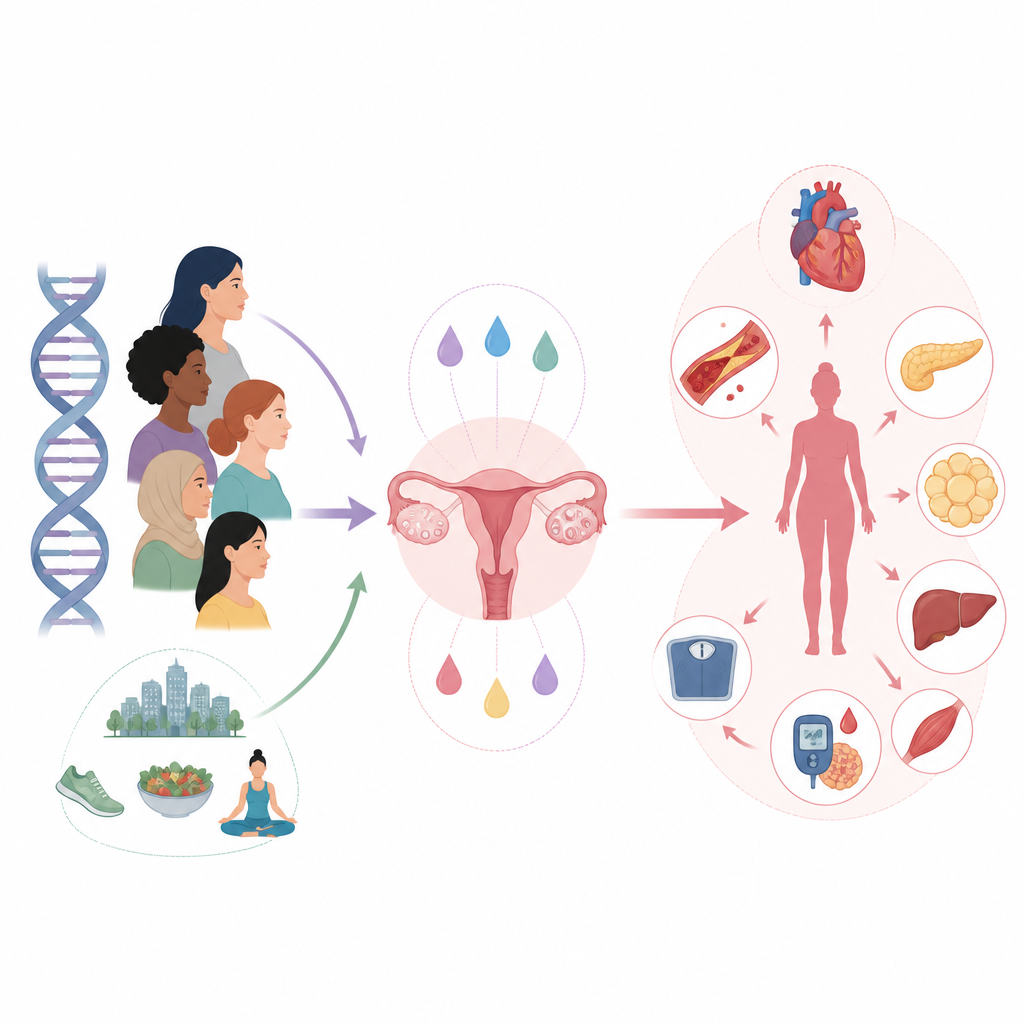
Looking into the genome for clues
The researchers combined genetic data from 20,818 women with PCOS and 523,695 women without the condition. By scanning the entire genome they expanded the number of known risk regions from 16 to 29. Many of these regions sit near genes involved in hormone production and signaling, including those that control the brain’s messages to the ovary and the balance of sex hormones in the blood. One region overlaps a well known obesity gene, reinforcing the idea that higher body weight can increase the chance of developing PCOS but is only part of the story.
Hormones, egg supply and reproductive timing
When the team compared PCOS risk regions with genetic studies of other traits, they saw strong links with the timing of menopause, levels of reproductive hormones and markers of egg reserves. In particular, versions of genes that raised PCOS risk also tended to be associated with later age at natural menopause and higher levels of a hormone that reflects the number of small growing follicles in the ovary. This suggests that women predisposed to PCOS often start out with a larger pool of available eggs that persists longer through life. The study also implicates changes in key hormones that control egg growth and ovulation, supporting the idea that PCOS arises from disrupted hormone feedback between the brain, pituitary gland and ovary.
Metabolic fingerprints in the blood
Beyond DNA, the scientists examined thousands of blood proteins in more than 20,000 women and asked which ones were associated with a broad diagnosis of ovarian dysfunction that includes PCOS. They identified 31 proteins, many involved in handling fats, cholesterol and sugar, as well as enzymes that help make sex hormones. Some proteins are already known players in cholesterol metabolism and type 2 diabetes, while others may shape how the body responds to a high fat diet. By connecting these proteins back to the genetic risk regions, the authors began to sketch pathways that link PCOS biology to long term changes in metabolism. 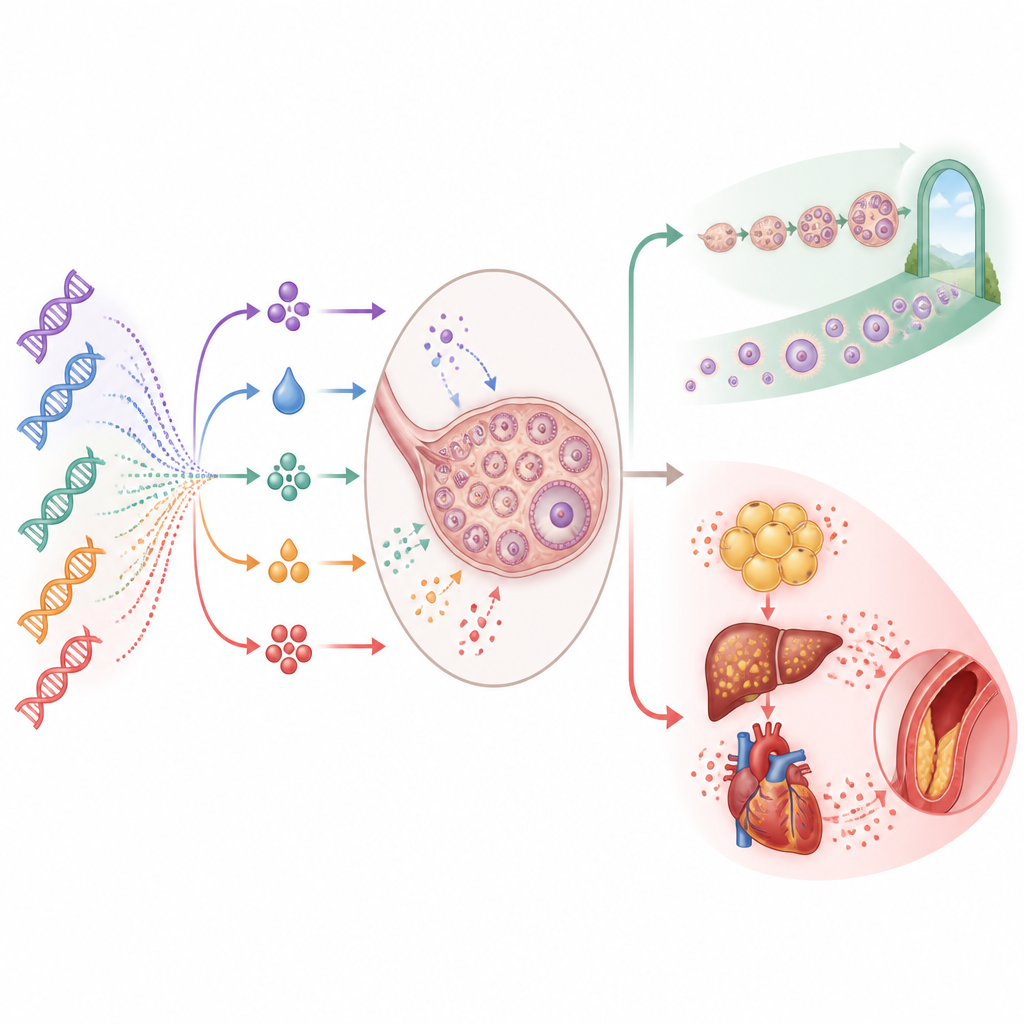
Shared risks for women and men
To see how PCOS risk might influence other diseases, the team built a polygenic risk score that reflects the combined effect of more than a million genetic variants. In the UK Biobank, a large population study, people with higher scores had greater chances of obesity, type 2 diabetes and coronary artery disease, and less favorable levels of blood fats and blood sugar. These patterns appeared in both women and men, even though only women can be diagnosed with PCOS, suggesting that underlying hormonal and metabolic factors are shared between the sexes. Some of these links weakened after accounting for body mass index, showing that higher weight explains part, but not all, of the connection.
Fertility trade offs across the lifespan
Because PCOS is a leading cause of ovulation related infertility, a key question is why genes that predispose to it remain so common. The study offers a possible answer. Genetic susceptibility to PCOS was tied to a larger number of eggs retrieved during in vitro fertilization and to later age at last birth, but it was not clearly related to overall family size or lifelong childlessness. This hints at a balancing effect: while PCOS can reduce fertility at younger ages, the associated larger and longer lasting egg supply may extend the window for having children, helping keep these genetic variants in the population.
What this means for lifelong health
Overall, the work paints PCOS as a condition rooted in hormone regulation and egg supply, with strong ties to the body’s handling of weight, fats and sugar. Rather than being a disorder of the ovary alone, it reflects a whole body pattern that can affect health well beyond the reproductive years. For people with a genetic tendency toward PCOS, the study suggests a mix of costs and benefits: a larger egg reserve and potentially longer reproductive span, but also a lifelong increase in metabolic and heart related risks that affect both women and men.
Citation: Moolhuijsen, L.M.E., Zhu, J., Mullin, B.H. et al. Genomic analyses implicate hormonal and metabolic dysregulation in polycystic ovary syndrome. Nat Genet 58, 1040–1050 (2026). https://doi.org/10.1038/s41588-026-02543-9
Keywords: polycystic ovary syndrome, reproductive hormones, genetic risk, metabolic health, menopause timing