Clear Sky Science · en
Coral microbiomes as reservoirs of unknown genomic and biosynthetic diversity
Hidden helpers of coral reefs
Coral reefs are famous for their colourful fish and intricate rock-like structures, but much of their true richness is invisible to the naked eye. Living in and on reef-building corals is a vast community of microscopic partners—bacteria and other microbes—that quietly produce a wealth of useful molecules. As climate change and pollution drive reefs into decline, this paper asks a pressing question: what unseen genetic and chemical treasures might we lose along with the corals themselves?
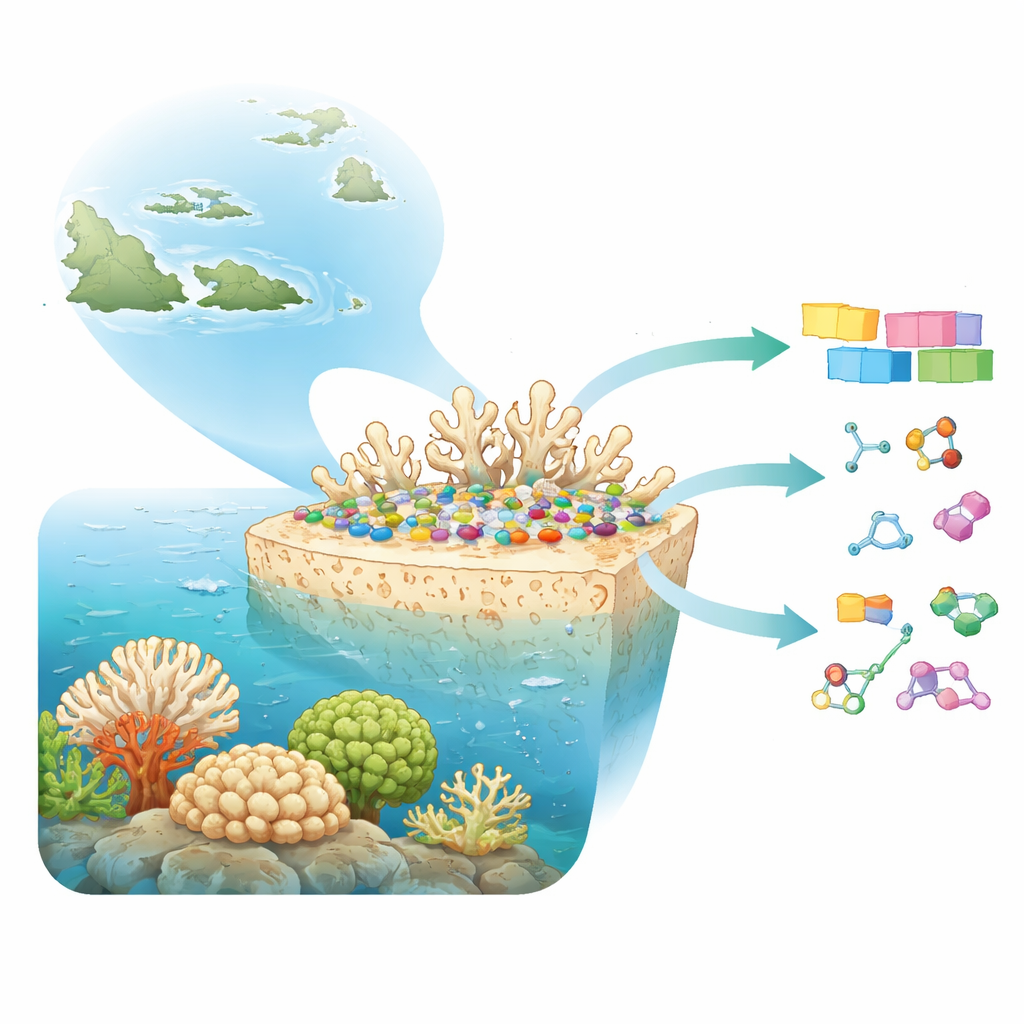
Exploring a ocean-wide coral journey
The study draws on the Tara Pacific expedition, a three-year voyage that sampled corals and surrounding seawater at 99 reefs across 32 Pacific islands. Researchers focused on three common reef-building corals—two stony corals and a fire coral—and combined these new samples with hundreds of existing datasets from other corals and sponges. Instead of culturing microbes in the lab, they sequenced all DNA in each sample and computationally pieced together individual microbial genomes. This produced more than 13,000 high-quality genomes from coral and sponge microbes, forming a new resource called the Reef Microbiomics Database.
New species in a familiar habitat
When the team compared their genomes to existing references, they discovered that nearly 90% of the 4,224 microbial species they identified had never been seen in such detail before, and almost all of those from Tara Pacific corals were completely new to genome databases. Microbial communities differed sharply between corals and surrounding seawater, and even between different coral types; most species were tied to a specific host. Only a small fraction of coral microbes showed up in nearby water, and their numbers dropped quickly with distance from the coral surface. This tight host association suggests that corals act as distinct micro-habitats that shelter unique microbial lineages.
Genetic treasure chests inside microbes
Beyond counting species, the authors asked what these microbes can do. They catalogued over 16 million distinct genes from the reef-associated microbes and found that, on average, each species carries more genes and larger genomes than typical open-ocean bacteria. Many of these genes lack known functions, hinting at unexplored biology. Of particular interest are biosynthetic gene clusters—stretches of DNA that encode pathways for making specialized small molecules, including potential antibiotics and other drugs. The coral microbiome held more, and more varied, biosynthetic clusters per species than microbes from the open ocean, rivaling or surpassing well-known natural-product sources such as sponges. Fire corals stood out as especially rich hosts for biosynthetic microbes.
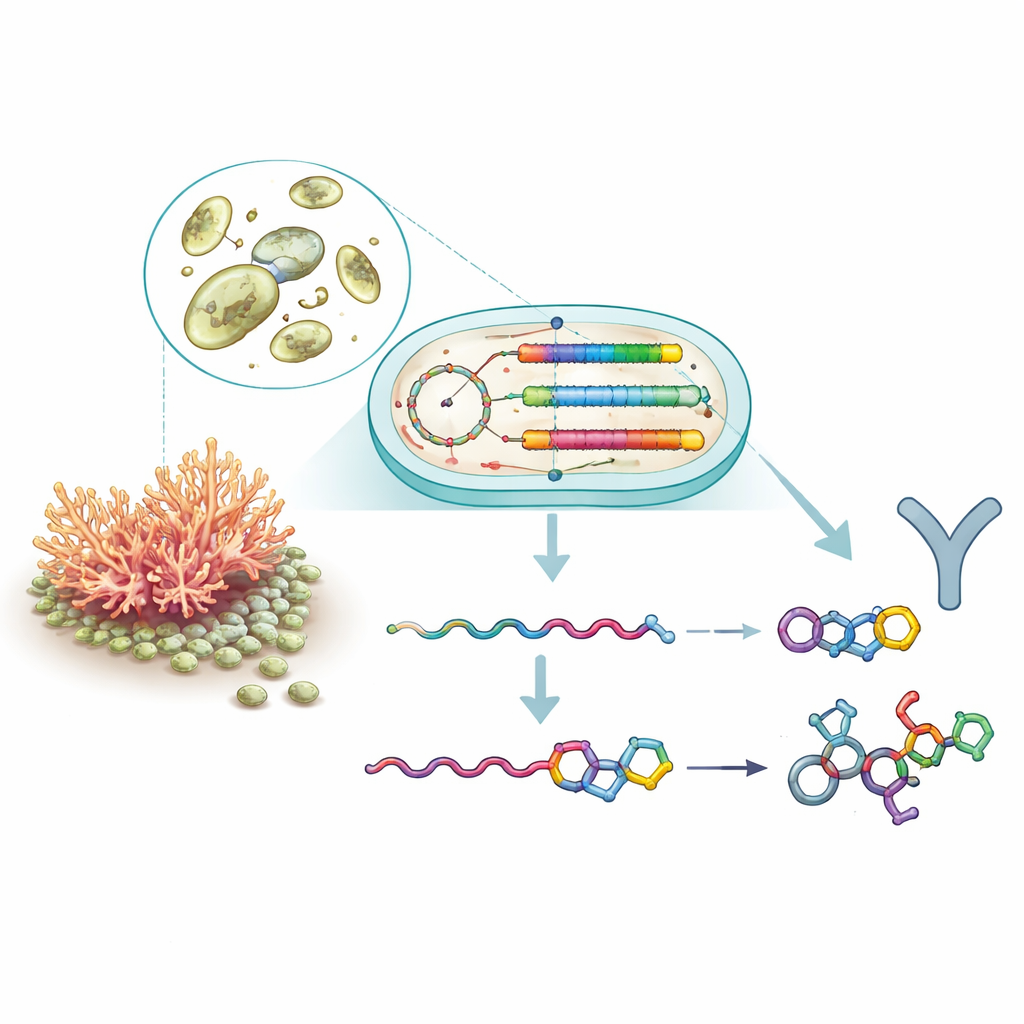
Unusual coral bacteria and novel chemistry
Among the most promising microbes were members of a bacterial group called Acidobacteriota, which turned out to contain species with dozens of biosynthetic pathways each. These bacteria were abundant and widespread across the surveyed corals. The researchers zoomed in on several gene clusters predicted to make small, ring-rich peptides. Using synthetic biology, they reconstructed these pathways in laboratory bacteria and tracked how the encoded enzymes modified the peptides. They uncovered previously unknown enzyme activities, including a member of a common oxidase family that can form a chemical ring called a thiazole without relying on the usual energy-consuming machinery. The resulting peptides showed potent inhibition of a human immune-system enzyme, illustrating how coral microbes can generate molecules with direct biomedical relevance.
Why this matters for reefs and people
Taken together, the work reveals reef-building corals as hosts to a largely uncharted galaxy of microbial genes and chemistries. Many of the compounds encoded in these genomes are unlike anything seen before, and the newly found enzymes provide fresh tools for engineering drugs and other bioactive molecules in a sustainable way. At the same time, the tight link between particular microbes and particular coral hosts means that ongoing reef loss is also a loss of unique microbial diversity and the molecular possibilities it carries. To a lay reader, the message is clear: protecting coral reefs is not just about saving beautiful ecosystems, but also about preserving a vast, still-unopened library of natural chemicals that could benefit medicine, biotechnology and human wellbeing.
Citation: Wiederkehr, F., Paoli, L., Richter, D. et al. Coral microbiomes as reservoirs of unknown genomic and biosynthetic diversity. Nature 652, 686–693 (2026). https://doi.org/10.1038/s41586-026-10159-6
Keywords: coral microbiome, natural products, biosynthetic gene clusters, marine biotechnology, reef conservation