Clear Sky Science · en
A drug–microbiome–drug interaction impacts co-prescribed medications for Parkinson’s disease
Why gut germs matter for Parkinson’s pills
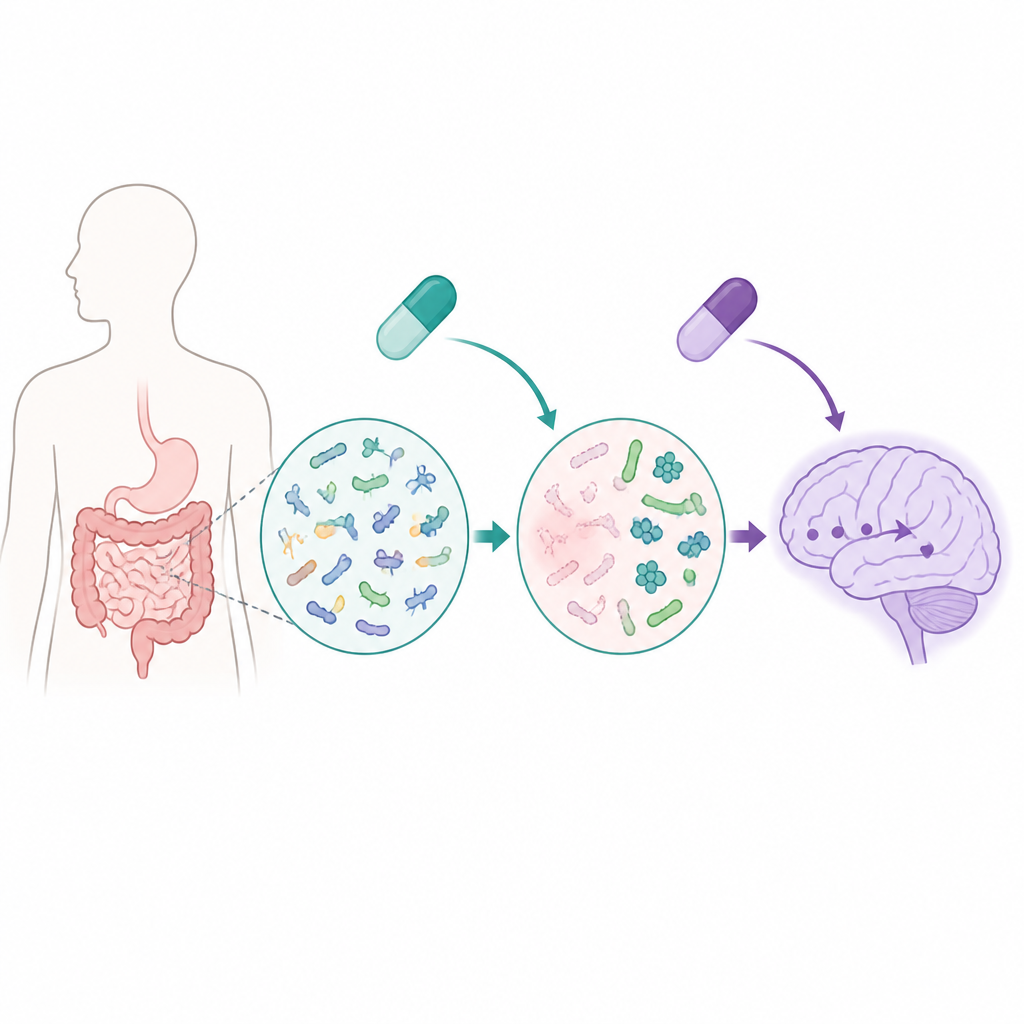
People with Parkinson’s disease often take several drugs at once to keep their symptoms in check. This study reveals that the trillions of microbes living in the gut can reshape how two of these medicines interact with each other. By acting a bit like hidden antibiotics and iron magnets, helper drugs for Parkinson’s therapy can unintentionally change the mix of gut bacteria and the way the main drug is used by the body.
The mainstay drug and its helpers
Parkinson’s disease arises when brain cells do not make enough of the chemical messenger dopamine, leading to tremor, stiffness and slowed movement. Doctors commonly prescribe levodopa, a pill that the body turns into dopamine after it crosses into the brain. Because levodopa is also broken down in the rest of the body before it ever reaches the brain, patients are given extra medicines called COMT inhibitors such as tolcapone and entacapone. These helper drugs are meant to block one of the body’s routes for chewing up levodopa, so that more of it gets to the brain and eases symptoms.
Helper drugs that act like antibiotics
The researchers discovered that these helper drugs do more than block human enzymes. In test tubes and in mice, tolcapone and entacapone also slowed or killed certain gut bacteria, especially members of a group called Bacteroidetes. Other bacteria, including common gut residents like Enterococcus, were far less affected. Many sensitive microbes were able to chemically alter tolcapone into new forms that no longer harmed them, showing that bacteria can both be targets of the drug and help detoxify it. The strength of this hidden antibiotic effect depended on iron, a key nutrient for microbes: tolcapone can latch onto iron outside and inside bacterial cells, changing both its own activity and the stress it causes.
Iron as a switch for microbial responses
By combining genetic experiments and chemical tests, the team found that bacteria with reduced capacity to import iron were more resistant to tolcapone’s toxic effects. In some cases, pulling iron away inside the cell actually protected the microbes, even though it slowed their growth. Adding free iron to growth medium, on the other hand, could trigger rapid non-enzymatic changes that turned tolcapone into less harmful versions. These intertwined effects mean that iron levels in the gut act as a kind of switch that can both weaken the drug’s antibiotic power and shape which microbial species survive treatment.
How the gut community gets remodeled
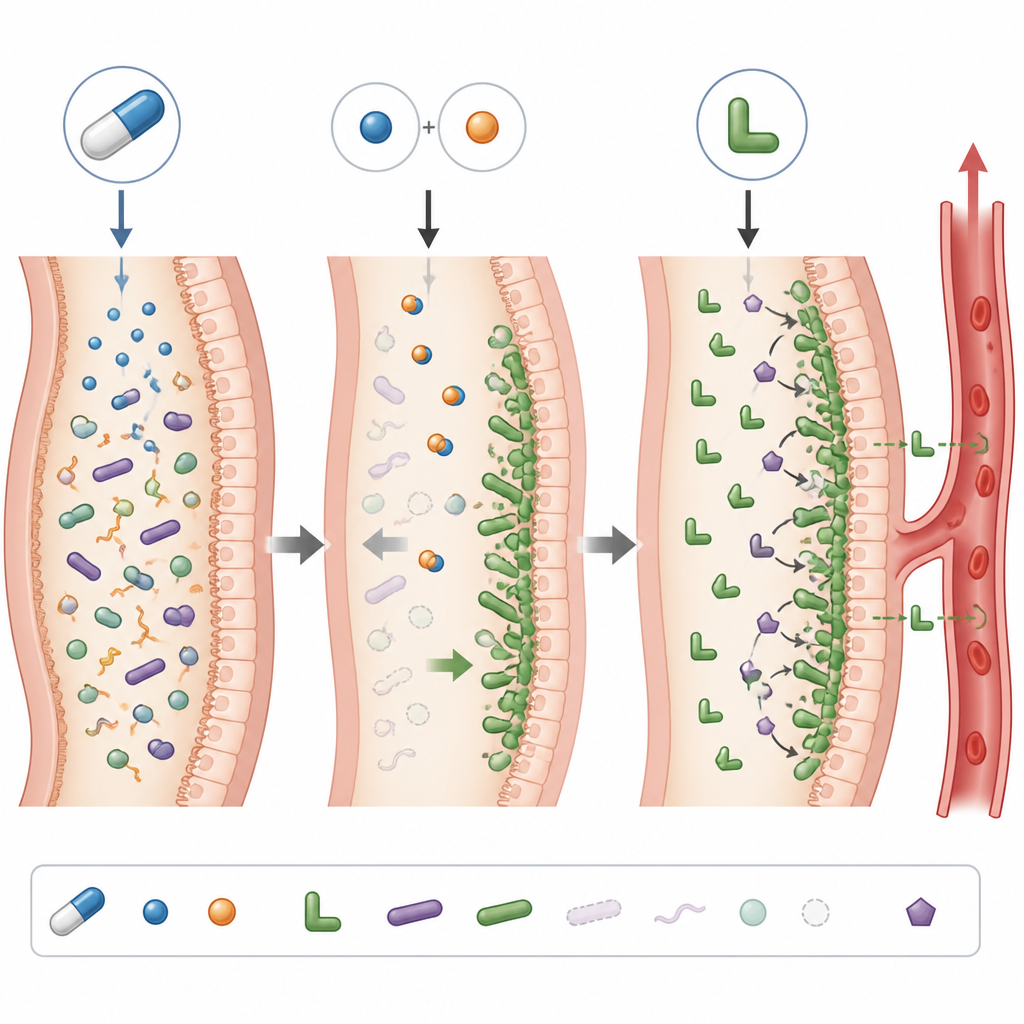
To see what happens in a full gut community, the scientists exposed stool samples from many healthy volunteers to tolcapone in oxygen-free culture dishes. Across these miniature ecosystems, tolcapone lowered overall diversity and consistently knocked back bacteria that were sensitive in earlier tests. At the same time, resistant groups such as Enterococcus and some others expanded. In both lab dishes and specially raised germ-free mice carrying human gut microbes, tolcapone treatment often led to a surge of Enterococcus strains that carry a gene called tyrDC. This gene equips the bacteria with an enzyme that can convert levodopa into dopamine right in the gut.
When microbes rewrite levodopa’s fate
The team then asked how these microbial shifts affect levodopa itself. In several human gut communities, levodopa could be broken down along more than one route. Tolcapone or entacapone treatment nudged these communities toward a pathway where tyrDC-bearing Enterococcus turned levodopa into dopamine before it could be absorbed. By adding or removing specific Enterococcus strains, and by using mutant strains lacking the tyrDC gene, the researchers showed that this single microbial ability was necessary and sufficient for the shift. In mice, tolcapone feeding also raised the levels of tyrDC-positive Enterococcus in the small intestine, the main site where levodopa is normally taken up into the blood.
What this means for people with Parkinson’s
Put simply, a drug given to protect levodopa can change the gut ecosystem in ways that may undercut levodopa’s benefit for some individuals. By favoring bacteria that eat levodopa, tolcapone and related helpers could lower the amount of drug that reaches the brain and alter the mix of byproducts made in the gut. The study does not give treatment advice, but it shows that gut microbes can sit between one medicine and another, shaping how combined therapies work. In the future, measuring features of a person’s microbiome, such as the presence of tyrDC-carrying Enterococcus, may help predict who is most likely to experience these drug–microbe–drug interactions.
Citation: Verdegaal, A.A., Oh, J., Javdan, B. et al. A drug–microbiome–drug interaction impacts co-prescribed medications for Parkinson’s disease. Nat Microbiol 11, 1387–1409 (2026). https://doi.org/10.1038/s41564-026-02299-2
Keywords: Parkinson’s disease, gut microbiome, levodopa metabolism, drug interactions, Enterococcus