Clear Sky Science · en
Reinvigorating COTL1high NK cells via GITR signalling overcomes immune checkpoint blockade resistance in tsMHC-I-impaired tumours
Why some cancer immunotherapies fail and others work
Immune checkpoint drugs have transformed cancer care, but most patients still do not benefit. This study asks a puzzling question: why do some liver tumors that should be invisible to the immune system still shrink with these drugs? By following the behavior of a special group of immune cells called natural killer cells, the researchers uncover a hidden rescue pathway that can restore the body’s anti-tumor defenses.
When tumors hide from the immune system
Many immunotherapies rely on killer T cells that recognize tumor “ID tags” on the cell surface. These tags are carried by a set of molecules known as MHC class I. Some tumors dodge attack by lowering these tags, creating what doctors call a “cold” tumor with few active T cells and poor response to treatment. Yet in several clinical trials of liver cancer, the authors noticed that about a quarter of patients with low MHC class I levels still responded to drugs targeting PD-1 or PD-L1. This unexpected group of responders suggested that another arm of the immune system might be stepping in when T cells are handicapped.
A standout squad of natural killer cells
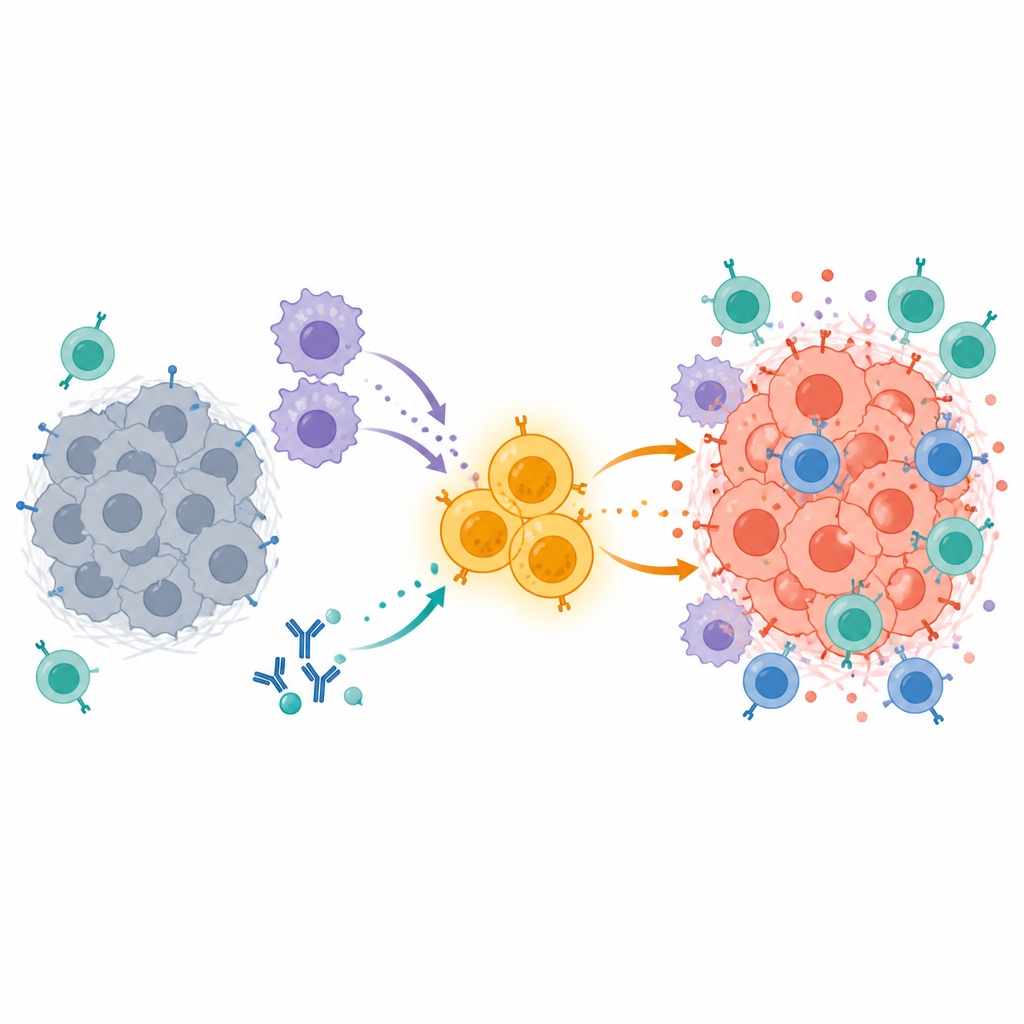
By analyzing tumor samples from multiple hospitals and large genetic datasets, the team found that responders with low MHC class I had an unusually high number of natural killer (NK) cells inside their tumors. Using single-cell sequencing and advanced imaging, they pinpointed a distinct NK subset marked by high levels of a protein called COTL1. These COTL1-high NK cells lived close to tumor cells and to immune “support” cells called macrophages, and they produced large amounts of the signaling molecule interferon gamma. Patients whose tumors contained more of these NK cells were more likely to benefit from checkpoint therapy, not only in liver cancer but also in lung, skin, and several other cancers.
A three-way conversation between drug, macrophage, and NK cell
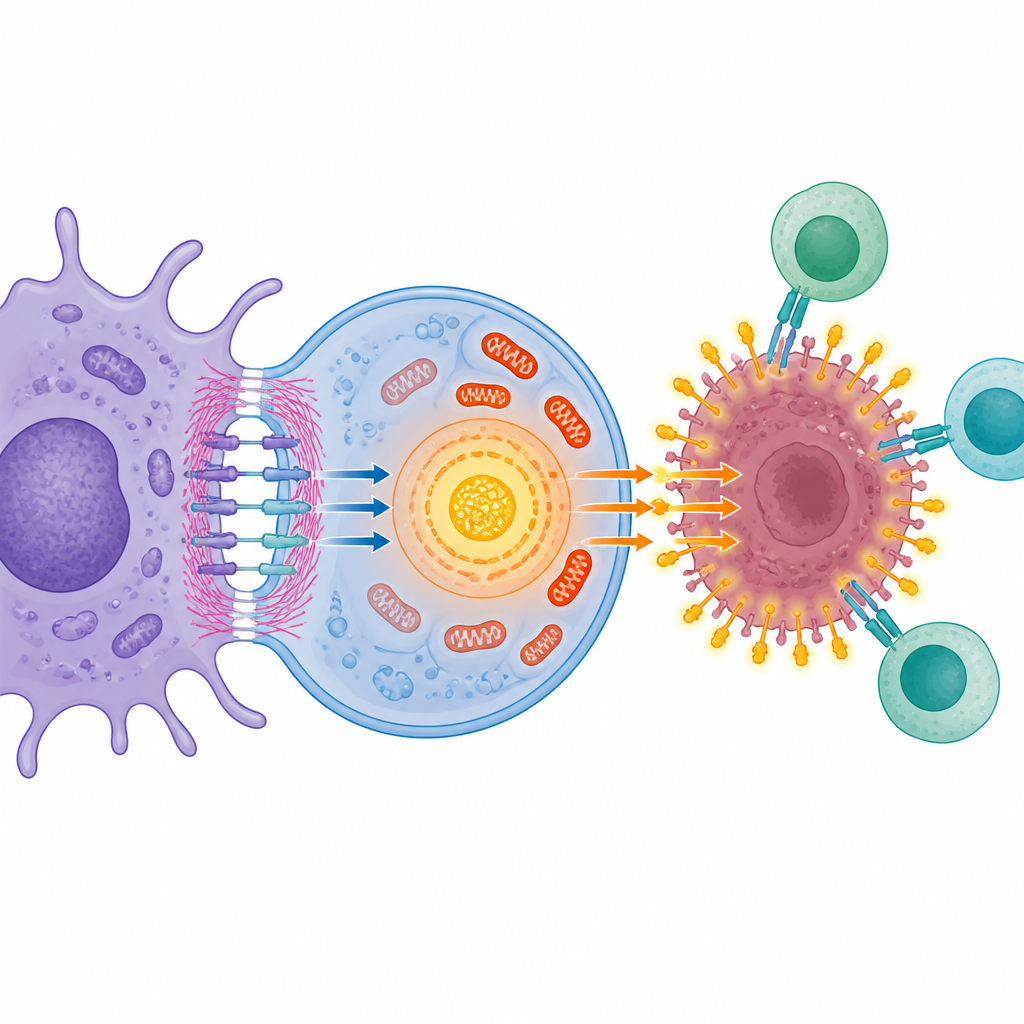
The researchers then traced how checkpoint therapy rewires communication in the tumor. In these liver cancers, macrophages often carry PD-L1 on their surface and also a partner signal called GITRL. COTL1-high NK cells display the matching receptor GITR. Under normal conditions, engagement of PD-1 by PD-L1 dampens NK cell activity, even in the presence of GITRL. When PD-1 or PD-L1 is blocked by antibody drugs, this brake is lifted and the GITRL–GITR signal can flow. Direct contact between macrophages and NK cells at tight “immune synapses” allows GITR signaling to switch on the NK cells, which then ramp up interferon gamma production and other attack programs.
Recharging NK cells from the inside out
Zooming in further, the study shows that GITR signaling does more than flip a simple on–off switch. It boosts the NK cells’ energy factories, their mitochondria, increasing oxygen consumption and fuel processing. This metabolic surge feeds into epigenetic changes: chemical marks on DNA-associated proteins that open up key genes. One transcription factor, RBPJ, becomes more active and helps sustain the production of both interferon gamma and COTL1 itself. As a result, COTL1-high NK cells form more stable contacts with macrophages and stay in a highly functional state even in the harsh tumor environment.
Turning hidden tumors into visible targets
The consequences of this NK cell awakening ripple outward. Interferon gamma from COTL1-high NK cells pushes tumor cells to restore their MHC class I tags, making them visible again to killer T cells. In mouse models with low MHC class I, removing these NK cells or blocking their interferon receptor on tumor cells wiped out the benefit of PD-L1 blockade. Conversely, adding a GITR-stimulating antibody together with PD-L1 blockade produced stronger tumor control, more active NK cells and T cells, fewer suppressive regulatory T cells, and higher MHC class I on tumors. Similar patterns appeared in ex vivo cultures of human liver tumors, where combining GITR activation with PD-L1 blockade made previously resistant samples more sensitive to killing.
What this means for patients
For people whose tumors have lost some of their immune “ID tags,” this work offers an explanation for why immunotherapy still helps a subset of patients and suggests a way to widen that group. COTL1-high NK cells can act as first responders, restoring tumor visibility and rallying T cells when standard pathways falter. Drugs that activate the GITR signal, especially in combination with PD-1 or PD-L1 blockers, may help overcome resistance in these hard-to-treat cancers and could guide future treatment strategies across several tumor types.
Citation: You, W., Hu, C., Zhang, Y. et al. Reinvigorating COTL1high NK cells via GITR signalling overcomes immune checkpoint blockade resistance in tsMHC-I-impaired tumours. Nat Cell Biol 28, 957–971 (2026). https://doi.org/10.1038/s41556-026-01925-9
Keywords: natural killer cells, immune checkpoint blockade, hepatocellular carcinoma, GITR signalling, MHC I downregulation