Clear Sky Science · en
Self-amplifying COVID-19 mRNA vaccination induces longitudinally enhanced antibody function in a Phase 3 trial
Why longer lasting COVID boosters matter
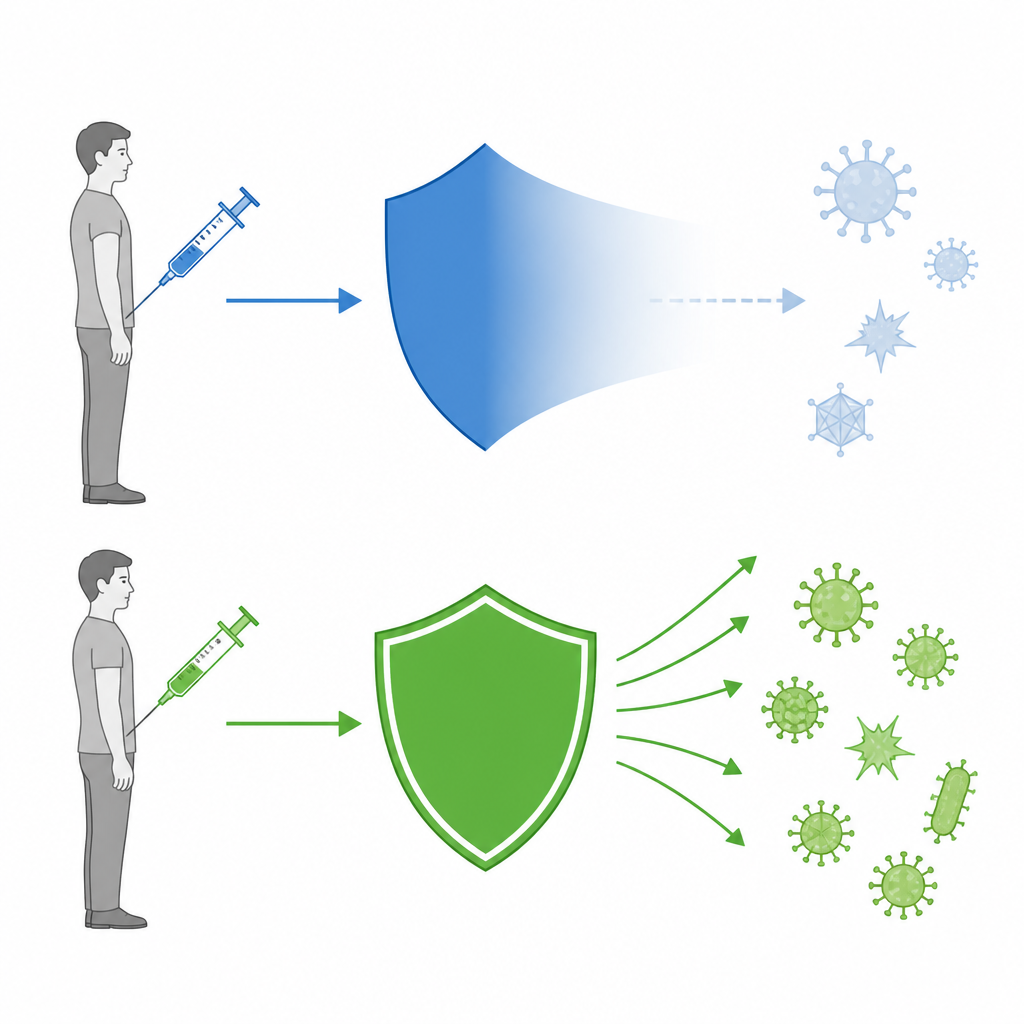
Many people now rely on booster shots to keep their protection against COVID-19 up to date, but antibody levels from standard vaccines tend to fade over time. This study asks a simple question with big public health implications: can a newer type of messenger RNA booster keep our infection fighting antibodies working longer and against a wider range of coronavirus variants than today’s familiar shots?
A new twist on the mRNA idea
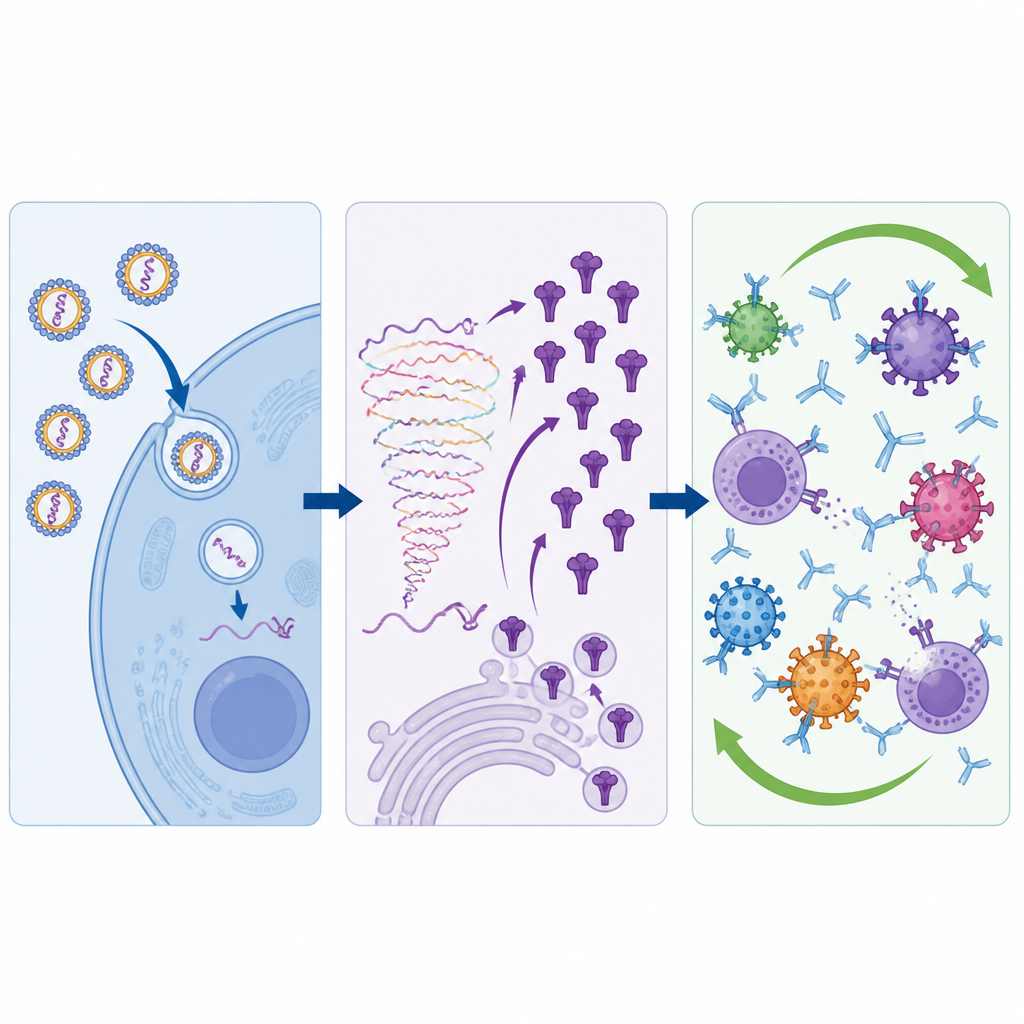
Familiar COVID-19 vaccines use messenger RNA to teach our cells to make the virus’s spike protein, which then trains the immune system. The booster tested here, called ARCT-154, uses a “self amplifying” form of RNA that can copy itself inside cells for a limited time, leading to longer production of spike protein from a smaller starting dose. Researchers compared this self amplifying booster to the standard mRNA booster BNT162b2 in people who had already received three earlier mRNA doses. Everyone in the study got either ARCT-154 or BNT162b2 as a fourth shot, and blood samples were collected over the course of a year.
Tracking antibodies over a full year
The team did not stop at measuring simple antibody counts. Instead, they used a broad laboratory toolkit to examine which kinds of antibodies were present, how strongly they attached to different versions of the spike protein, and whether they could recruit immune cells to attack infected targets. They looked at responses to the original virus spike and to several later variants, including Delta and Omicron sublineages such as BA.5 and XBB.1.5. They also checked reactions to unrelated viruses like influenza and Ebola to make sure any changes were truly driven by the COVID-19 boosters.
Self amplifying booster slows the fade
Both boosters raised antibody responses by about one month after vaccination, as expected. After that peak, however, important differences emerged. In people who received the standard mRNA booster, total antibody levels against the spike protein began to drop between one and three months. In contrast, those who received the self amplifying booster showed little or no decline over that same period, suggesting an extended window of stimulation before levels slowly decreased later in the year. This pattern held not only for the original spike but also for several drifted variant spikes, while antibodies to unrelated control viruses stayed essentially unchanged in both groups.
Keeping powerful immune helpers on duty
Beyond how many antibodies were present, the researchers studied how well those antibodies could call in other immune defenses. One key feature was the ability to bind a receptor on natural killer cells that triggers them to destroy infected cells. Antibodies from the self amplifying booster group kept this activating feature for longer, especially for the original spike and for the BA.5 variant that was circulating during the study. Measurements of natural killer cell responses in the lab matched this signal, showing more sustained activity in the self amplifying booster group. Other antibody driven tasks, such as helping immune cells gobble up virus coated particles, tended to wane in both groups but showed hints of slower decline with the new booster.
What this means for future COVID shots
For people deciding whether all boosters are the same, this study suggests that how a vaccine delivers its instructions can shape not just the height of the antibody response but also how long it lasts and how vigorously it engages the rest of the immune system. The self amplifying mRNA booster produced a longer lasting, more activating antibody profile against both the original coronavirus and several newer variants, without noticeably stirring responses to unrelated viruses. While the two booster strategies looked more similar by the end of the year, the slower fade and broader activity seen with the self amplifying approach hint that this platform could become a useful tool for building durable protection against evolving respiratory viruses.
Citation: Levine, K.S., Blanc, R., Wang, Q. et al. Self-amplifying COVID-19 mRNA vaccination induces longitudinally enhanced antibody function in a Phase 3 trial. npj Vaccines 11, 106 (2026). https://doi.org/10.1038/s41541-026-01431-x
Keywords: COVID-19 boosters, self amplifying mRNA, antibody durability, vaccine immunity, SARS-CoV-2 variants