Clear Sky Science · en
The current landscape of therapeutic vaccination approaches for treatment of HPV-dependent malignancies
Why a Shot Against Cancer Matters
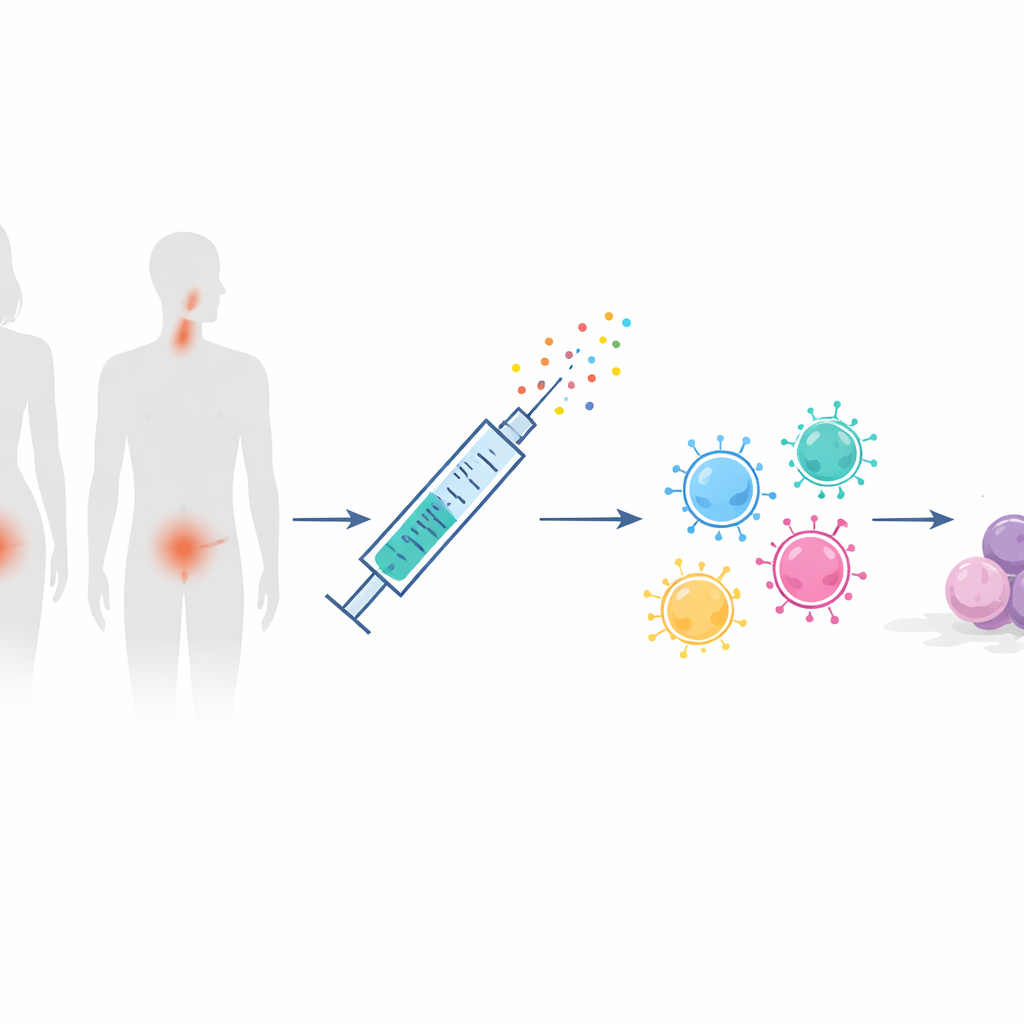
Most people know that human papillomavirus (HPV) can cause cervical cancer, but fewer realize it also drives cancers of the anus, penis, vulva, vagina, and throat. Standard treatments like surgery, radiation, and chemotherapy can save lives, yet they often leave lasting side effects and are not always curative. This review article explores a new frontier: therapeutic HPV vaccines designed not to prevent infection, but to help the immune system recognize and destroy HPV-driven precancerous lesions and cancers that already exist.
From Common Virus to Serious Disease
HPV is a large family of viruses that infect the skin and mucous membranes; nearly everyone will encounter it at some point in life. Most infections clear on their own, but a subset of “high-risk” HPV types—especially HPV16 and HPV18—can linger and gradually push cells toward cancer. Before a full cancer forms, these infections often create abnormal patches of tissue known as intraepithelial neoplasia (for example, CIN in the cervix). Such lesions are far more common than invasive cancers and can cause great anxiety, frequent medical visits, and, when treated surgically, fertility and childbirth risks. Current preventive vaccines, made from empty virus-like shells of the L1 protein, are very effective at blocking new infections, but they cannot help people who are already infected or who have lesions.
Turning Viral Weaknesses Into Vaccine Targets
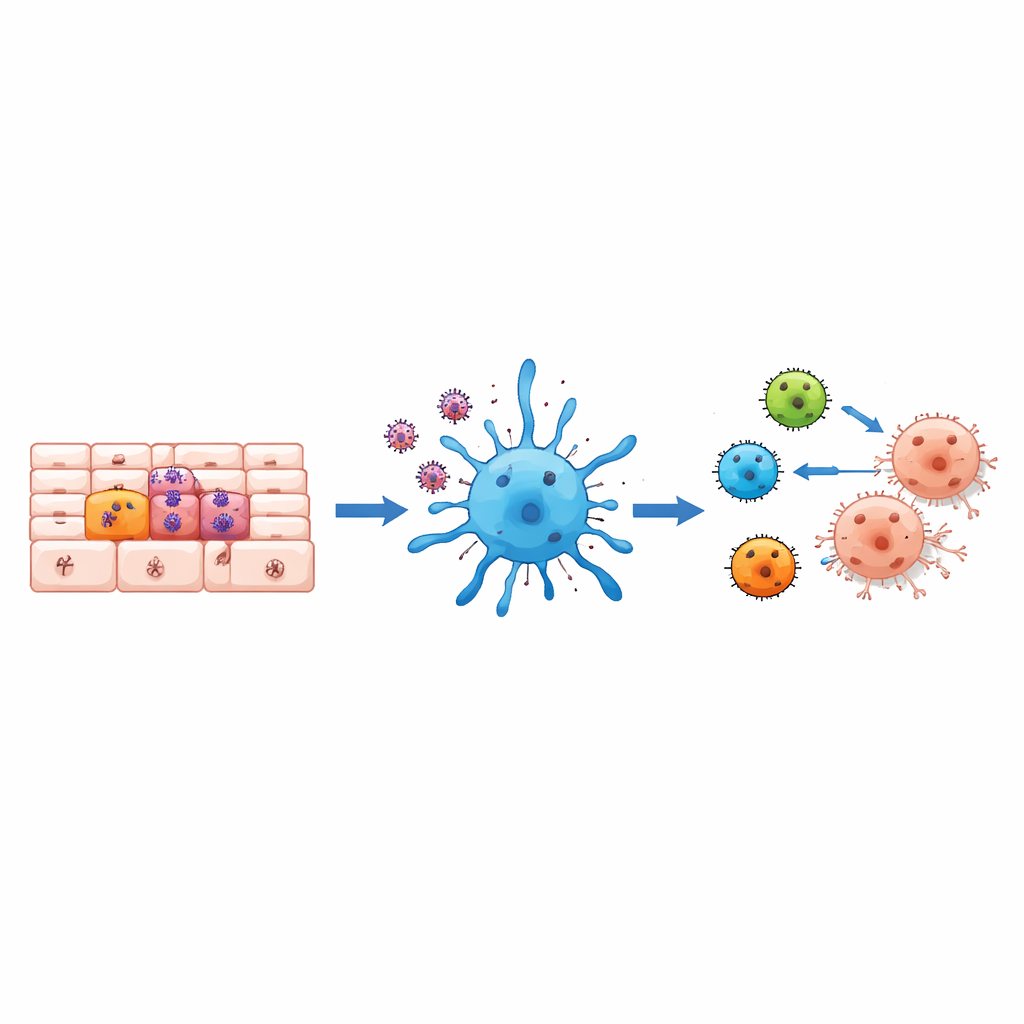
Therapeutic HPV vaccines exploit a central vulnerability of HPV-related tumors: they depend on two viral “workhorse” proteins, called E6 and E7, to keep infected cells dividing and to block normal safety checks like p53 and the Rb pathway. Because the tumor cannot survive without these proteins, it cannot simply stop making them to hide from the immune system. Fragments of E6 and E7 appear on the surface of infected cells as foreign flags that immune cells can, in principle, recognize. Therapeutic vaccines are designed to boost killer T cells that home in on these flags and selectively destroy abnormal cells while sparing healthy tissue. Other early HPV proteins, such as E2 and E5, are being explored as targets, but they are not present in all stages of disease.
Many Ways to Teach the Immune System
Researchers are testing a broad array of vaccine formats. DNA and mRNA vaccines deliver genetic instructions for cells to briefly make E6 and E7 fragments, prompting a T cell response; some, like VGX-3100 and GX-188E, have reached large clinical trials. Peptide and protein vaccines supply viral fragments directly, often bundled with powerful immune stimulants. Viral and bacterial vectors—like weakened adenoviruses, poxviruses, or harmless gut bacteria—act as Trojan horses that carry HPV genes into the body and naturally stir strong immunity. Dendritic cell and other cell-based vaccines ex vivo “preload” professional immune cells with HPV antigens before reinfusing them. Each platform balances ease of manufacturing, safety, and the strength and breadth of the T cell response it can induce.
Early Lesions Versus Advanced Cancers
One key lesson from clinical trials is that timing matters. In early lesions, the virus keeps a low profile and dampens local immunity, but the tissue has not yet become deeply immunosuppressive. Several DNA and vector vaccines in women with high-grade cervical or vulvar lesions have shown meaningful rates of lesion regression and viral clearance, sometimes boosted further by pairing with topical immune stimulants. In contrast, advanced cancers create a hostile environment filled with regulatory cells and inhibitory signals that blunt T cell attack. For these tumors, vaccines are being combined with immune checkpoint drugs like anti-PD-1 or anti-PD-L1 antibodies, or with chemo‑ and radiotherapy. Many such combinations show modest but encouraging improvements in tumor shrinkage or disease control, particularly in patients whose tumors already display signs of being inflamed.
Learning From Setbacks and Better Models
Not all vaccine attempts have succeeded. Some promising candidates failed in later-stage trials, showed insufficient benefit over standard care, or proved too toxic, especially certain bacterial vector vaccines. The authors argue that part of the problem lies in preclinical testing that relies heavily on mouse tumor models that do not fully mimic human disease. Subcutaneous tumors in mice, for instance, differ from real mucosal tumors in the cervix or throat, and common mouse immune genes favor responses to viral fragments that humans hardly ever present. Newer “orthotopic” models, which place HPV-driven tumors at the correct anatomical sites, and mice engineered to carry human immune molecules are beginning to give more realistic predictions of how vaccines will perform in people.
Designing Smarter Vaccines With Computers
The review also highlights the growing role of computer-guided design in this field. Using large databases and machine-learning tools, scientists can now predict which short viral fragments will bind human immune receptors, avoid triggering allergies or toxicity, and be recognized across diverse populations. Programs such as NetMHCpan, VaxiJen, and structural modeling tools like AlphaFold help refine vaccine constructs before they are ever made in the lab. These in silico predictions, however, still need careful experimental validation to confirm that the chosen fragments are actually displayed on tumor cells and can provoke strong, durable T cell responses.
What This Means for Patients
Putting all the evidence together, the authors conclude that therapeutic HPV vaccines are closest to clinical impact in the setting of precancerous lesions, where vaccines alone may be able to clear disease with fewer side effects than surgery. For advanced cancers, vaccines will likely find their place as combination partners with checkpoint inhibitors and other therapies, adding specificity and immune memory to existing regimens. Progress will depend on better animal models, rigorous trial designs with well-matched control groups, smart use of biomarkers to identify high‑risk patients, and continued refinement of vaccine design using computational tools. While no single “magic bullet” vaccine has emerged yet, the landscape is rich and rapidly evolving, bringing the idea of treating cancer with highly targeted immune education closer to reality.
Citation: Audouze-Chaud, J., Schlosser, AK. & Riemer, A.B. The current landscape of therapeutic vaccination approaches for treatment of HPV-dependent malignancies. npj Vaccines 11, 89 (2026). https://doi.org/10.1038/s41541-026-01426-8
Keywords: therapeutic HPV vaccines, cervical precancer, cancer immunotherapy, DNA and mRNA vaccines, immune checkpoint inhibitors