Clear Sky Science · en
Chicken vaccination reduces colonization and dissemination of Salmonella serovar Enteritidis with decreased susceptibility to ciprofloxacin
Why Safer Chicken Matters to Everyone
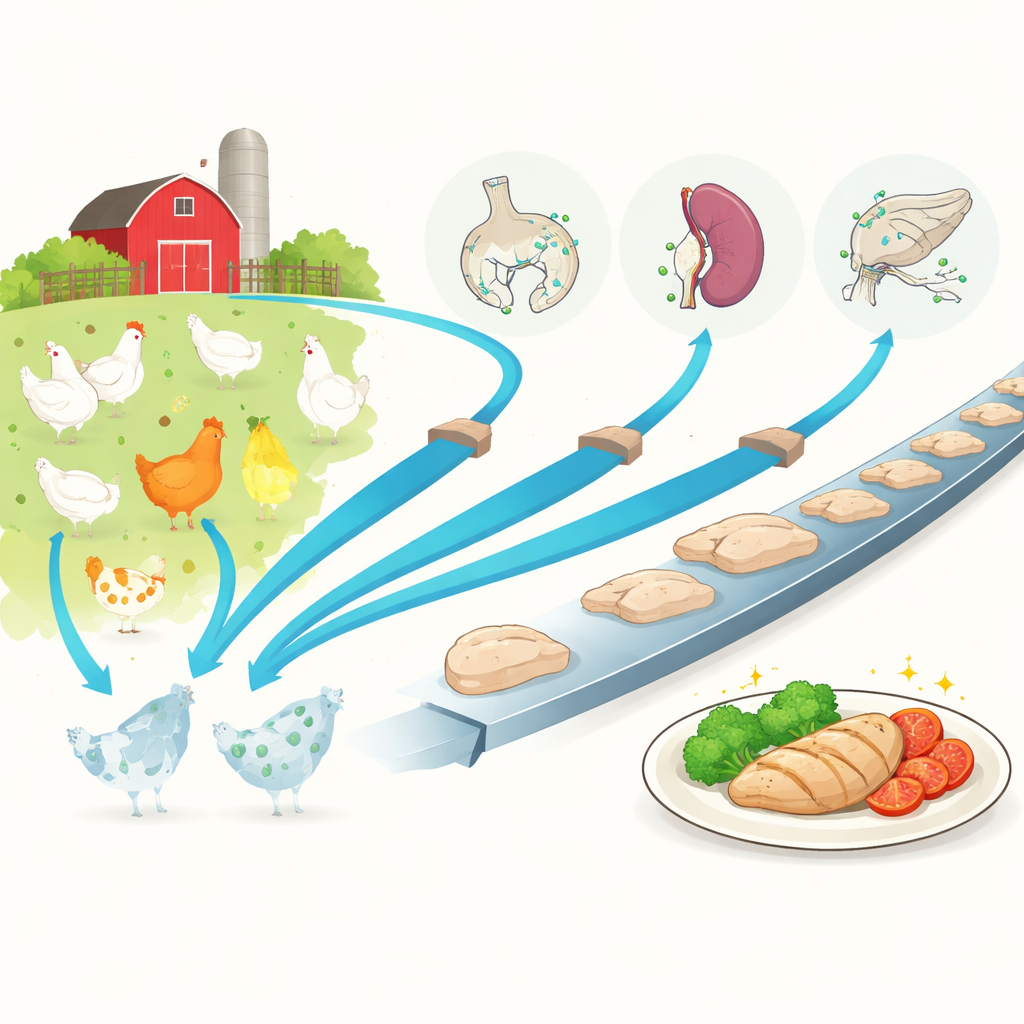
Chicken is a staple on dinner tables around the world, but it can also carry invisible passengers that make people sick. One of the most common culprits is Salmonella Enteritidis, a bacterium that often lives quietly in chickens while causing foodborne illness in humans. Doctors rely on a few powerful antibiotics, such as ciprofloxacin, when infections become severe. Worryingly, more Salmonella strains from chickens and people are showing reduced sensitivity to this drug, raising the risk that treatments may fail. This study explores whether a new chicken vaccine can cut down these hard-to-treat Salmonella infections before they ever reach the kitchen.
A New Shield for Flocks
The researchers tested a live but weakened strain of Salmonella, called BBS 1134, as a vaccine for broiler chickens. This strain is related to Salmonella Typhimurium, not Salmonella Enteritidis, so the team wanted to know if it could still offer cross-protection. Chicks received the vaccine in a way that mirrors commercial practice: a fine spray when they were one day old and a booster dose through drinking water two weeks later. At five weeks of age, all birds, vaccinated and unvaccinated, were given an oral dose of a Salmonella Enteritidis strain that has decreased susceptibility to ciprofloxacin, mimicking a tough, real-world infection challenge.
Keeping Germs Out of Key Organs
After infection, the scientists measured how many Salmonella bacteria were present in the chickens’ intestines and in deeper organs. In vaccinated birds, the numbers of the drug-tolerant Salmonella in the cecum, a major section of the gut, dropped by more than a tenfold to hundredfold compared with unvaccinated birds. The bacteria were also far less likely to reach the spleen, an organ that signals a widespread infection. Most strikingly, the vaccine completely blocked the bacteria from entering the bone marrow at the tested time points, while unvaccinated chickens often carried Salmonella there. Because bone and nearby tissues can end up in mechanically separated meat products, keeping this inner space free of germs may be important for preventing contamination of processed chicken foods.
Tracking Immunity Without Losing Sight of Infection
Farmers and regulators rely on blood tests to see whether flocks have been naturally exposed to Salmonella Enteritidis. A common worry with vaccines is that they may confuse these tests by generating similar antibodies, hiding true infections. The team used a commercial antibody test designed specifically for Salmonella Enteritidis and showed it did not detect antibodies in vaccinated birds before challenge. That means this vaccine has so-called DIVA properties: it lets veterinarians differentiate infected animals from vaccinated ones. At the same time, a separate assay confirmed that vaccinated chickens had higher levels of another class of antibodies directed against the vaccine strain itself, showing that their immune systems were clearly activated without masking surveillance.
A Friendlier Microbial Neighborhood
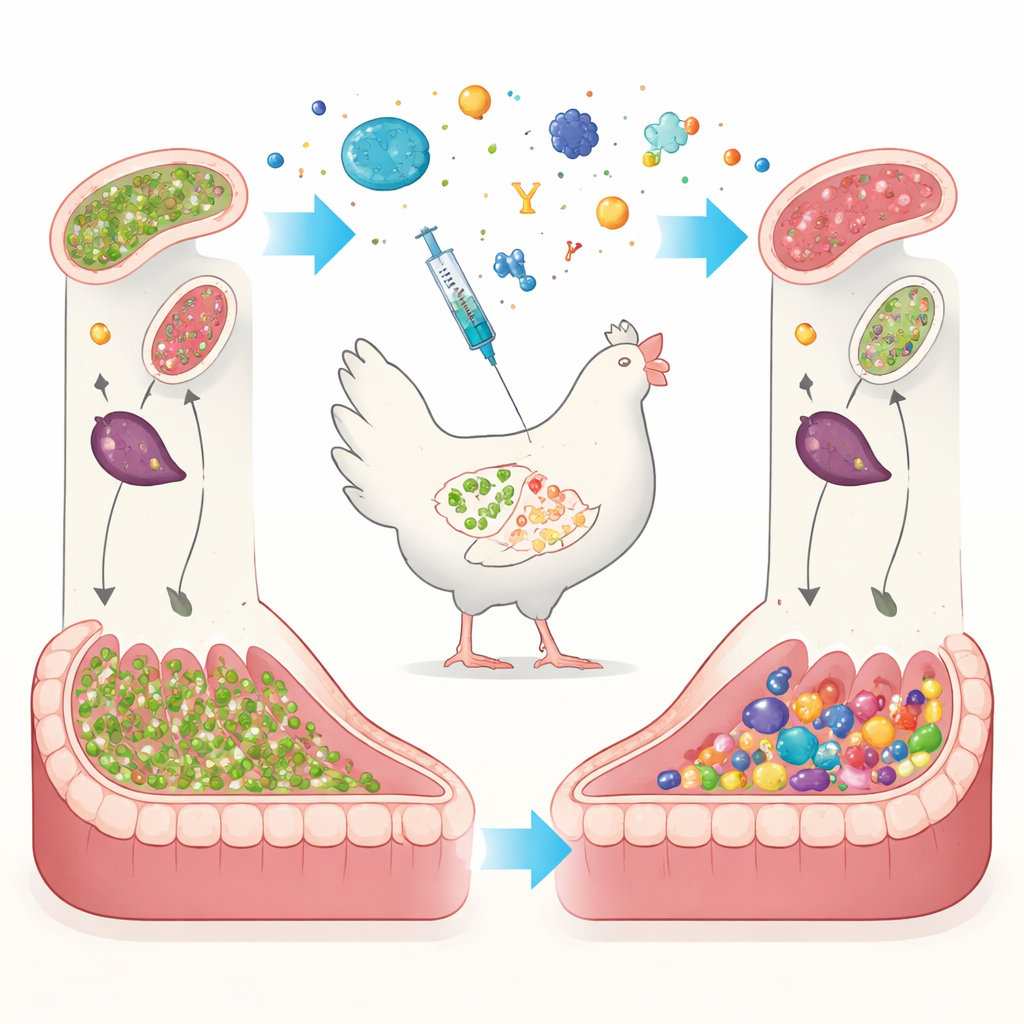
Beyond direct protection, the scientists examined how vaccination affected the community of helpful and harmful microbes in the chicken’s cecum. Using DNA-based profiling, they found that vaccinated and unvaccinated birds carried gut communities that were clearly distinct from each other, both before and after Salmonella challenge. Certain bacterial groups linked to a healthy intestine and the production of short-chain fatty acids were more common in vaccinated birds, while others were enriched in unvaccinated birds. These fatty acid–producing microbes are thought to strengthen the gut barrier and make it harder for Salmonella to thrive, suggesting that the vaccine may help reshape the microbial neighborhood in ways that indirectly hinder invaders.
What This Means for Food Safety
In simple terms, this study shows that vaccinating chickens with the BBS 1134 strain makes it much harder for a troublesome, partially drug-resistant Salmonella Enteritidis to take hold in the gut and spread to vital organs. The vaccine not only cuts down bacterial numbers and blocks access to bone marrow, it also leaves routine infection testing intact and appears to foster a more protective gut ecosystem. If adopted in poultry production, such a vaccine could reduce the chances that contaminated meat reaches consumers and help preserve the usefulness of important antibiotics by lowering exposure to difficult-to-treat strains before they ever leave the farm.
Citation: Bearson, B.L., Whelan, S.J., Encinosa, M.P.N. et al. Chicken vaccination reduces colonization and dissemination of Salmonella serovar Enteritidis with decreased susceptibility to ciprofloxacin. npj Vaccines 11, 88 (2026). https://doi.org/10.1038/s41541-026-01414-y
Keywords: chicken vaccination, Salmonella Enteritidis, food safety, antibiotic resistance, gut microbiome