Clear Sky Science · en
A chikungunya virus-like particle vaccine reduces chikungunya disease in cynomolgus macaques and protection is mediated by antibody transferred from vaccinated humans
Why this study matters
Chikungunya is a mosquito-borne illness that can leave people with crippling joint pain for months or even years, and it is spreading into new regions, including parts of the Americas and Europe. A recently approved vaccine called VIMKUNYA is based on harmless virus-like particles rather than live virus, but real-world trials are hard to run because outbreaks are unpredictable. This study uses monkeys and antibodies taken from vaccinated people to show how well this vaccine can blunt infection and joint damage, and what level of antibodies may be enough to protect against disease.
The threat of a painful virus
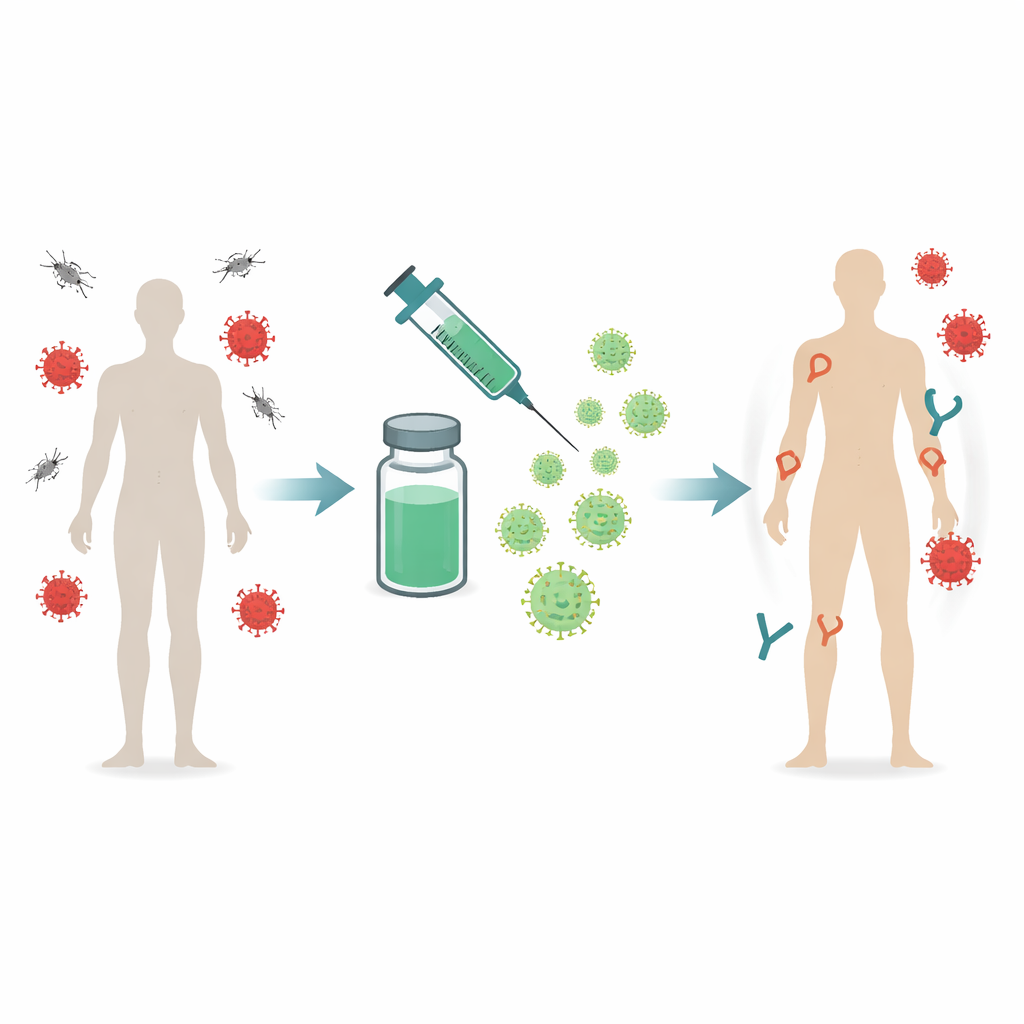
Chikungunya virus is carried by common urban mosquitoes and has caused tens of millions of infections across more than 110 countries. Infection brings high fever and intense pain in multiple joints; for as many as 60% of patients, that pain can linger and become disabling. As the virus has appeared in new places, including a locally acquired case in New York, the need for safe and effective vaccines has become urgent. Two vaccines have been licensed, but one live, weakened vaccine has raised safety concerns. VIMKUNYA takes a different approach: it presents only the virus’s outer shell as a particle that looks like the virus, but lacks its genetic material, so it cannot reproduce or cause disease.
A safe stand-in for human infection
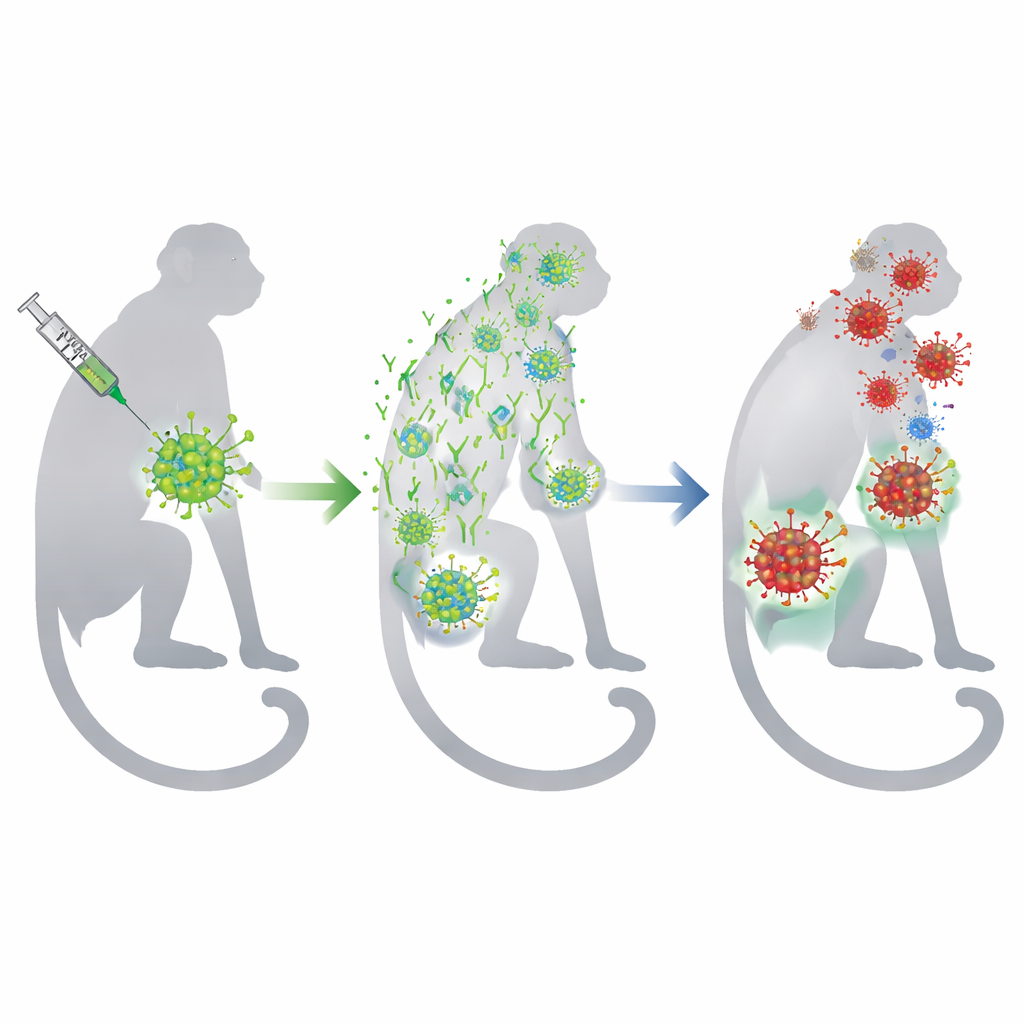
To test this vaccine in a controlled way, the researchers turned to cynomolgus macaques, monkeys whose response to chikungunya closely resembles that of humans. In an initial step, they identified a virus dose that reliably caused high levels of virus in the blood, joint inflammation, and other signs of disease without killing the animals. With this challenge dose set, they vaccinated groups of monkeys with different amounts of the virus-like particle, with or without an aluminum-based booster ingredient, and later exposed them to chikungunya. Another set of animals received purified antibodies from people who had taken part in clinical trials of the same vaccine, allowing the team to test whether those human antibodies alone could shield the monkeys.
Vaccine and borrowed antibodies both blunt disease
The vaccinated monkeys mounted strong antibody responses and, when challenged, had little to no detectable infectious virus in their blood. In contrast, unvaccinated control animals developed extremely high virus levels that then declined over about 10 days, mirroring the course of infection in people. Tissue samples from joints and muscles told a similar story: vaccinated animals carried far less viral genetic material and showed only mild or no inflammation, while controls had clear signs of joint damage. Remarkably, even very low vaccine doses—down to 1.25 micrograms combined with aluminum—were enough to sharply reduce virus levels and joint injury.
Testing protection from human vaccine antibodies
When monkeys were given antibodies purified from vaccinated people, they were also strongly protected. Those that received higher antibody doses often had virus levels below the test’s detection limit and no measurable infectious virus in their blood. Even animals given lower antibody doses, which produced average neutralizing activity below the level regulators had predicted would be needed, still fared much better than controls. They had less virus in their blood and tissues, required fewer pain medicines and supportive treatments, and showed much milder joint inflammation under the microscope.
How much antibody is enough
By comparing antibody levels just before infection with how much virus appeared afterward and how severe the joint damage was, the researchers showed that higher neutralizing antibody levels strongly tracked with better outcomes. Animals with more of these antibodies had lower peak virus levels, lower overall virus exposure over time, and healthier joints. Importantly, benefits were seen even when antibody levels were below the previously suggested protective threshold, hinting that people may gain meaningful protection at lower levels than expected, especially in real-world exposure where the virus dose from a mosquito bite is lower than that used in the experiments.
What this means for people
Put simply, this study shows that the chikungunya virus-like particle vaccine can stop the virus in its tracks and prevent serious joint damage in a realistic monkey model, and that antibodies generated by vaccinated humans can transfer that protection to other animals. The work strengthens the case that neutralizing antibodies are a good yardstick for judging whether the vaccine will protect people, even when traditional field trials are difficult to run. It supports using this vaccine to help shield people in areas where chikungunya is common and to protect travelers, with the reassuring message that strong protection may be achievable even at antibody levels lower than once thought necessary.
Citation: Coffey, L.L., Olstad, K.J., Reader, J.R. et al. A chikungunya virus-like particle vaccine reduces chikungunya disease in cynomolgus macaques and protection is mediated by antibody transferred from vaccinated humans. npj Vaccines 11, 97 (2026). https://doi.org/10.1038/s41541-026-01413-z
Keywords: chikungunya, virus-like particle vaccine, neutralizing antibodies, mosquito-borne disease, joint inflammation