Clear Sky Science · en
Plasmablast, memory B cell and T follicular helper cell responses after human papillomavirus vaccination: effect of dose number and age
Why this vaccine study matters
Cervical cancer is one of the leading causes of cancer deaths in women worldwide, and it is almost always triggered by long‑lasting infection with certain types of human papillomavirus (HPV). Vaccines against HPV are remarkably good at preventing these infections, and evidence suggests that even a single dose can work well. But scientists still do not fully understand how many doses are truly needed, how long protection lasts, and how responses differ between children, teenagers, and young adults. This study looks under the hood of the immune system to see how key infection‑fighting cells behave after HPV vaccination in girls and young women in The Gambia.
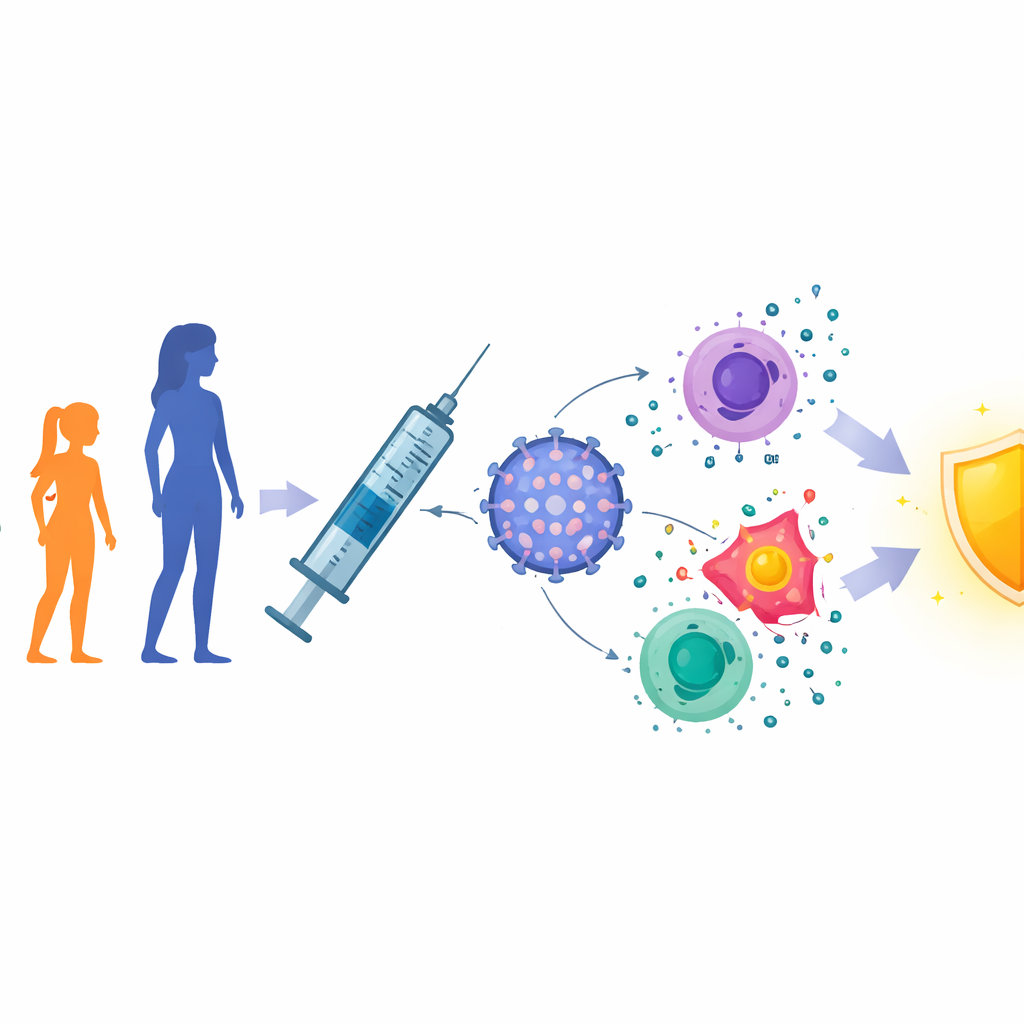
Looking inside the body’s defenders
Rather than only measuring antibody levels in the blood, the researchers focused on three types of white blood cells that shape long‑term protection. Plasmablasts are short‑lived cells that pump out antibodies immediately after vaccination. Memory B cells act as a recall system, ready to restart antibody production years later if the virus appears. T follicular helper (Tfh) cells are support cells that coach B cells in specialised immune hubs, helping them mature and persist. The team studied 120 females aged 4 to 26 years who received the 9‑valent HPV vaccine, which targets HPV types 16 and 18—the main causes of cervical cancer—as well as several other types. Younger girls (4–8 and 9–14 years) received two doses, while young women (15–26 years) received three doses.
What happens after each vaccine dose
Blood samples were taken before vaccination and shortly after each dose to track how the three cell types rose and fell over time. After the very first dose, there was a noticeable burst of early‑stage antibody‑producing plasmablasts of the IgM type, especially in younger girls, and a smaller rise in more mature IgG plasmablasts. These early responses faded back toward starting levels before the next dose. In contrast, the second and third doses triggered much stronger waves of IgG plasmablasts to both HPV16 and HPV18, showing that the immune system had been primed and was responding more vigorously with each boost.
Building lasting immune memory
Memory B cells specific for HPV16 and HPV18 grew only modestly after the first vaccination, but their numbers climbed clearly after the later doses. By expressing these cells as a fraction of all memory B cells in the blood, the researchers showed that meaningful, vaccine‑specific memory was mainly established after two or three doses. In general, younger participants tended to have higher memory B cell responses than young adults, although not all differences reached statistical significance. A few individuals already showed relatively high memory levels before their second or third dose—possibly from earlier exposure or strong reactions to the first dose—and some of them did not gain further increases, hinting that timing and spacing of doses can influence how well boosters work.
Helper cells and the role of age
The study also examined Tfh cells directly in the blood and after laboratory restimulation with HPV proteins. Overall activation of the Tfh pool rose with additional vaccine doses, and younger girls showed the highest levels of activated Tfh cells when measured directly, suggesting particularly lively support for B cells in childhood. However, when the team looked specifically for Tfh cells that responded to HPV proteins in culture, older adolescents and young adults showed stronger HPV‑focused activation than the youngest group. This contrast highlights how different ways of measuring the same cell type can reveal distinct aspects of the immune response, and that age shapes these responses in complex ways.
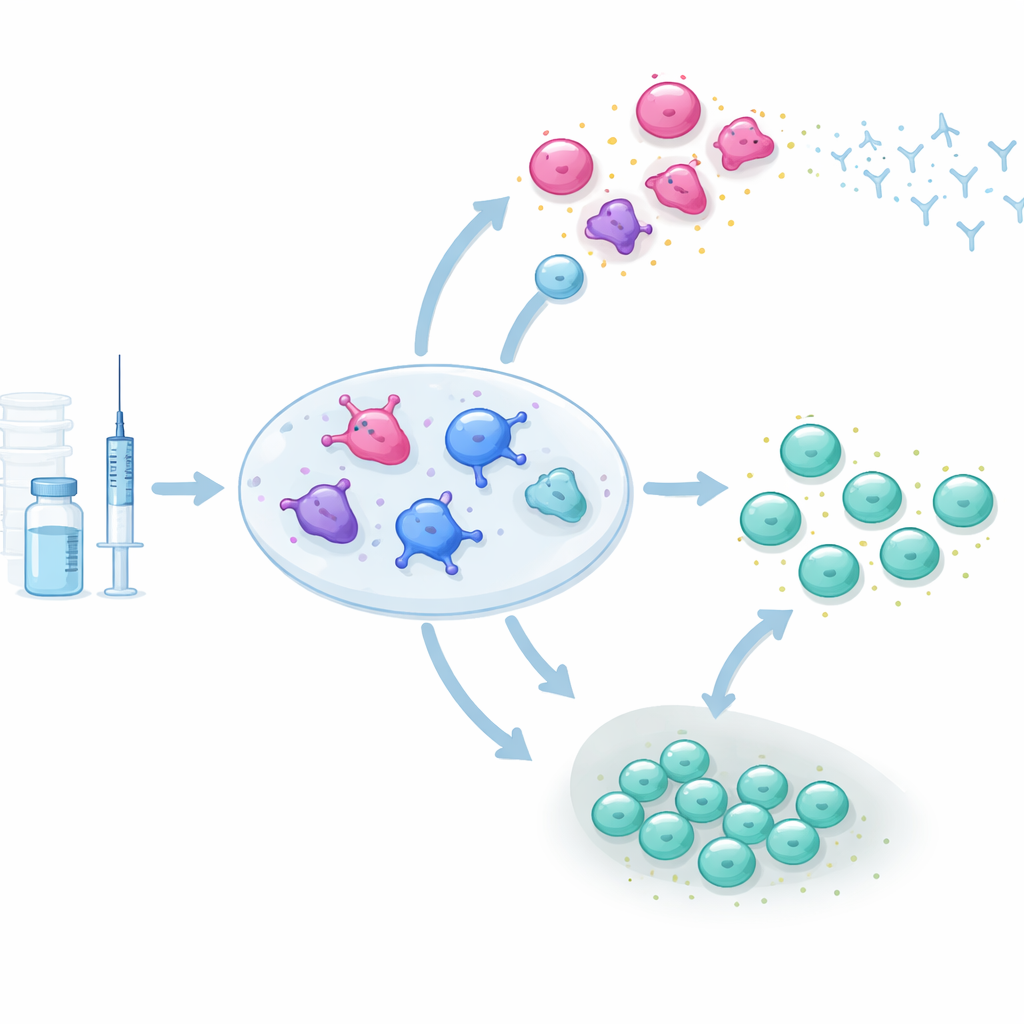
What this means for HPV vaccination
Altogether, the findings show that HPV vaccination sparks a coordinated dance between plasmablasts, memory B cells, and Tfh cells that becomes more robust with additional doses. Multi‑dose schedules clearly strengthen the machinery that sustains antibodies over time, particularly in younger recipients who often respond most strongly. At the same time, the modest but real cellular responses seen after a single dose support ongoing efforts to confirm whether one shot can provide durable protection, especially in settings where completing multi‑dose schedules is hard. The study also suggests that starting vaccination even earlier, in children under nine, may be safe and might further improve uptake and long‑term cancer prevention, while underlining the need to keep monitoring how well single‑dose strategies perform over many years.
Citation: Kiamba, E.W., Ajiboye, D.O., Bashorun, A.O. et al. Plasmablast, memory B cell and T follicular helper cell responses after human papillomavirus vaccination: effect of dose number and age. npj Vaccines 11, 77 (2026). https://doi.org/10.1038/s41541-026-01408-w
Keywords: HPV vaccine, cervical cancer prevention, immune memory, B cells, T follicular helper cells