Clear Sky Science · en
Potent and dose-sparing next-generation SARS-CoV-2 vaccine, mRNA-1283, induces polyfunctional and durable T cell immunity
Why this new vaccine study matters
As the COVID-19 pandemic evolves, one big question remains: can we design vaccines that stay protective for a long time, use less material per dose, and still stand up to new variants? This study looks at a next-generation COVID-19 shot called mRNA-1283 and shows that, even at a much lower dose, it can train a key arm of the immune system—T cells—to respond strongly and durably, in ways comparable to the original Moderna vaccine mRNA-1273.

A new twist on an mRNA COVID-19 shot
The original Moderna vaccine encodes the entire spike protein of SARS-CoV-2, the virus that causes COVID-19. The new candidate, mRNA-1283, takes a more focused approach. It carries instructions only for two particularly important pieces of spike, known as the receptor-binding and N‑terminal regions. Because these segments are shorter, the genetic message is more compact and appears easier to manufacture and keep stable in the refrigerator. Earlier trials showed that this streamlined vaccine could trigger antibody responses as strong as, or stronger than, those from the full-dose original shot, even when given at one-tenth the dose. What had been missing was a clear picture of how well it trains T cells, the white blood cells that help control infections and provide long-lasting protection.
How the study was done
Researchers ran a phase 1 clinical trial in 105 healthy adults who had never had COVID-19 and had not been vaccinated before. Participants were randomly assigned to receive two doses of mRNA-1283 at three different dose levels (10, 30, or 100 micrograms), two standard doses of mRNA-1273 at 100 micrograms, or a single dose of mRNA-1283 at 100 micrograms. Blood samples were collected before vaccination and several times afterward, up to roughly seven months. The team used advanced lab methods to measure how many T cells recognized the spike protein, what signals they produced, what types of memory they formed, and how diverse their receptors were—essentially, how many different viral “fingerprints” they could detect.
Strong, long-lasting T cell training
Two-dose regimens of the new vaccine, especially the lowest 10‑microgram dose, generated robust T cell responses that lasted at least six months. Helper T cells (CD4) mainly showed a pattern known as “Th1,” associated with antiviral defense rather than allergy-like reactions, and produced several different immune signals at once—a feature called polyfunctionality that is linked to better control of infection. Killer T cells (CD8), which can destroy infected cells, were also strongly activated. Surprisingly, people who got just 10 micrograms of mRNA-1283 often had higher levels of these killer cells than those who received the full 100‑microgram dose of the original vaccine. Many of the responding cells took on long‑lived memory forms, including a subset of killer cells associated with durable antiviral protection.
A broad and diverse T cell arsenal
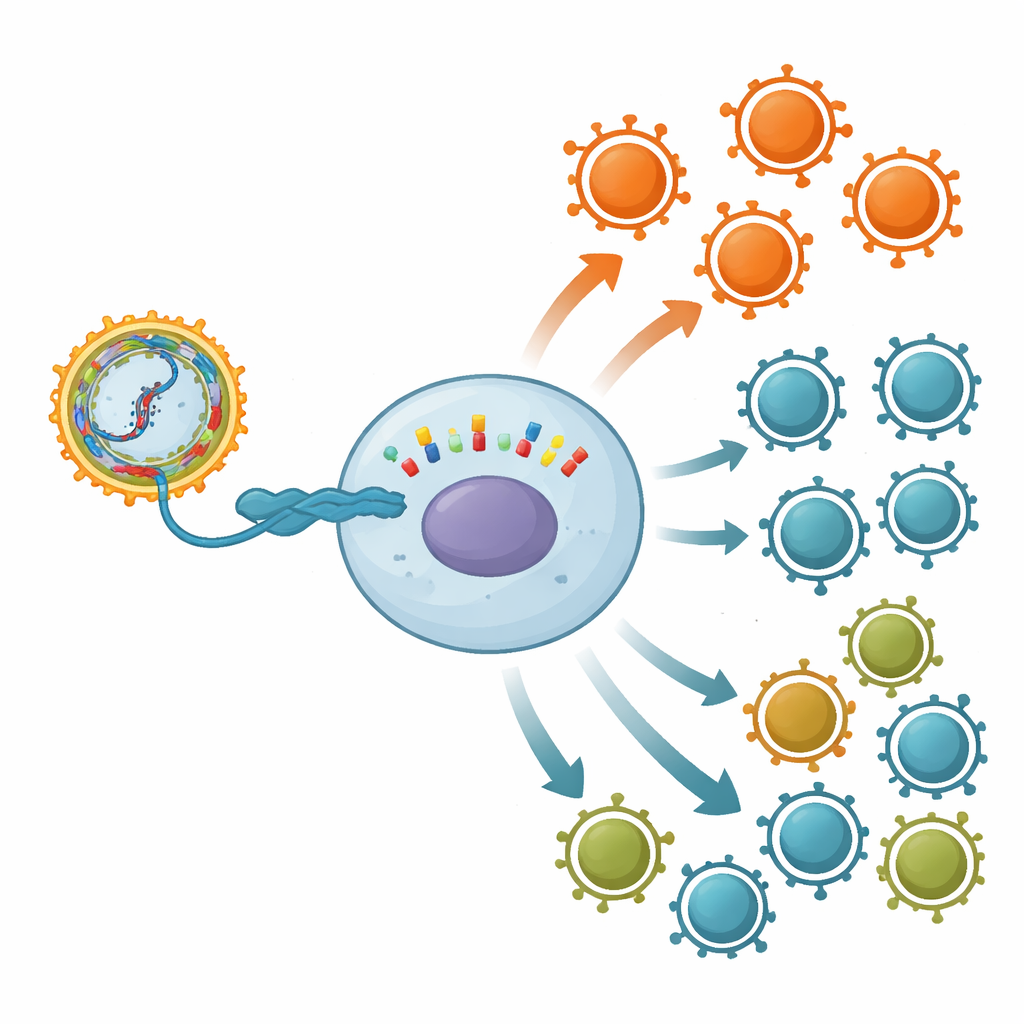
Beyond counting cells, the scientists sequenced the receptors on T cells that recognize SARS‑CoV‑2. After two doses of either vaccine, participants showed a marked expansion in both the number and diversity of spike‑specific T cell clones, indicating that many distinct viral targets were being recognized. The focused mRNA-1283 vaccine mainly drove responses against the regions it encodes, while the original shot also covered the remainder of spike; nonetheless, overall diversity within the targeted regions was similar between the two. The abundance of these spike‑specific receptors closely matched the strength of T cell activity measured in functional tests, reinforcing the conclusion that the low-dose next‑generation vaccine can build a rich T cell repertoire. Computer analyses suggested that most of these T cell targets remain unchanged in omicron variants, hinting that the responses should still recognize newly emerged strains.
What this means for future COVID-19 protection
In simple terms, this study shows that a carefully redesigned COVID-19 vaccine can use much less material yet still summon a powerful, long‑lasting T cell response comparable to the original high‑dose shot. That matters because T cells are thought to be crucial for preventing severe disease when antibodies fade or variants slip past some of our front‑line defenses. A low‑dose, more stable vaccine like mRNA-1283 could make it easier to manufacture and distribute shots globally, and to combine COVID‑19 protection with vaccines against other respiratory viruses, all while preserving strong cellular immunity against serious illness.
Citation: Paila, Y.D., Pajon, R., Banbury, B. et al. Potent and dose-sparing next-generation SARS-CoV-2 vaccine, mRNA-1283, induces polyfunctional and durable T cell immunity. npj Vaccines 11, 74 (2026). https://doi.org/10.1038/s41541-026-01402-2
Keywords: COVID-19 vaccines, T cell immunity, mRNA-1283, SARS-CoV-2 variants, dose-sparing strategies