Clear Sky Science · en
Global loss of metabolic responsiveness and elevated enzyme in leptin deficient obese mice during starvation
Why starving muscles matter
When we miss a meal, our bodies rapidly reshuffle how they use and produce energy so that vital organs, especially the brain, keep working. But in obesity, this emergency reshuffling often malfunctions. This study asks a simple but important question: when food suddenly disappears, how do the muscles and livers of obese animals differ from those of lean animals, and what does that say about their health? By tracking thousands of molecules at once, the researchers uncover a hidden loss of metabolic “agility” in obesity that could help explain problems like insulin resistance and difficulty losing weight.
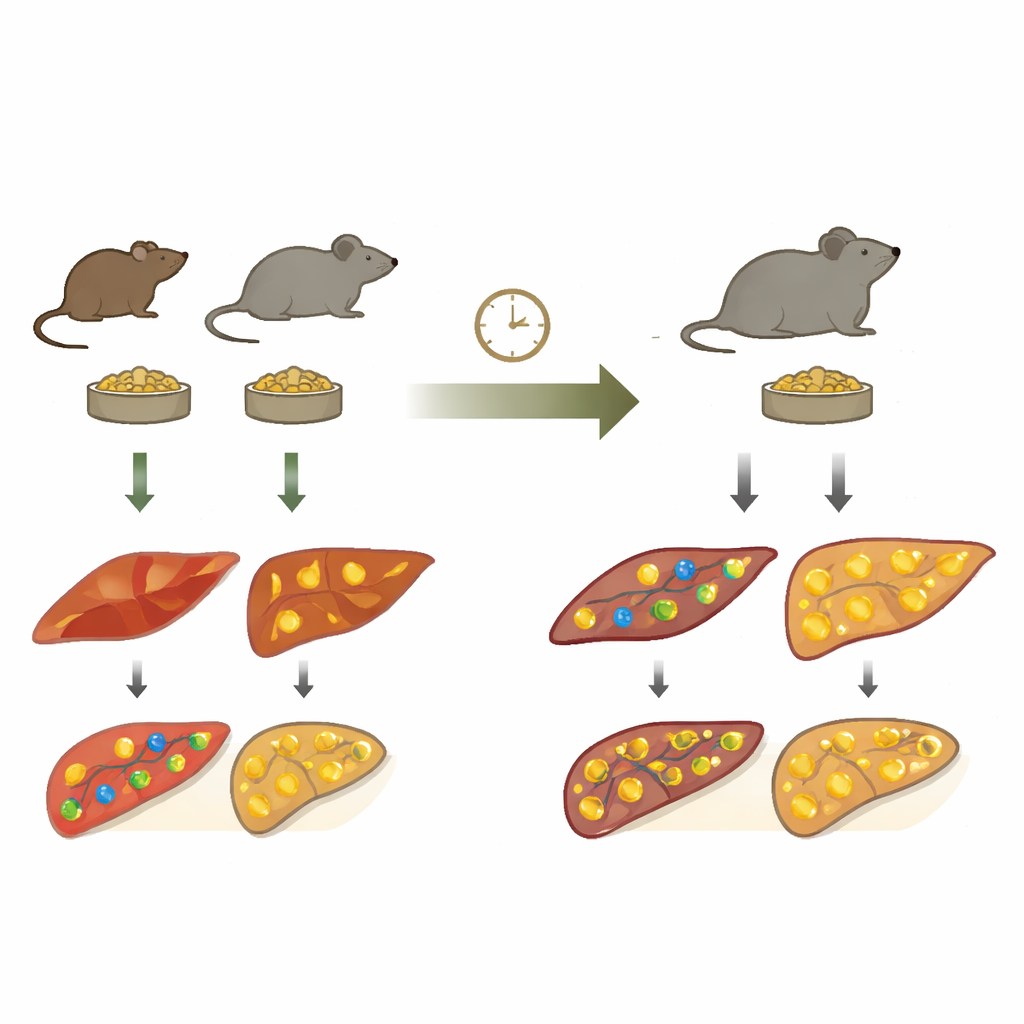
A tale of two types of mice
The scientists compared normal mice with leptin-deficient “ob/ob” mice, a classic genetic model of severe obesity. Both groups were fasted for 24 hours, and samples of skeletal muscle and liver were taken at eight time points. Instead of looking at just one class of molecules, the team measured small metabolites, gene activity (RNA), protein levels, and protein phosphorylation, a common way cells switch enzymes on or off. They then stitched these layers together into “trans-omics” networks that map how signals flow from energy-sensing molecules through enzymes and signaling proteins to whole metabolic pathways.
Healthy muscles stay flexible under stress
In lean mice, fasting triggered extensive, tightly coordinated changes across the molecular landscape. Key energy-carrying molecules such as ATP and AMP shifted in opposite directions, raising the AMP/ATP ratio—a chemical flag that energy is scarce. This, in turn, strongly activated the AMPK pathway, a central energy sensor that promotes fuel burning and suppresses energy-hungry processes. Many enzymes changed in amount or phosphorylation state over time, and whole pathways related to protein turnover and fat use adjusted in concert. The authors call this time-dependent pattern of rises and falls in molecules “responsiveness,” and in healthy muscle and liver it was widespread.
Obese muscles are stuck on “difference,” not response
In obese ob/ob mice, the picture was strikingly different. Across all molecular layers, far fewer metabolites and proteins showed real time-course changes during fasting. Protein-level responses in particular were almost absent in obese muscle. Instead, a large fraction of enzymes—especially those involved in fat metabolism—were chronically higher in obese animals than in lean ones, regardless of the fasting timeline. The researchers refer to this as “difference”: static disparities between obese and healthy tissue that do not dynamically track the changing energy situation. In other words, obese tissues came into the fast already altered and then barely moved, rather than flexibly adjusting as conditions changed.
Energy sensors go quiet in obesity
Zooming in on the energy-sensing circuitry exposed a critical fault. In lean mice, fasting increased AMP and decreased ATP, boosting the AMP/ATP ratio and robustly activating AMPK by phosphorylation. Downstream, this was linked to enzyme changes consistent with ramped-up fat burning, reduced fat synthesis, and lowered glycogen (stored carbohydrate) building in muscle and liver. In obese mice, AMP and ATP barely budged, AMPK activation was blunted or lost, and downstream enzymes did not shift in ways expected for an efficient fuel switch. At the same time, markers of protein synthesis tended to stay high and markers of protein breakdown relatively low, helping to explain why obese tissues contained more enzyme protein but lacked coordinated, rapid regulation.
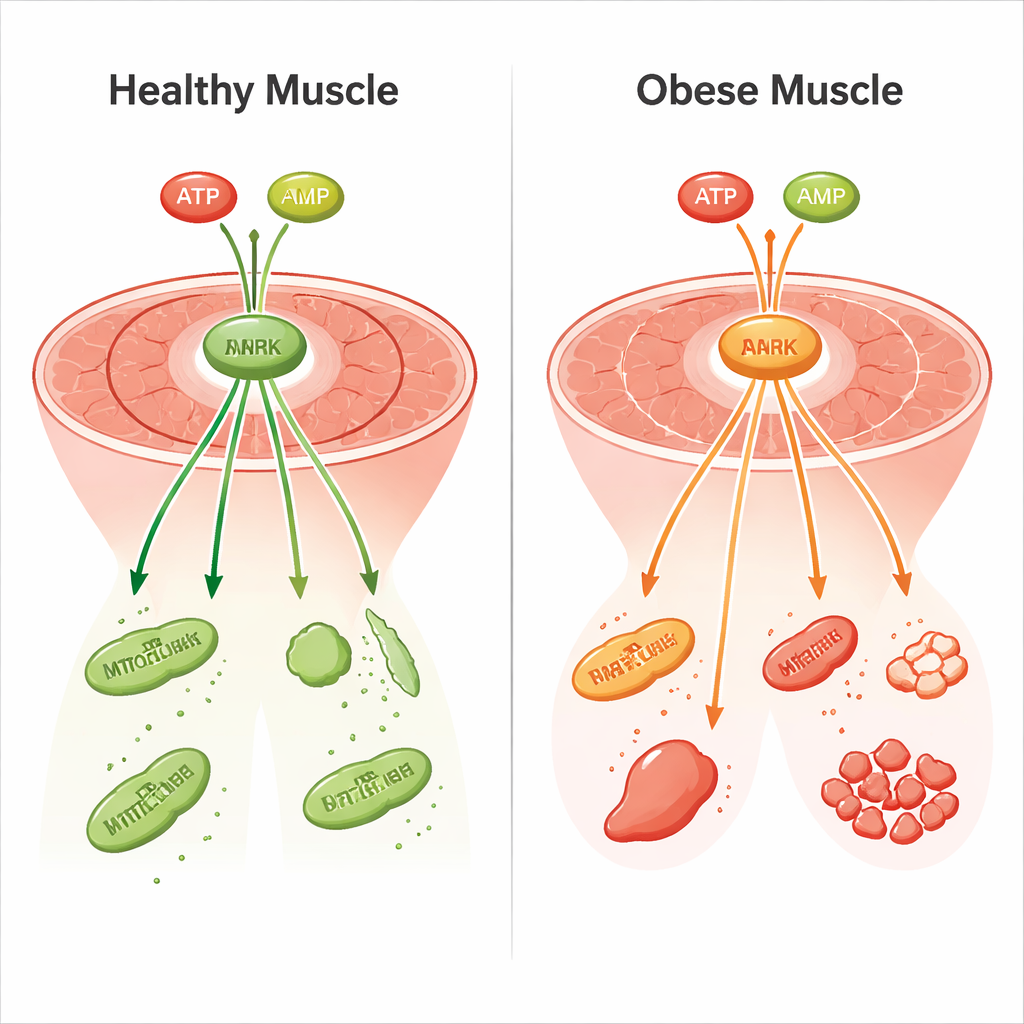
A body that cannot adapt
By comparing skeletal muscle and liver side by side, the study shows that this pattern is systemic: in obesity, both organs share a global loss of fasting responsiveness and a tendency toward persistently elevated enzyme levels. Rather than acting like a smart, adjustable engine, the obese body behaves more like a machine with its knobs jammed—high output in some areas, but poor ability to tune fuel choice and energy use when circumstances change. For a layperson, the takeaway is that obesity is not just “extra fat”; it is a whole-body weakening of the emergency systems that normally help us ride out periods of low food supply, and this weakened flexibility may underlie many metabolic complications.
Citation: Li, D., Morita, K., Kokaji, T. et al. Global loss of metabolic responsiveness and elevated enzyme in leptin deficient obese mice during starvation. npj Syst Biol Appl 12, 53 (2026). https://doi.org/10.1038/s41540-026-00678-3
Keywords: metabolic flexibility, fasting and starvation, obesity and energy metabolism, skeletal muscle and liver, AMPK signaling