Clear Sky Science · en
Dietary rhythms and biological aging risk across multiple organs
Why meal timing matters for aging
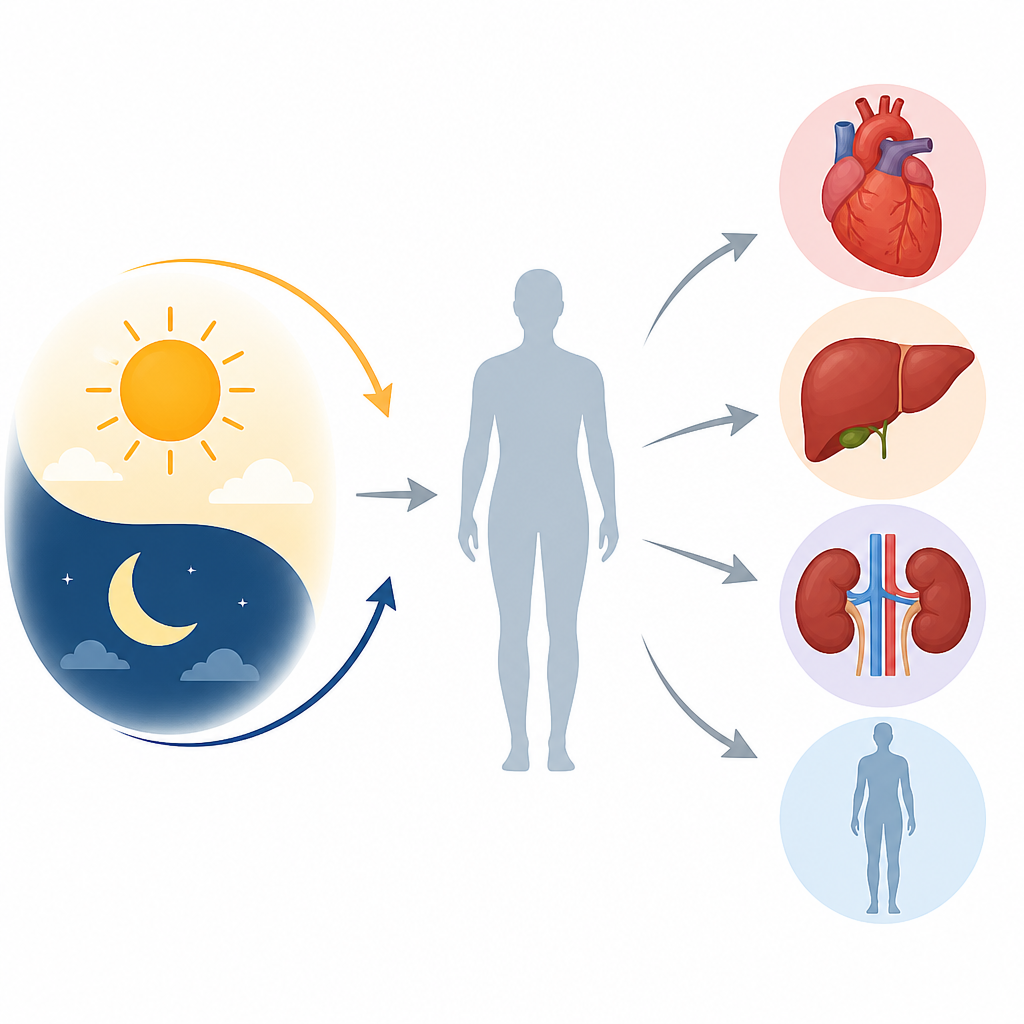
Most advice about healthy eating focuses on what and how much we eat. This study asks a different question that matters to anyone hoping to stay healthy longer in life: does the timing of our meals, day after day, change how fast different parts of our body grow old? Using a large U.S. survey, the researchers looked at when people started and stopped eating, how long they spent eating each day, and how these patterns related to signs of biological aging in the whole body, heart, liver, and kidneys.
Looking inside the body clock
Instead of relying only on birthdays, the team used the idea of biological age. This is a measure built from routine blood tests and other clinical markers that reflect how well organs are working compared with what is typical for a given chronological age. For more than 14,000 adults in the U.S. National Health and Nutrition Examination Survey, the researchers built models to estimate biological age for the body as a whole and for the heart, liver, and kidneys. People whose biological age was higher than their actual age were considered to have accelerated aging, and this group did in fact show higher risks of death, especially from heart and kidney related causes.
Early dinners and earlier first bites
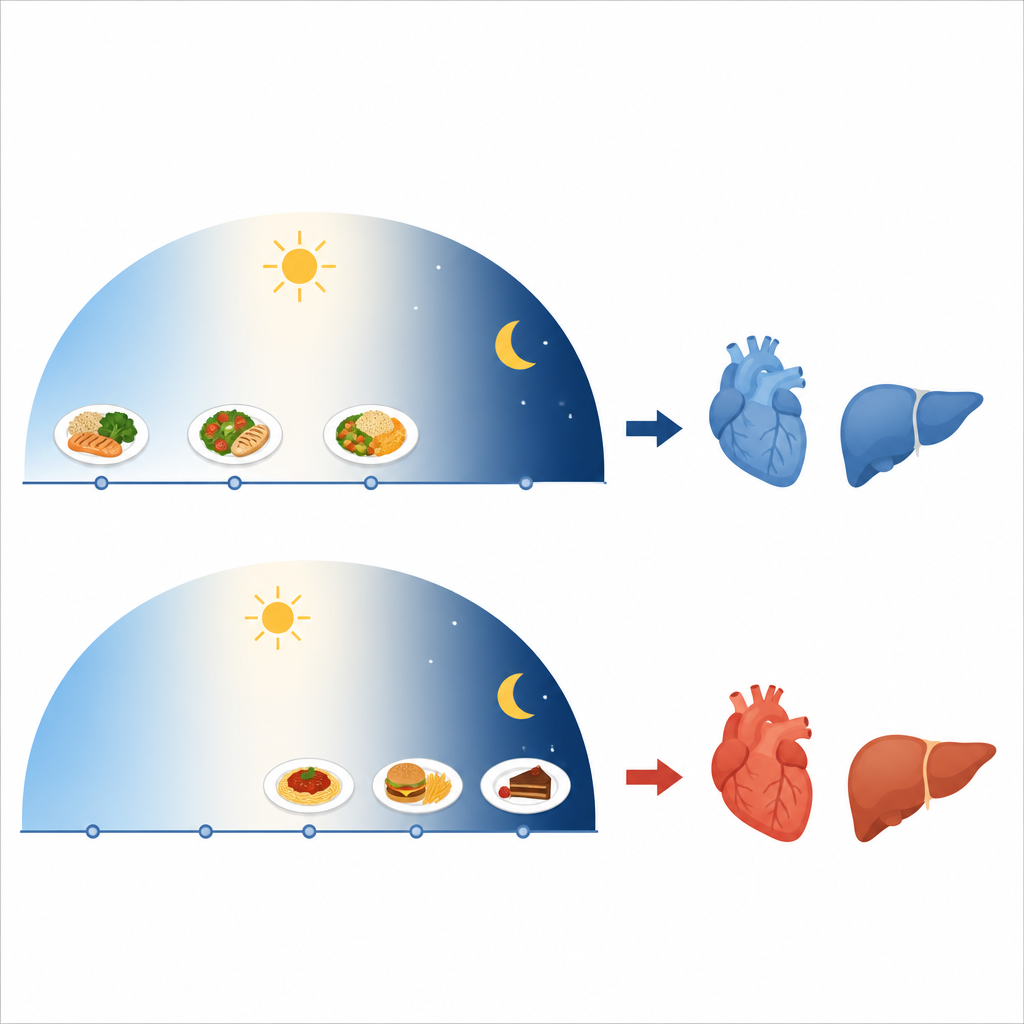
When the researchers compared daily eating patterns with biological aging, clear timing patterns emerged. People who finished their last meal earlier in the evening tended to have lower aging risk for the body, heart, and liver, compared with those who ate after 9 p.m. The most favorable window for the body and heart was a last meal between 3 and 5 p.m., while the liver seemed to do best when the last meal fell between 5 and 7 p.m. Eating the last meal very early, before 3 p.m., was not consistently better and in some cases was linked to higher aging risk, hinting that there may be a sweet spot rather than a “the earlier the better” rule.
Breakfast timing and daily eating span
The timing of the first meal of the day also mattered. Compared with people who ate their first meal before 8 a.m., those who waited until after noon had higher odds of accelerated biological aging in the body, heart, and liver. In addition, people who spread eating across more than 16 hours each day, or who fasted for less than 8 hours overnight, showed higher aging risks for these organs. In contrast, a shorter eating window and a longer nightly break from food were linked to lower aging risk, echoing interest in time restricted eating, though this study did not test any specific diet plans.
Different ages, sexes, and health states
The links between meal timing and aging were strongest in adults over 40. Younger adults under 40 showed fewer clear patterns, possibly because their organs are more resilient. Men appeared more sensitive to the clock time of meals, especially for heart aging, while women were more affected by how long they spent eating and fasting each day. People who already had chronic diseases, such as heart or liver conditions, often showed different timing patterns from those without such diagnoses. For example, earlier dinners seemed particularly helpful for liver aging in people with existing diseases.
Calories, diet quality, and the bigger picture
Meal timing did not act in isolation. In people who ate fewer calories or followed a healthier Mediterranean style diet, earlier last meals and earlier first meals were more clearly linked to slower aging of the body and liver. In contrast, for those with poorer diet quality, the heart seemed especially vulnerable when unhealthy foods were combined with late eating. These results suggest that when we eat, how much we eat, and what we eat work together to shape how organs age, and no single factor tells the whole story.
What this means for everyday life
This cross sectional study cannot prove that shifting meal times will make anyone live longer, but it provides strong clues that daily eating rhythms are tied to how quickly key organs age. Overall, patterns that favored earlier first meals, earlier but not extreme dinner times, and a shorter daily eating span with a longer overnight fast were linked to lower biological aging risk for the body, heart, and liver, though kidneys were less affected. The findings support the idea that paying attention to the clock, not just the plate, may be an important part of future personalized nutrition advice aimed at healthy aging.
Citation: Zheng, L., Jia, Z., Gong, S. et al. Dietary rhythms and biological aging risk across multiple organs. npj Sci Food 10, 148 (2026). https://doi.org/10.1038/s41538-026-00799-3
Keywords: meal timing, biological age, circadian rhythm, time restricted eating, organ aging