Clear Sky Science · en
Early and diverse lipid consumption by Saccharomyces cerevisiae: an extensive targeted lipidomics approach and new perspectives for managing wine fermentation
Why fats in wine matter
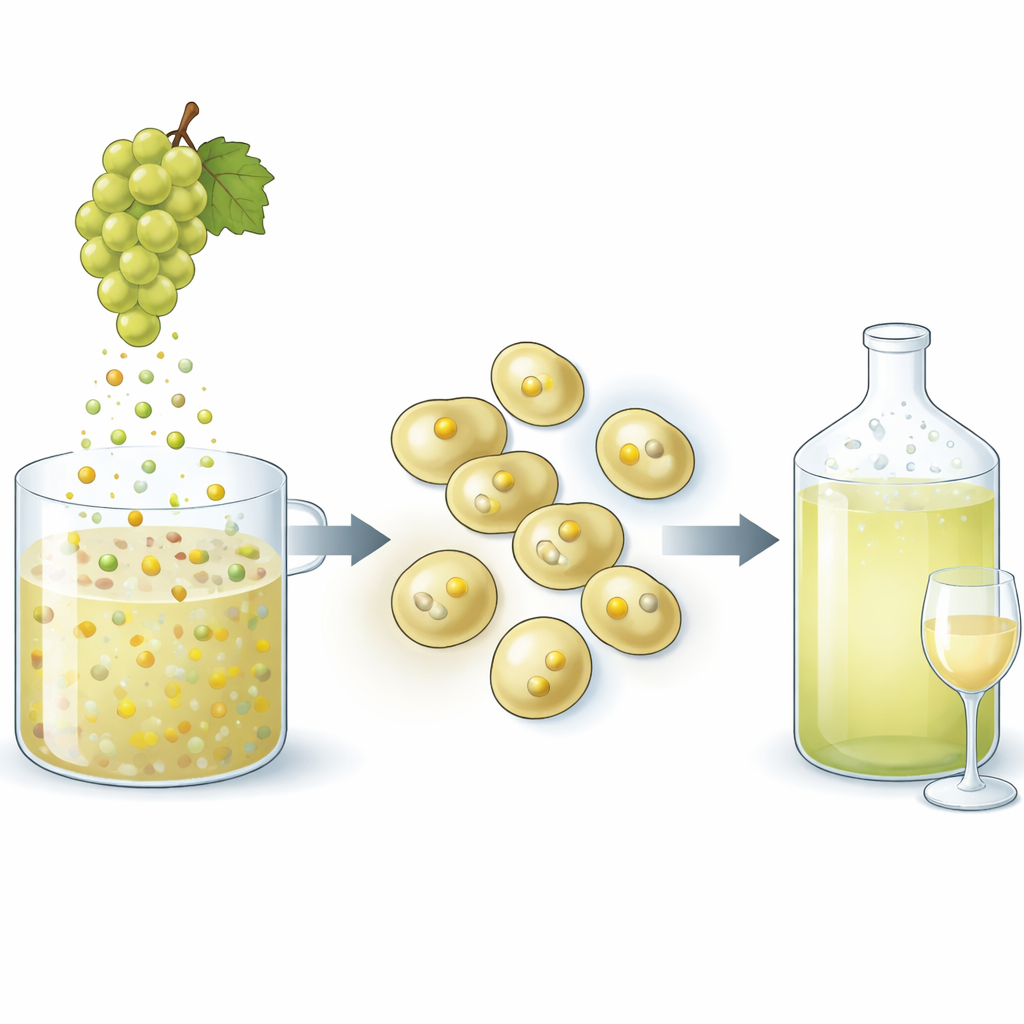
When people think about wine, they usually focus on sugar, alcohol, and aromas. Yet hidden in grape juice is a colorful cast of fat‑like molecules known as lipids. These lipids quietly help yeast survive stress, finish fermentation, and shape a wine’s flavor. This study dives deep into how wine yeast feed on a wide range of lipids during fermentation, revealing that their appetite is broader, earlier, and more precisely measurable than winemakers have long assumed.
Looking beyond the usual suspects
Winemaking textbooks traditionally highlight just two groups of lipids as important for yeast: certain fatty acids and sterols, which help build cell membranes and protect against alcohol and low oxygen. But grape juice contains many more types of lipids, including diglycerides, sterol esters, phospholipids, and ceramides. The authors set out to follow the fate of 94 different lipid species in real white grape musts (Chardonnay and Gewürztraminer) fermented with three commercial Saccharomyces cerevisiae strains. Instead of measuring only “total fats,” they used targeted lipidomics, a high‑resolution technique that tracks individual molecules over time, to see which compounds yeast actually consume and when.
Following yeast during fermentation
The team monitored five key points during fermentation, from sugar‑rich must to nearly dry wine, and compared lipid levels at the beginning and end of the process. They found that 66 out of the 94 lipids changed significantly, and 21 vanished altogether. Statistical analyses showed a strong “core pattern”: regardless of yeast strain or grape variety, many saturated fatty acids and complex lipids declined in similar ways, indicating shared metabolic needs. At the same time, more subtle differences depended on the specific yeast and the grape matrix, especially for certain diglycerides and sterol esters. Overall, most lipids went down rather than up, suggesting that yeast are net consumers rather than releasers of these compounds under the conditions studied.
Eating, not just sticking, to fats
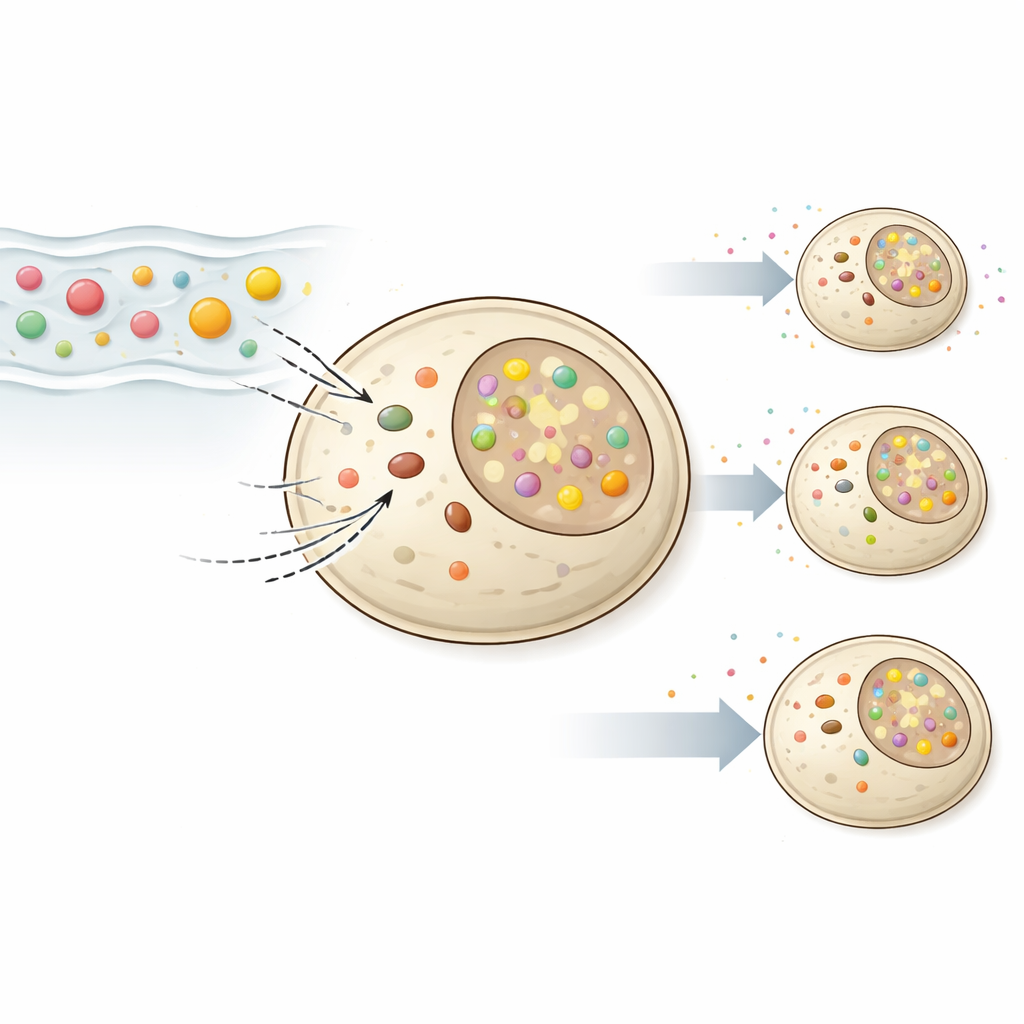
A key question was whether lipids disappear because yeast truly metabolize them, or simply because they stick to cell surfaces like grease on a sponge. To separate these possibilities, the researchers exposed grape must to heat‑inactivated yeast, which can still adsorb molecules but cannot grow. After 72 hours, concentrations of most fatty acids barely changed, while active fermentations showed dramatic drops. Phytosterols (plant sterols from grapes) did show some passive sticking, but the loss during real fermentation was far greater. This comparison indicates that metabolic uptake, not passive adsorption, is the main driver of lipid depletion—especially for long‑chain fatty acids and complex sterol forms.
Which lipids yeast really need
By combining lipid measurements with counts of viable cells, the authors calculated how much of each lipid type was consumed per 108 yeast cells. Several free fatty acids and all four phytosterols studied were completely depleted, pointing to a vital role in cell growth and survival. Free fatty‑acid requirements turned out to depend strongly on the grape must: Gewürztraminer, richer in nitrogen and slightly higher in sugar, led to higher biomass and therefore higher fatty‑acid consumption than Chardonnay. In contrast, the per‑cell need for phytosterols was remarkably stable across strains and musts, averaging about 6.7 milligrams per liter per 108 cells. Strikingly, the lipids most heavily used were also those most abundant at the start, and simple linear models showed that up to 90% of the variation in consumption could be explained by initial concentration alone.
Implications for better wine
For wine producers, these findings sharpen the picture of what yeast require to complete fermentation smoothly. The work shows that yeast rely on a broader and more diverse set of lipids than previously recognized, and that they take up many of them early in the fermentation, when cell populations are expanding fastest. While free fatty‑acid needs shift with the composition of the grape must, sterol demands are consistent enough to be expressed as a practical, per‑cell requirement. Because natural sterol content in grape juice can fall below this need, the study offers quantitative support for common cellar practices such as adding oxygen or lipid nutrients early on. In short, understanding and managing this hidden “fat diet” of wine yeast can help prevent stuck fermentations and fine‑tune wine quality.
Citation: Ramousse, L., Pais de Barros, JP., Roullier-Gall, C. et al. Early and diverse lipid consumption by Saccharomyces cerevisiae: an extensive targeted lipidomics approach and new perspectives for managing wine fermentation. npj Sci Food 10, 123 (2026). https://doi.org/10.1038/s41538-026-00774-y
Keywords: wine fermentation, yeast lipids, grape must, phytosterols, fermentation nutrition