Clear Sky Science · en
Nutritional distinction of Bolivian Quinoa Real compared to global varieties
A Special Grain from a Harsh Landscape
Quinoa has become a fixture in health-conscious kitchens around the world, but not all quinoa is the same. This study focuses on a particular group of Bolivian varieties known as Quinoa Real, or Royal Quinoa, grown only in a high, dry, and salty plateau between the Uyuni and Coipasa salt flats. By comparing these grains with commercial quinoa from eight other countries, the researchers show that Quinoa Real stands out nutritionally and may offer extra benefits for people and for future food security.
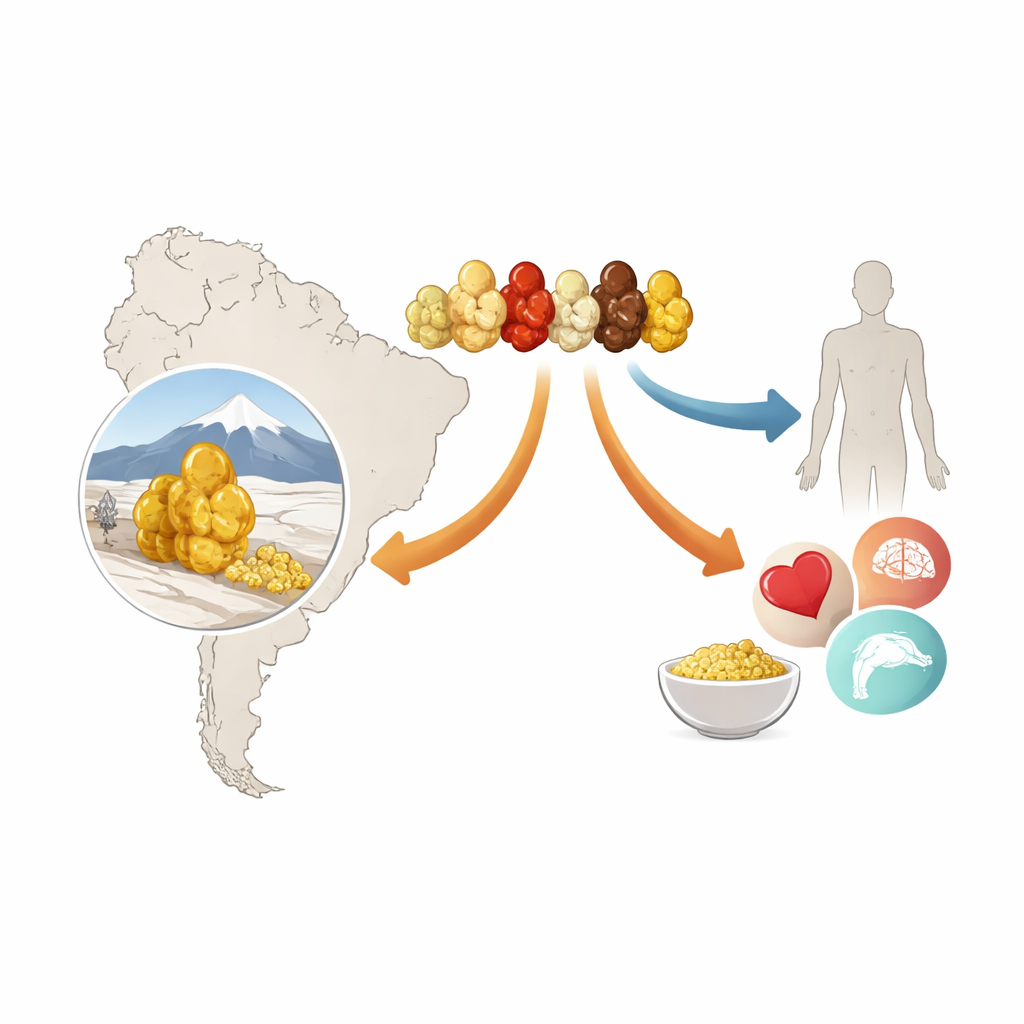
Where This Quinoa Comes From
Quinoa is an ancient Andean crop, first domesticated around Lake Titicaca thousands of years ago and now grown on several continents. Quinoa Real belongs to a special "salar" ecotype adapted to life at 3,800–4,800 meters above sea level, where the air is thin, the soil is salty and poor in nitrogen, sunlight is intense, and days are hot while nights are cold. Local communities have selected and conserved dozens of Real cultivars—white, red, and black grains with unusually large seeds—over many generations. These extreme growing conditions and long-term selection led Bolivian farmers and policy makers to suspect that Quinoa Real might be nutritionally superior, but until now this had not been thoroughly tested.
How the Grains Were Put to the Test
The team collected thirteen commercial quinoa samples: three Quinoa Real types from Bolivia and ten white, red, or black varieties from Peru, Ecuador, Colombia, the United States, Canada, Spain, China, and India. All samples were analysed in the same accredited laboratory using standard food-testing methods. The scientists measured seed size, basic composition (protein, fat, carbohydrates, fibre, and ash), detailed profiles of amino acids and fatty acids, a broad panel of vitamins, and eighteen minerals and trace elements. They then used statistical tools that look at all measurements together to see how the samples cluster or separate in terms of their overall nutritional "fingerprints."
What Makes Royal Quinoa Different
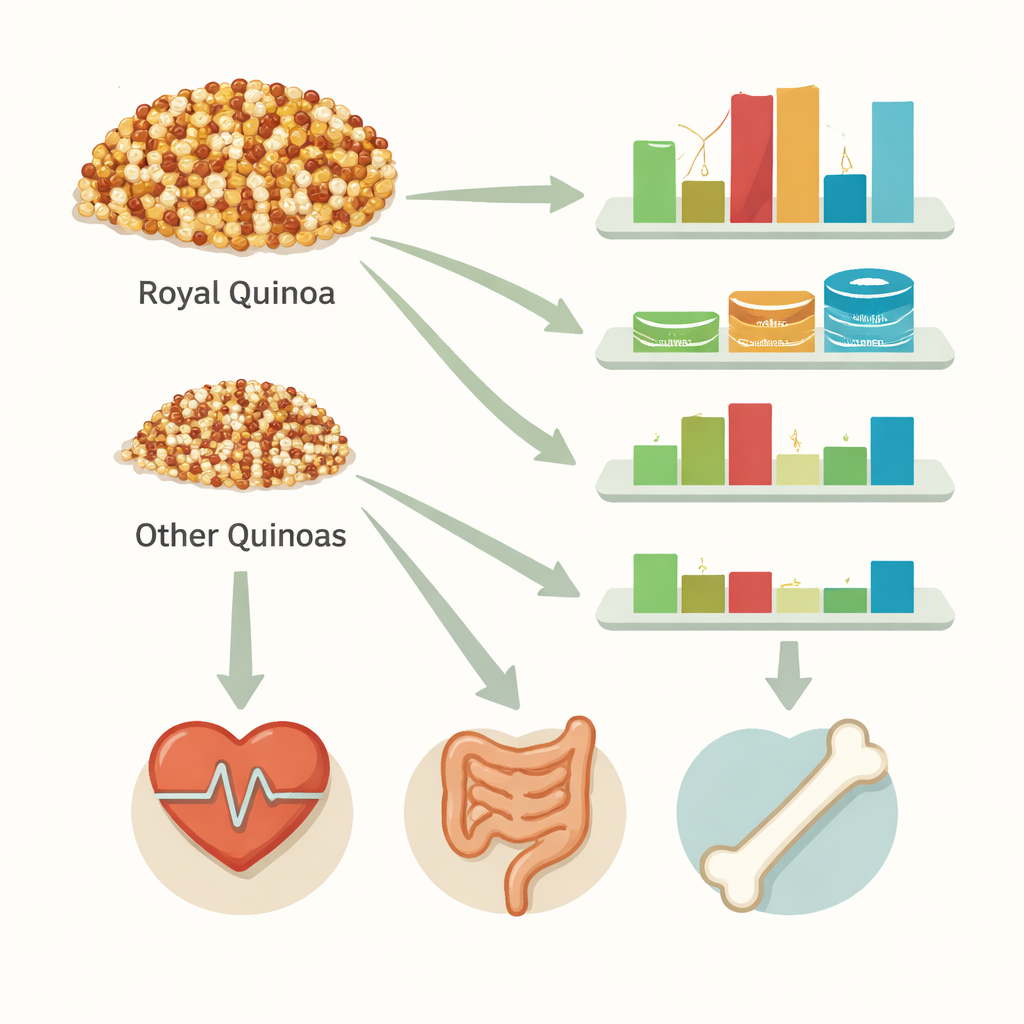
Quinoa Real clearly separated from the other samples. Its seeds were generally larger, matching the reputation of this grain in the Andean region. More importantly, Quinoa Real—especially the red and black types—contained more dietary fibre, more ash (a marker of total minerals), and higher levels of key minerals such as potassium, magnesium, iron, and zinc. These minerals support healthy muscles, nerves, blood formation, and the immune system. Quinoa Real also had relatively high levels of plant sterols, compounds linked to healthier blood cholesterol. Although its total protein was sometimes slightly lower—likely a result of nitrogen-poor soils—the balance of essential amino acids remained good and comparable to or better than most other samples.
Good Fats and Helpful Vitamins
The fat in quinoa is largely made up of unsaturated fatty acids, which are generally considered heart-friendly. Here again, Quinoa Real showed distinctive features: it had a favourable ratio of omega-6 to omega-3 fats, relatively high amounts of monounsaturated fat, and low levels of harmful trans fats, particularly in the white and black Bolivian grains. The researchers also found that Quinoa Real, especially the black variety, was rich in several vitamins. These included vitamin C and a suite of B vitamins such as B6, folate, riboflavin, and pantothenic acid, which are involved in energy production, nerve function, and protection against oxidative stress. Statistical analyses that combined vitamins, fats, minerals, and other traits consistently placed Quinoa Real as a distinct, nutrient-dense cluster compared with quinoa grown elsewhere.
Why This Matters for Our Plates and Our Planet
Taken together, the results support the idea that Bolivian Quinoa Real is not just another quinoa, but an unusually rich source of fibre, minerals, selected vitamins, and beneficial fats. Its ability to thrive under harsh conditions while delivering a dense package of nutrients makes it valuable for health-focused foods and as a genetic resource for future crop improvement. For everyday eaters, the message is straightforward: choosing products made from Quinoa Real may provide extra nutritional advantages, while also supporting traditional farming communities that have preserved this unique highland grain.
Citation: Peñarrieta, J.M., Loayza, E. & Linares-Pastén, J.A. Nutritional distinction of Bolivian Quinoa Real compared to global varieties. npj Sci Food 10, 130 (2026). https://doi.org/10.1038/s41538-026-00735-5
Keywords: quinoa, nutrition, Bolivia, functional foods, food security