Clear Sky Science · en
Witness high-dimensional quantum steering via majorization lattice
Spooky influence made sharper
Einstein once called it “spooky action at a distance”: the strange way one quantum particle can seem to affect another far away. Physicists now call one form of this effect quantum steering. It is not just philosophical curiosity—steering underpins secure communication and randomness generation. Yet as experiments move from simple two-level systems (qubits) to richer, high‑dimensional states, existing tools struggle to say cleanly when steering is really there. This paper introduces a new mathematical lens that can spot steering in systems of virtually any size, promising sharper tests for future quantum technologies.
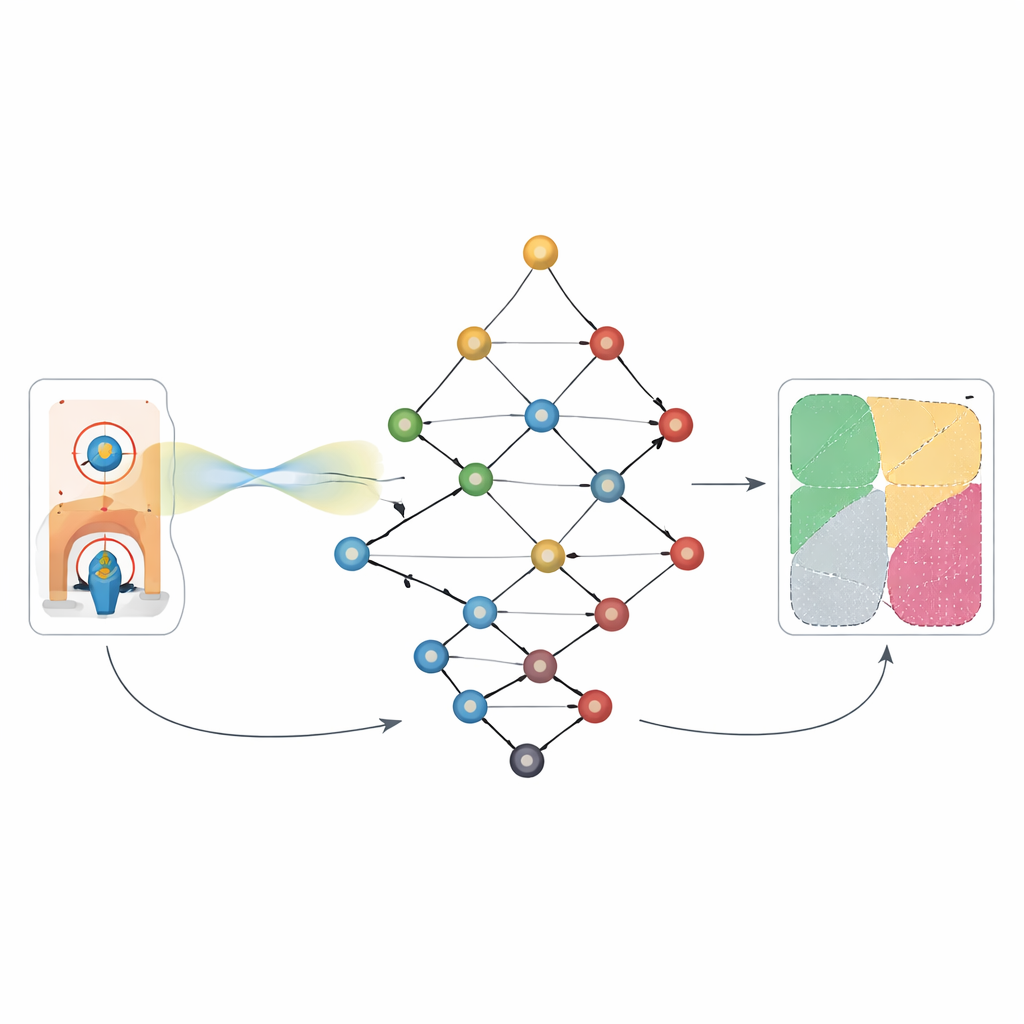
From messy data to ordered patterns
In a steering experiment, two parties—often named Alice and Bob—share entangled particles and perform measurements in chosen ways. What they actually record, however, is not “mystical influence” but long lists of joint probabilities: how often Alice’s result coincides with Bob’s. Traditional steering tests compress these probabilities into single numbers, such as entropies or variances. That compression inevitably throws away detail. The authors instead treat the full probability data as points in a structured landscape known as a majorization lattice, which orders probability distributions according to how “spread out” or “peaked” they are. This structure turns out to be a natural fit for describing what steering can and cannot produce.
A universal rulebook for steering
The core idea is to compare the observed joint probabilities with all probability patterns that would be possible if no steering occurred—if Bob’s system could be explained by a hidden local description, regardless of what Alice does. Within the majorization lattice, these non‑steerable patterns form a well‑defined region with an outer boundary. The authors prove that any experimental data falling outside this boundary must come from a steerable quantum state. They show how to construct practical inequalities based on “aggregating” probabilities: adding together selected outcomes into coarser groups that are easier to analyze, yet still preserve the crucial ordering in the lattice. Violating one of these inequalities is then a clear, state‑independent signature of steering.
Sharper tests in many dimensions
To demonstrate the power of their framework, the authors apply it to familiar families of quantum states. For simple two‑qubit states, their method reproduces known steering thresholds and shows how these thresholds behave as one increases the number of measurement settings. The real advantage appears in higher‑dimensional systems, such as so‑called Werner and isotropic states that are central models in quantum information. Here, the majorization approach yields stronger steering conditions than previously known, especially when measurements are taken in mutually unbiased bases—carefully chosen settings that reveal as much independent information as possible. In some cases, earlier high‑dimensional steering inequalities emerge as approximate versions of the new, more exact limits.
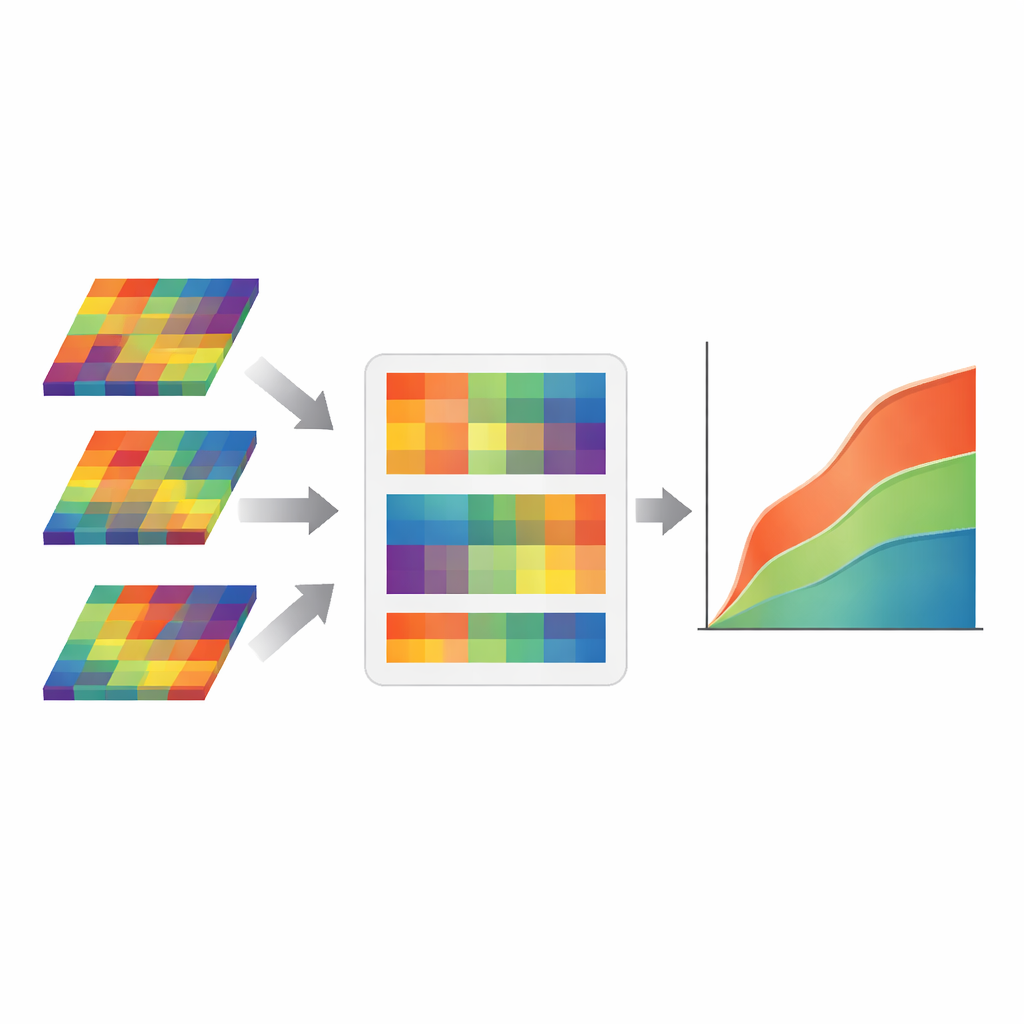
Finding the best way to look
Because their method is general, the authors can also ask which measurement choices are best for revealing steering in a given system. Using numerical optimization, they explore different measurement configurations in three‑level (qutrit) systems. They find that for certain states, standard mutually unbiased bases are indeed close to optimal, while for others, especially high‑dimensional Werner states, non‑standard measurement choices perform markedly better. The framework even distinguishes how strongly states with different “Schmidt ranks”—a measure of how many dimensions of entanglement are involved—resist noise: higher‑rank states support more robust steering that survives stronger disturbances.
Why this matters for future quantum tech
By linking quantum steering to the rich mathematics of majorization, this work delivers a versatile toolkit for diagnosing nonclassical correlations in complex systems. It allows experimenters to make full use of the probability data they collect, rather than reducing it to a few summary numbers, and to identify both optimal measurement strategies and realistic noise thresholds. For emerging applications in high‑dimensional quantum communication and cryptography—where information is packed into many levels to boost capacity and resilience—being able to reliably certify steering is crucial. The majorization lattice approach provides a clearer and more powerful way to say when “spooky action” is genuinely at work.
Citation: Yang, MC., Qiao, CF. Witness high-dimensional quantum steering via majorization lattice. npj Quantum Inf 12, 55 (2026). https://doi.org/10.1038/s41534-026-01204-3
Keywords: quantum steering, high-dimensional entanglement, majorization lattice, mutually unbiased bases, quantum communication