Clear Sky Science · en
Severe obstructive sleep apnoea can be accurately diagnosed in primary care centres
Why this matters for everyday sleep
Snoring and poor sleep are often brushed off as annoyances, but for many people they are signs of obstructive sleep apnoea—a condition where breathing repeatedly stops at night. Left untreated, it raises the risk of heart disease, stroke, diabetes and car crashes, and it quietly drives up health-care costs. This study asks a practical question with big implications: can family doctors, using a simple home sleep test, accurately pick out people with the most dangerous, severe form of this disorder without sending everyone to a hospital sleep lab?
A common problem hiding in plain sight
Obstructive sleep apnoea happens when the throat briefly closes during sleep, cutting off airflow and lowering blood oxygen. These pauses can repeat dozens of times per hour, fragmenting sleep even when the person does not fully wake up. Men, people between 30 and 70, and those with obesity are especially affected. Yet many cases go unnoticed because symptoms can be vague—daytime tiredness, morning headaches, or partners reporting loud snoring and gasping at night. Traditional testing relies on an overnight hospital study packed with sensors, which is expensive, scarce and often delayed by long waiting lists.
Bringing testing closer to home
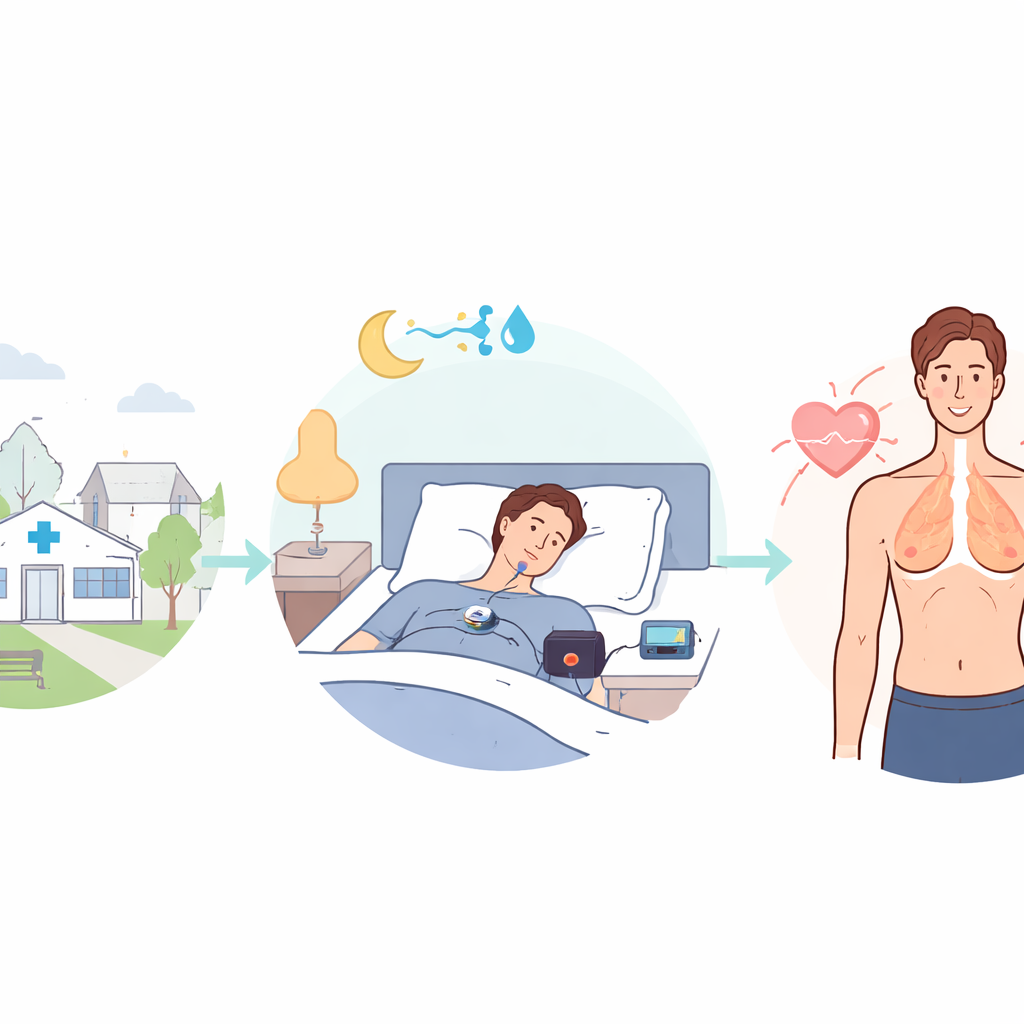
The researchers in Girona, Spain, designed a new pathway based entirely in primary care centres, where most people first seek help. Adults aged 30 to 70 visiting four participating clinics for any reason filled out a short checklist known as the STOP-Bang questionnaire, which flags those at high risk of sleep apnoea based on simple features like snoring, tiredness, blood pressure, body size and age. Anyone scoring high was invited to take home a small, portable recorder called ApneaLink Air for one night. Nurses showed patients how to attach a few sensors to measure breathing movements, airflow through the nose, snoring and blood oxygen while they slept in their own beds.
How the new approach was tested
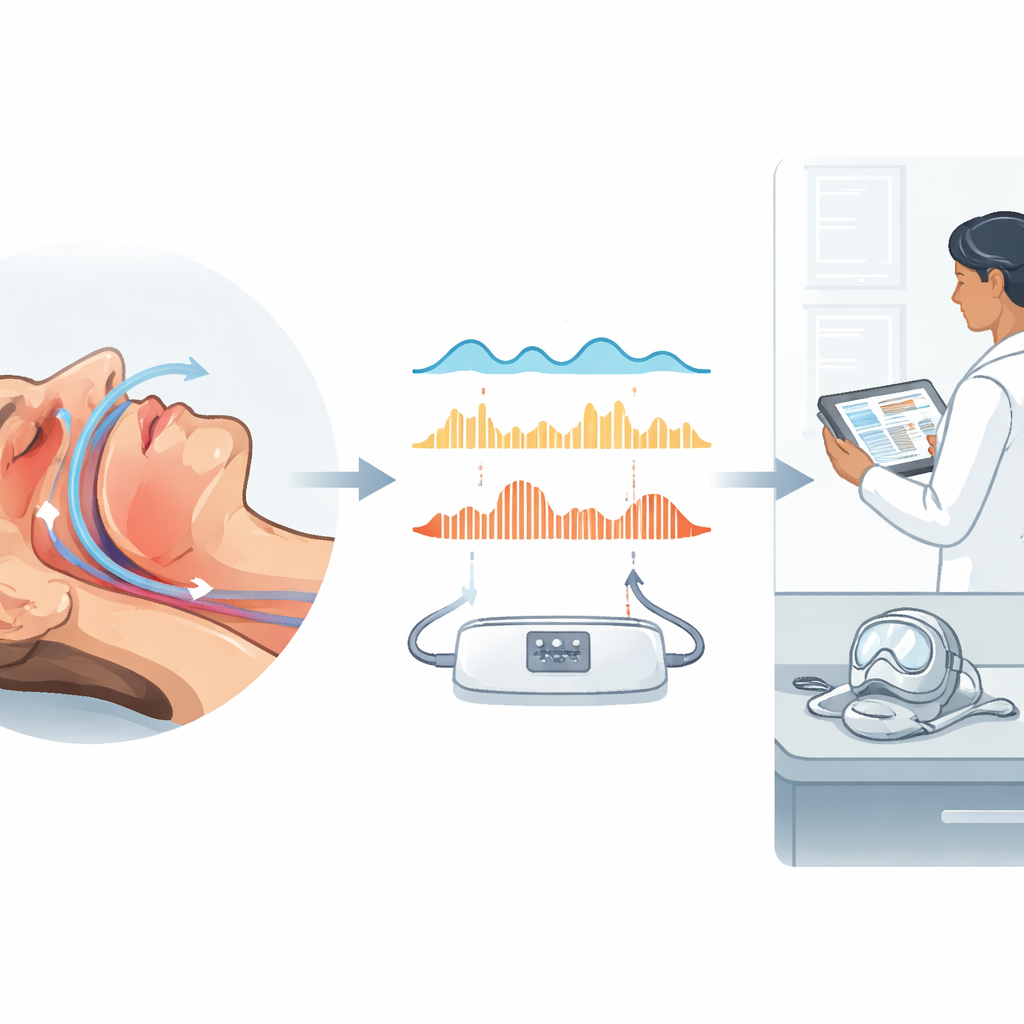
Family doctors accessed the recorder’s automatic analysis through an online platform and, after brief training, made their own diagnosis directly in the clinic. In parallel, a sleep specialist at the hospital—blinded to the primary care result—manually re-analysed the same home recordings. If this manual review suggested anything less than clearly severe disease, the patient also underwent a full hospital sleep study. In total, 329 high-risk patients completed this full chain of testing. Most were middle-aged men with common conditions such as high blood pressure, high cholesterol or diabetes, reflecting the real-world mix of people seen in everyday practice.
What the results showed
When the primary care pathway labelled someone as having the most serious, severe form of sleep apnoea, the hospital specialists almost always agreed. Specifically, nearly all cases that family doctors called severe were confirmed as severe by hospital-level testing, and the home device showed extremely high specificity—meaning it very rarely misclassified someone as severely ill when they were not. About four in ten of all severe cases in the study could be confidently identified and acted on directly from primary care using just this automatic home test. In contrast, agreement was much weaker for mild and moderate disease: people in these groups often shifted categories when more detailed hospital assessments were done.
What this means for patients and health systems
These findings suggest a practical division of labour. For patients who already appear high risk on a simple questionnaire, a one-night home test interpreted by their own doctor can reliably confirm severe obstructive sleep apnoea. Those patients could start treatment—such as nighttime breathing support—without waiting months for a hospital appointment, potentially preventing complications and reducing costs. At the same time, people with negative, mild or uncertain results on the home test would still benefit from specialist evaluation, where more nuanced testing can sort out who truly needs therapy. In short, carefully used home technology can help primary care teams find the sickest sleepers quickly, while hospital sleep units focus their limited resources on the more ambiguous cases.
Citation: Orriols, R., Rojas, E., Obrador, A. et al. Severe obstructive sleep apnoea can be accurately diagnosed in primary care centres. npj Prim. Care Respir. Med. 36, 24 (2026). https://doi.org/10.1038/s41533-026-00496-4
Keywords: obstructive sleep apnoea, home sleep testing, primary care, sleep disorders, ApneaLink