Clear Sky Science · en
Living with breathing pattern disorder: a scoping review
When Everyday Breathing Feels All Wrong
Most of us never think about how we breathe until something feels off. For some people, however, breathing itself becomes a constant worry: it feels tight, shallow, or never quite satisfying, even when tests say their lungs and heart are fine. This review looks at what it is like to live with breathing pattern disorder, a little-known condition where breathing goes out of sync with the body’s needs and spills over into many corners of daily life.
A Hidden Problem Behind Scary Symptoms
Breathing pattern disorder, or BPD, is not rare in adults and often appears alongside other conditions such as asthma, long COVID, or chronic lung disease. People describe a wide mix of symptoms: breathlessness, chest pain, pounding heartbeat, dizziness, tingling, tight muscles, stomach upset, and overwhelming fear. These complaints can closely mimic heart attacks, severe asthma, or neurological disease, so patients are often sent for batteries of tests. Episodes can last from under a minute to hours and may appear daily or only now and then. Many report an unnerving sense of being unable to take a satisfying breath, which is both frightening and hard to explain to others.

Stress, Life Shocks, and Tricky Triggers
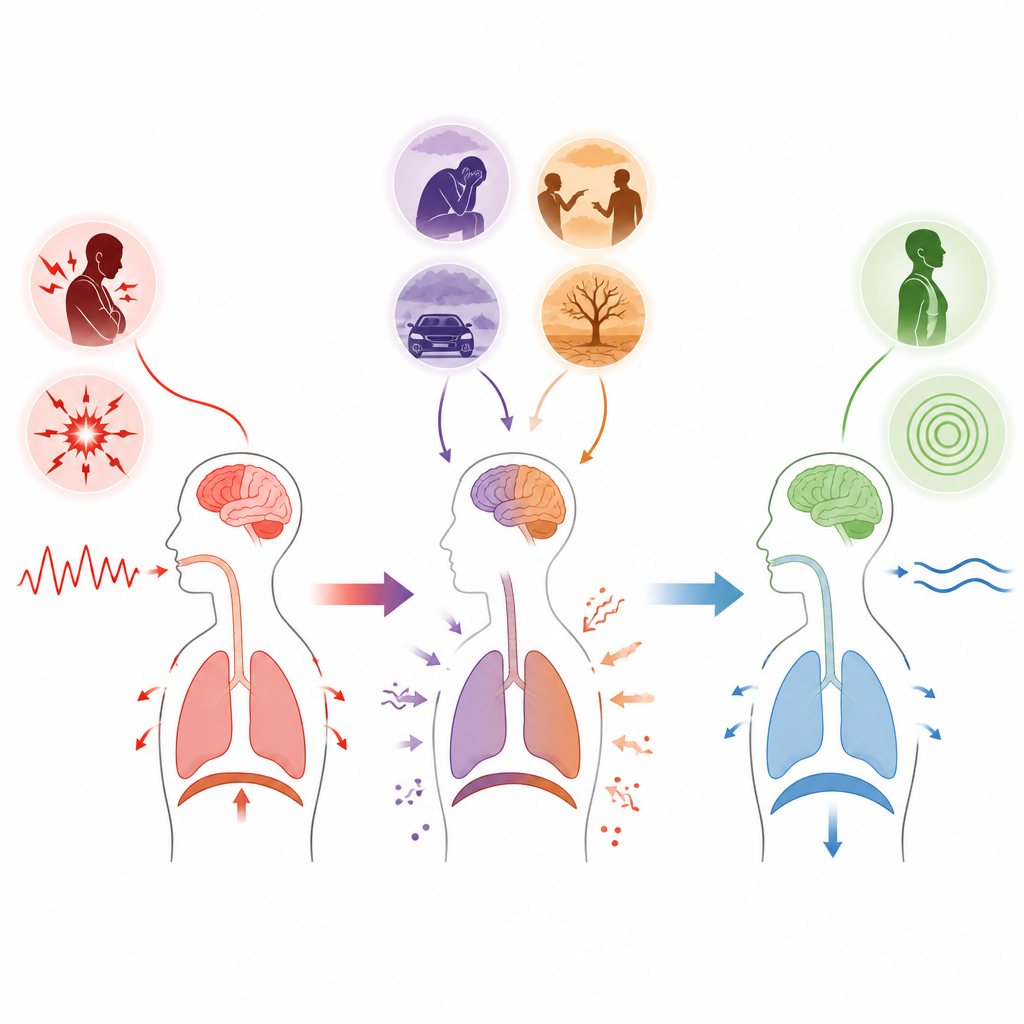
The review found that stress and difficult life events commonly surround the start and flare-ups of BPD. People often traced the beginning of their breathing problems to bereavement, workplace pressure, money worries, or conflict at home. Some had lived through trauma such as abuse, assaults, serious accidents, or frightening medical experiences and surgery. Everyday stressors could also set off attacks: tense meetings, crowded places, loud environments, or emotional arguments. Yet triggers were not always straightforward. Some people could exercise vigorously with no trouble, then feel short of breath while sitting quietly or doing a specific task, such as walking up one particular hill or speaking in public. This confusing pattern added to their fear that something serious was being missed.
A Long Road to a Name
Because BPD looks so much like other illnesses and there is no single agreed test or definition, the path to diagnosis is often long and frustrating. Many people were first told they had asthma, heart disease, epilepsy, or migraine, only to have those labels later removed. They underwent repeated heart, lung, brain, and stomach investigations that frequently showed nothing obviously wrong. Some were accused of being overly anxious or even faking symptoms. Others bounced between emergency rooms, specialist clinics, and hospital wards, sometimes being admitted for days or even to intensive care. This revolving door of care not only strained health services but also left patients anxious, confused, and unsure whom to trust.
Minds, Moods, and Daily Life
The review showed strong links between BPD and mental health. Many people with BPD also experienced panic attacks, phobias, general anxiety, or depression. Some were haunted by fears of sudden death, collapsing in public, losing loved ones, or serious undetected disease. It was not always clear whether these emotional problems helped trigger BPD, or whether living with unpredictable, alarming symptoms created or worsened the distress. Either way, the impact on daily life could be severe. People reported giving up work, avoiding social situations, limiting physical activity, or becoming housebound or bedridden. When BPD occurred alongside asthma, chronic lung disease, or long COVID, overall quality of life and disease control were generally worse than for those conditions alone.
What This Review Tells Us and What Is Missing
This scoping review pulled together 62 reports from different medical specialties to map what is known about the experience of BPD. It highlights that BPD can make ordinary breathing feel frightening, drive heavy use of emergency and hospital care, and erode both mental health and quality of life. Yet the evidence is patchy, often old, and largely based on Western case reports rather than robust modern studies or voices from diverse cultures. The authors argue that clearer definitions, better diagnostic approaches, and more research into people’s lived experiences are urgently needed. For patients, the review underlines that their symptoms are real, common, and shared by others, and that with better understanding and targeted breathing retraining, there is hope for regaining a sense of control over something as basic as the next breath.
Citation: Moffat, C., Walker, S., Fuld, J. et al. Living with breathing pattern disorder: a scoping review. npj Prim. Care Respir. Med. 36, 30 (2026). https://doi.org/10.1038/s41533-026-00495-5
Keywords: breathing pattern disorder, dysfunctional breathing, hyperventilation syndrome, anxiety and breathing, quality of life