Clear Sky Science · en
Inherited burden for disease predisposition in diverse populations
Why our genes matter more than we think
Most people think of genetic diseases as rare, unlucky events. This study turns that idea on its head. By sifting through DNA data from more than 1.7 million people worldwide, the researchers show that nearly everyone is born carrying several gene changes that could, under the right circumstances, lead to disease. Understanding this hidden inherited burden could transform how we screen for illness, prevent it, and design health policies for diverse populations.
Looking at DNA before looking at disease
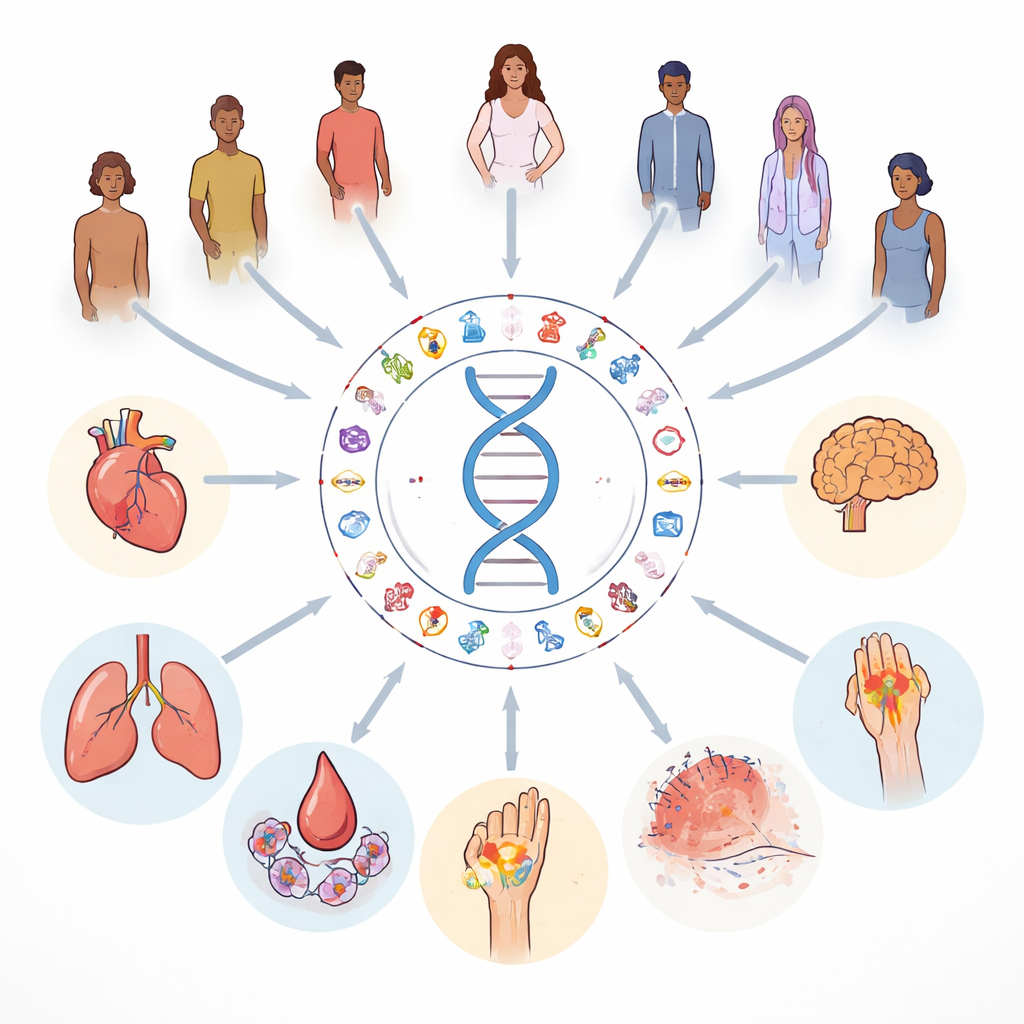
Traditionally, doctors first see a patient’s symptoms and then go hunting for a genetic cause. This work flips the script: it starts with the genome and asks, “What diseases does this DNA quietly predispose someone to?” The team combined two massive international DNA collections plus a detailed Turkish dataset, covering more than 4,500 known disease genes. Using expert-approved rules from medical genetics, applied through automated tools they previously developed, they classified millions of genetic variants according to how likely they are to cause disease. This allowed them to count, across many ancestries, how many risky variants people typically carry and how often these might add up to an actual disease-causing genetic combination.
How common risky gene changes really are
The analysis revealed that an average person is born with about 4.7 variants that are either clearly or probably disease-causing. Of these, about 1.7 are arranged in a way that, in principle, could produce a recognizable inherited disorder—whether by a single faulty copy of a dominant gene, two faulty copies of a recessive gene, or a problem on the X chromosome. The chance of having no such clearly harmful variants at all was vanishingly small: roughly 1 in 100 people for the strictest variant set, and far rarer when including borderline variants. In other words, carrying multiple potentially serious genetic risks is the rule, not the exception.
Differences across populations and disease types
Because the data included nine major ancestry groups, the researchers could see how inherited risk varies around the globe. Some genes showed especially high carrier rates in particular populations, often reflecting historical forces such as infections or population bottlenecks. For example, variants in genes linked to blood disorders and protection against malaria were common in people of African ancestry, while certain variants in Turkish, Middle Eastern, Ashkenazi Jewish, and Finnish groups reflected unique ancestral histories. When they grouped genes by broad medical categories using the international disease coding system, they found that genetic predisposition was especially common for conditions that affect development at birth, the skeleton and connective tissues, the blood and immune system, the nervous system, and the skin. Respiratory diseases, by contrast, had the lowest inherited burden in this analysis.
Actionable findings and who should be screened
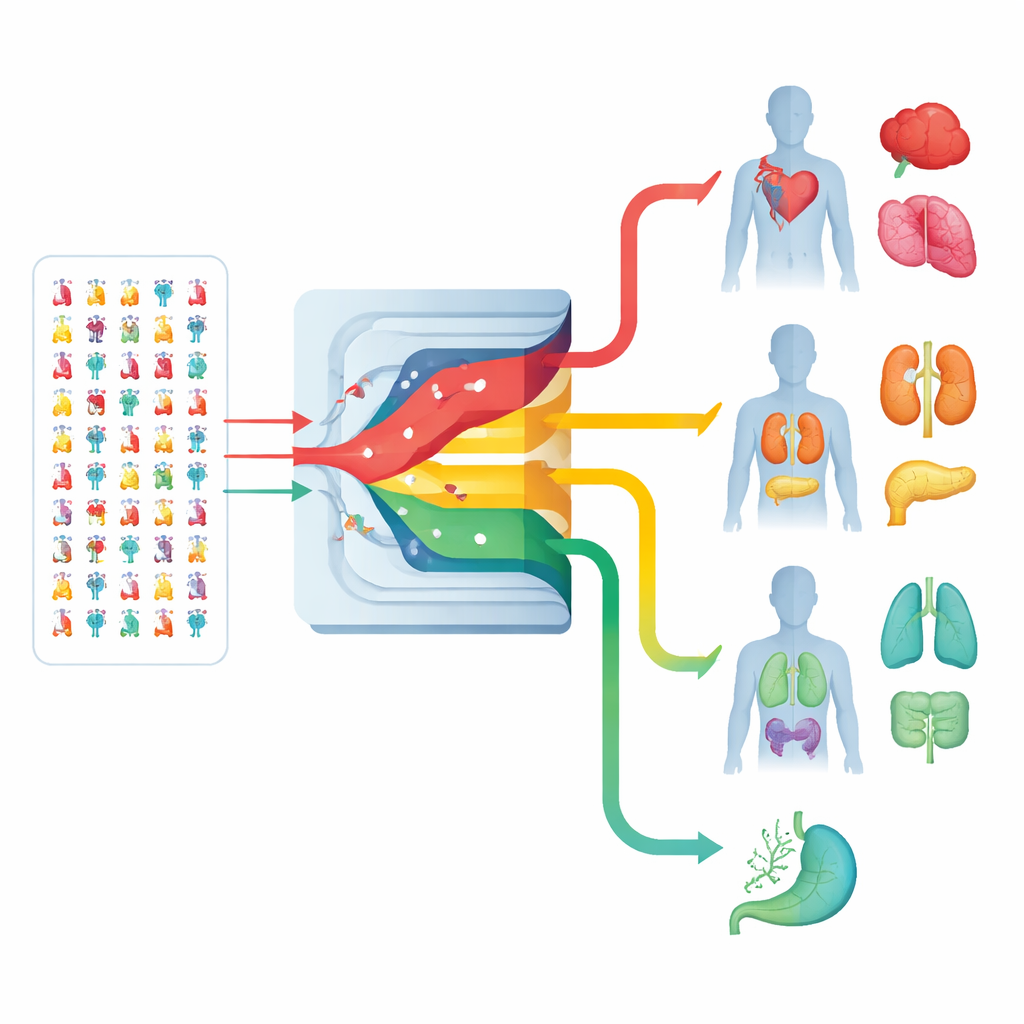
The team also focused on 84 genes that expert panels already consider "actionable"—meaning that, if someone is found to carry a dangerous variant, there are known steps to reduce risk or catch disease early. They estimated that about 1 in 11 people worldwide, roughly 1.7 billion individuals, carries at least one such actionable genetic change. Building on current guidelines for screening couples before or during pregnancy, they identified 382 genes that meet frequency thresholds for carrier screening, nearly 100 more than are currently recommended. This expanded list varies by ancestry, highlighting the need for screening programs that are tailored to different populations rather than built mainly from European data.
What this means for everyday health
For a layperson, the message is twofold. First, almost everyone carries inherited risks, so having a genetic predisposition to disease is normal, not a rare misfortune. Second, because many of these risks are now detectable and some are actionable, large-scale genetic screening—especially if extended to newborns or couples—could allow earlier diagnosis, targeted monitoring, and lifestyle changes that improve both healthspan and lifespan. The study argues that a fair and accurate approach to precision medicine must account for the full inherited burden across diverse populations, not just in well-studied groups, so that the benefits of genomic medicine can be shared more equitably.
Citation: Kayaalp, B., Kars, M.E., Itan, Y. et al. Inherited burden for disease predisposition in diverse populations. npj Genom. Med. 11, 18 (2026). https://doi.org/10.1038/s41525-026-00552-5
Keywords: genetic risk, carrier screening, personalized medicine, population genomics, inherited disease