Clear Sky Science · en
Supporting decisions about genomic newborn screening at scale in the digital age: the BabyScreen+ study
Why this matters for new parents
Expectant parents today face a growing number of choices about tests for their baby’s health. This study looks at whether an easy-to-use online system can help parents decide about a new kind of check called genomic newborn screening, which looks at many genes to find serious conditions early, without overwhelming families or overloading health services.
A new kind of baby health check
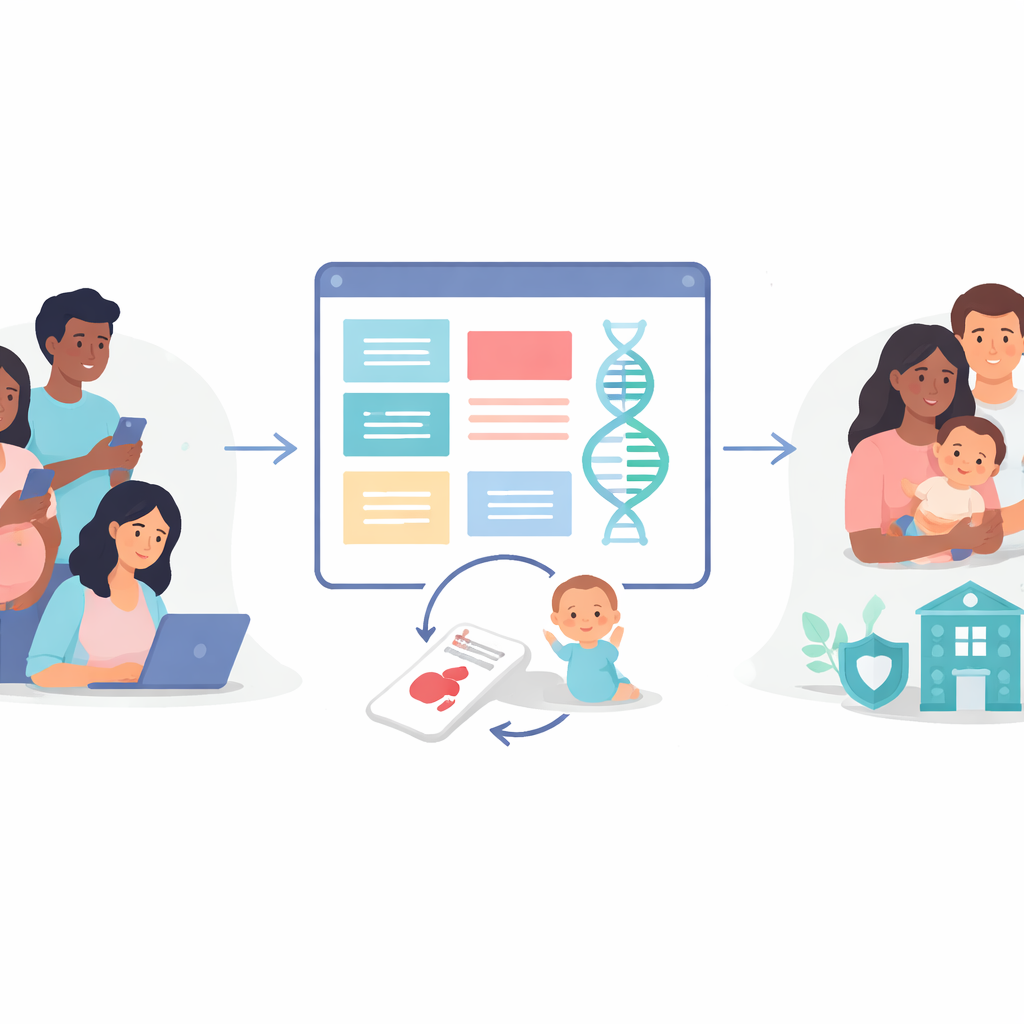
Newborn screening has long used a heel-prick blood spot to test for a small set of rare but serious diseases. Powerful DNA reading technologies could greatly expand this, spotting hundreds of severe, early-onset, treatable conditions long before symptoms appear. But these tests can also uncover uncertainties, raise questions about privacy and insurance, and affect other family members. That means parents need more time and clearer information than they usually get in the hectic days after birth, and health systems need a way to offer that support to many families at once.
Putting information and choice online
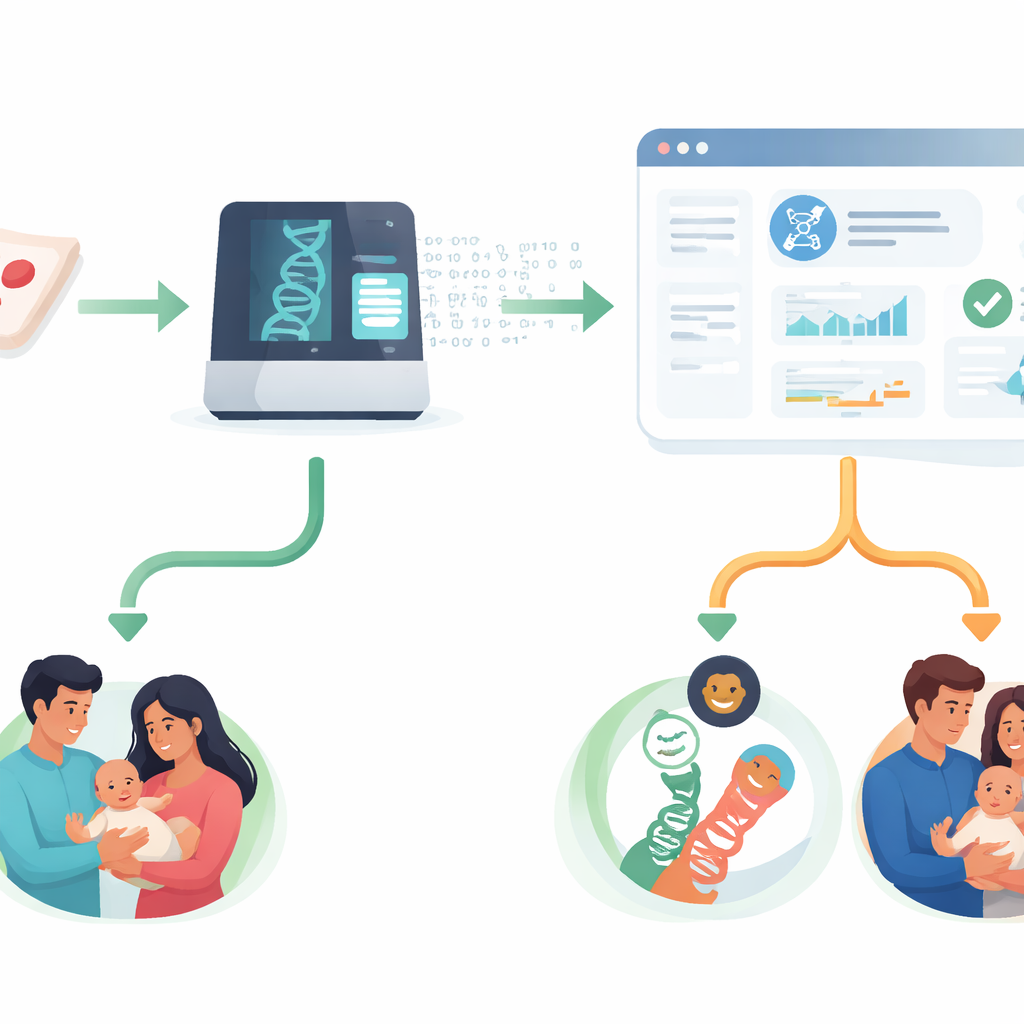
The BabyScreen+ study, run in Victoria, Australia, used an online platform called Genetics Adviser to offer genomic newborn screening to 1000 babies. Expectant parents were invited during the third trimester of pregnancy to log into the platform from home. There they could watch short animations, read simple explanations, work through a values quiz about what mattered most to them, and then decide whether to consent to screening. Later, when the baby’s dried blood spot was tested, families with a reassuring (low-chance) result received it back through the same platform; those with a concerning (high-chance) result spoke with a genetic counselor by phone.
How parents used the system
More than a thousand participants created a profile, and 1007 went on to consent to genomic screening and give feedback on the online tool. Most were highly positive: 96% found the site easy to use and nearly everyone finished in under 20 minutes. Over 80% correctly answered at least six out of eight basic knowledge questions about genomic newborn screening right after using the platform, and that understanding stayed high three months after results were given. Parents especially grasped ideas like false positive and false negative results, though they were less confident about what “treatable” means and how family history fits in. Only about one in seven participant-initiated contacts with the study team asked for extra genetic counseling, suggesting that most families felt well supported by the online materials alone.
What parents said in their own words
In follow-up interviews, parents often described the online process as convenient, flexible, and “efficient,” especially when compared with trying to fit long discussions into busy clinic visits. Many appreciated being able to go through the material at their own pace and share it with partners. At the same time, participants stressed that a fully online approach would not suit everyone. They pointed out that people with limited reading skills, limited digital access, or who speak languages other than English may need different or additional options. Some also found the long list of possible conditions daunting and wanted more user-friendly explanations and clearer descriptions of what support would be available if a high-chance result were found.
Looking ahead to fair and scalable screening
The study shows that a carefully designed digital platform can deliver consistent, clear information about genomic newborn screening to many families, while preserving strong understanding and leaving only a small need for one-on-one counseling. This could ease pressure on a limited genetics workforce and make it more realistic to offer expanded screening on a population scale. However, the participants were mostly people comfortable with English and online tools, and no one fell into a strongly skeptical “concerned” profile. The authors conclude that online systems like Genetics Adviser can form the backbone of large-scale genomic screening, but must be expanded with multilingual, culturally adapted, and alternative offline options so that all families—not just the most digitally confident—can make informed choices about their baby’s genomic testing.
Citation: Downie, L., Caruana, J., Kugenthiran, N. et al. Supporting decisions about genomic newborn screening at scale in the digital age: the BabyScreen+ study. npj Genom. Med. 11, 16 (2026). https://doi.org/10.1038/s41525-026-00551-6
Keywords: genomic newborn screening, digital health, informed consent, genetic counseling, population screening