Clear Sky Science · en
Comprehensive genomic analysis of non-BRCA familial breast cancer in an Arab population
Why this study matters to families
Many families wonder why breast cancer strikes some relatives but not others, and why it sometimes appears at a young age. This study looks closely at inherited DNA changes in Arab women from Jordan who developed breast cancer despite testing negative for the well known BRCA1 and BRCA2 genes. By comparing their genomes to thousands of healthy Arab women, the researchers searched for other hidden risk factors that might help doctors better estimate risk and guide care in this understudied population.
Looking beyond the usual suspect genes
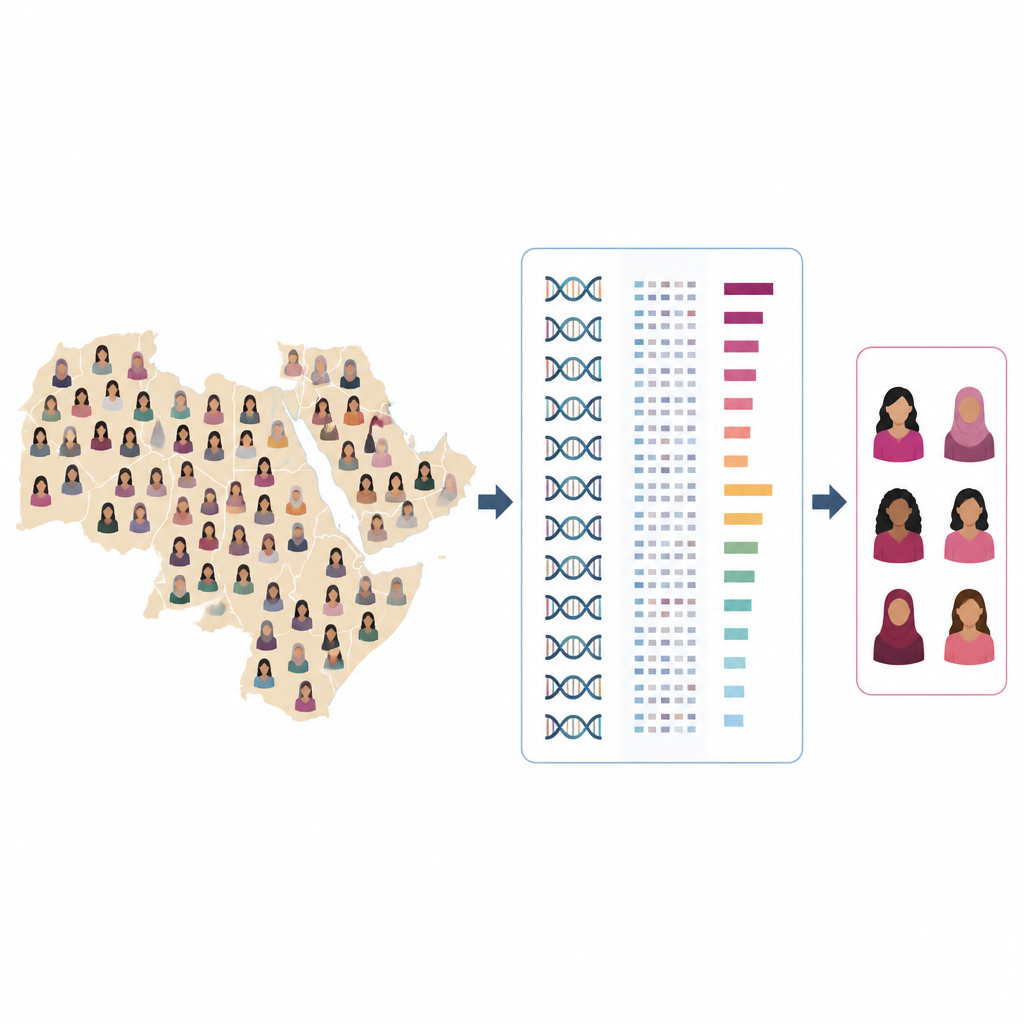
Only a small fraction of breast cancers are caused by strong inherited mutations, and most attention has focused on BRCA1 and BRCA2. In Jordan and across the wider Middle East and North Africa region, however, the pattern of BRCA mutations does not fully explain why so many families are affected. The team assembled DNA data from 180 high risk breast cancer patients who did not carry BRCA mutations and from nearly 6000 healthy Arab women. Using whole genome sequencing, which reads nearly every letter of a person’s DNA, they scanned a large set of genes previously linked to breast cancer and to cancer in general to identify rare changes that might tilt the odds toward disease.
Rare genetic changes that stand out
The researchers found several rare, harmful changes in genes already known to influence breast cancer risk, including TP53, PALB2, ATM, BARD1, and RAD51D. These changes appeared only in patients and not in the healthy control group. Many of them were so uncommon that they do not appear in global DNA reference databases at all, suggesting they may be specific to this population or even to individual families. The study also uncovered unusual variants of uncertain meaning in additional risk genes such as NF1 and CHEK2. Together, these findings show that many non BRCA families carry other inherited changes that may raise their risk, even though each individual variant is rare.
Clues from a wider cast of cancer genes
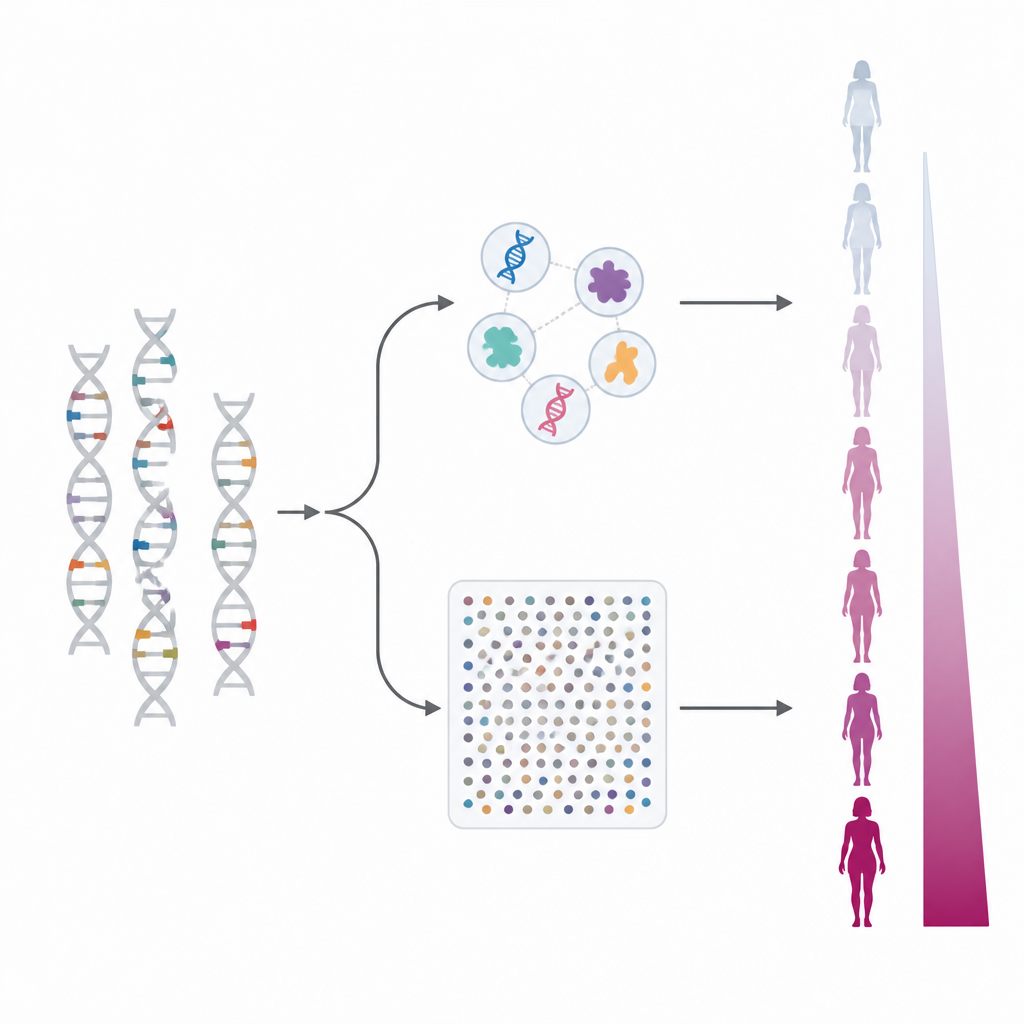
To see whether other genes might also matter, the team widened its search to more than 1200 genes that play roles in cancer biology. They pinpointed rare variants that were more common in patients than in controls, including changes in genes involved in DNA repair and cell growth control. A gene called CHD2 showed the strongest overall enrichment of rare damaging variants in patients, and the well known ATM gene again emerged as important. The researchers caution that many of these variants are currently labeled as disease causing for conditions other than cancer, or have unclear effects, and that the small number of patients means results must be interpreted carefully. Still, these patterns hint that a broader network of genes may shape inherited breast cancer risk in Arab women.
Testing combined risk across many small DNA changes
Not all inherited risk comes from single powerful mutations. Many common DNA differences each nudge risk by a tiny amount, and together they can be summarized as a polygenic risk score. The authors evaluated 120 existing breast cancer scores, originally developed mostly in non Arab populations, in their Jordanian group. More than four fifths of these scores were linked to whether a woman had breast cancer, and four scores in particular separated patients from healthy women reasonably well. For the best performing score, women in the highest tenth of the score distribution had more than three times the odds of being in the patient group compared with other women. This suggests that such scores could one day help identify Arab women who might benefit from earlier or more frequent screening.
What this means for patients and care
Overall, the study shows that inherited breast cancer risk in Arab families often involves rare changes in several non BRCA genes, along with the combined effect of many small DNA differences. It also highlights that tools built in European populations do not automatically transfer perfectly to other groups. For families, the work supports the idea that broader genetic testing and improved risk scores tailored to local populations could eventually refine who is considered high risk. For scientists and clinicians, it underscores the need for larger, ancestry specific studies and laboratory experiments to clarify which DNA changes truly matter and how they might guide prevention, screening, and treatment for women across the Middle East and North Africa.
Citation: Ullah, E., Abdel-Razeq, H., Bentebbal, S. et al. Comprehensive genomic analysis of non-BRCA familial breast cancer in an Arab population. npj Breast Cancer 12, 67 (2026). https://doi.org/10.1038/s41523-026-00926-z
Keywords: breast cancer genetics, familial breast cancer, Arab population, polygenic risk score, rare variants