Clear Sky Science · en
Heterogeneity and immune microenvironment of early invasive estrogen receptor-positive breast cancer reveal an immune-rich subset
Why this breast cancer study matters
Most breast cancers are fueled by the hormone estrogen and are treated with drugs that block this signal. Yet many patients still face the threat of the cancer returning years later. This study looks beyond the cancer cells themselves and examines the surrounding neighborhood of immune and support cells inside early estrogen receptor–positive (ER+) breast tumors. By mapping where these cells sit and how active they are, the researchers uncover a surprisingly varied immune landscape that could help explain why some ER+ cancers behave more aggressively—and may point toward smarter use of immunotherapy.
A closer look inside early breast tumors
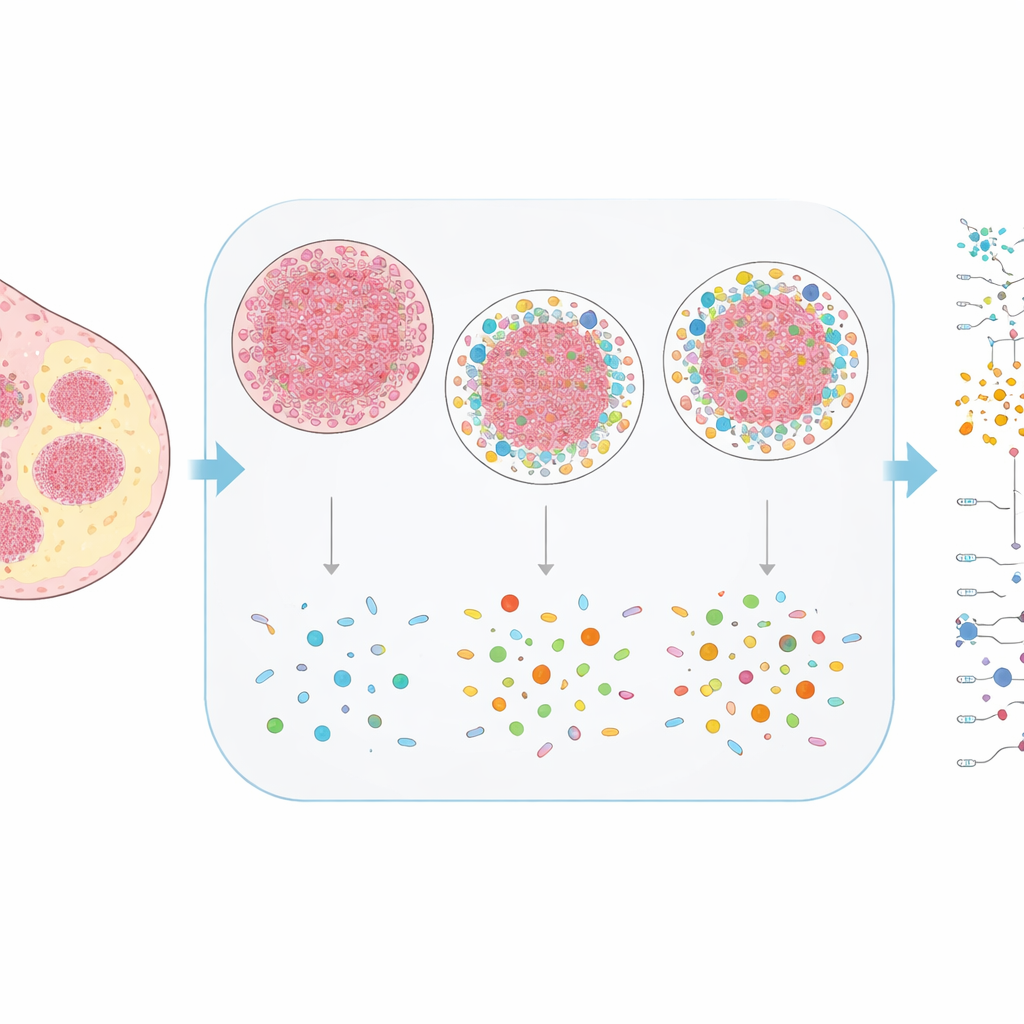
The team analyzed tumor samples from 57 women with early-stage invasive breast cancer, most of whom had ER+ disease. Instead of relying on a single biopsy, they sampled many tiny cores from different parts of each lumpectomy. Using advanced spatial profiling tools, they measured dozens of proteins and hundreds of genes separately in cancer cell clusters and in the surrounding tissue known as the tumor microenvironment. This approach let them see how immune and support cells are arranged across the tumor, rather than averaging everything together.
Not all ER+ tumors are equally “cold”
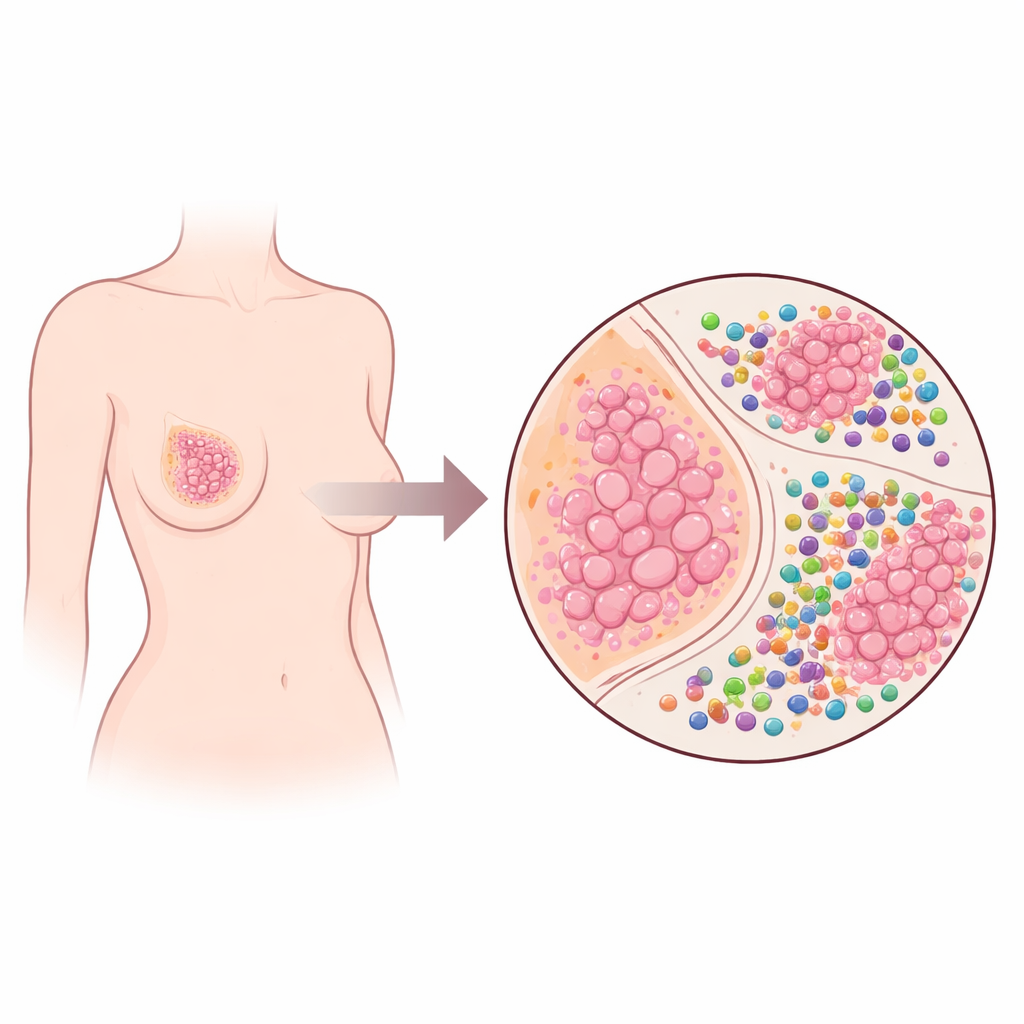
ER+ breast cancer is often described as “immune cold,” meaning it seems to attract relatively few immune cells compared with other subtypes. In this study, however, the picture was more complex. As expected, most immune-related proteins were more abundant outside the cancer nests, in the surrounding tissue. But in a notable subset of samples, some tumor regions showed high levels of immune proteins right inside the cancer cell clusters. Even within a single patient’s tumor, neighboring regions could look very different—some rich in immune signals and others sparse. This patchwork pattern suggests that a single biopsy may miss important hotspots where the immune system is actively engaging the cancer.
Hot spots, cold spots, and what they mean
To make sense of this variation, the researchers grouped each sampled region into simple categories based on how many immune cells and fibroblasts (support cells that help shape tissue structure) were present. Regions with few immune cells in both the tumor and surrounding tissue were labeled “cold,” while those with abundant immune and support cells in both compartments were labeled “hot” or “invading.” When they compared gene activity between these groups, hot regions showed increased signals related to immune cell movement, communication molecules, and immune checkpoints—features of an active but partly restrained immune response. Cold regions, by contrast, tended to overexpress genes linked to cell division and DNA repair, hinting at more rapidly growing cancer cells in areas where immune surveillance is weaker.
How hormone signaling ties into the immune picture
The investigators also focused on differences within ER+ tumors themselves by separating samples with relatively low versus high levels of the estrogen receptor protein. Tumor regions with lower estrogen receptor levels were enriched for gene pathways involved in immune cell migration, antigen presentation, and cytokine signaling. In simpler terms, ER–low areas looked more “immune awake,” with stronger signs that immune cells were being drawn in and activated. This suggests that not all ER+ cancers are equally quiet from an immune standpoint; some may behave more like the immune-active forms of breast cancer that already benefit from immunotherapy.
Hints for prognosis and future treatment
To see whether these patterns matter for patients’ outcomes, the team examined an independent large dataset of luminal (hormone-driven) breast cancers. Gene sets linked to immune-hot regions were generally associated with better survival, while those tied to immune-cold, highly proliferative regions were linked to higher risk of recurrence. Together, these findings support the idea that the balance between immune activity and unchecked tumor growth within ER+ cancers can influence long-term outcomes, even when all tumors look similar under standard testing.
What this means for patients
This work shows that early ER+ breast cancers are not uniformly quiet from an immune standpoint. Instead, they contain a mosaic of immune-rich and immune-poor areas, with distinct gene activity beneath the surface. For patients, the takeaway is that future tests may move beyond a single receptor status label and instead measure the immune “heat” and spatial patterns across the tumor. Such information could help identify a subset of ER+ cancers that might benefit from immunotherapy or combination treatments targeting both hormone and immune pathways, ultimately aiming for more tailored and durable control of the disease.
Citation: Jain, D., Liao, L., Talebian, V. et al. Heterogeneity and immune microenvironment of early invasive estrogen receptor-positive breast cancer reveal an immune-rich subset. npj Breast Cancer 12, 56 (2026). https://doi.org/10.1038/s41523-025-00875-z
Keywords: estrogen receptor positive breast cancer, tumor immune microenvironment, spatial profiling, immune hot and cold tumors, cancer heterogeneity