Clear Sky Science · en
Exopolysaccharides of Lactobacillus crispatus mediate key balancing interactions with the vaginal mucosa
Why the Bugs in the Vaginal Tract Matter
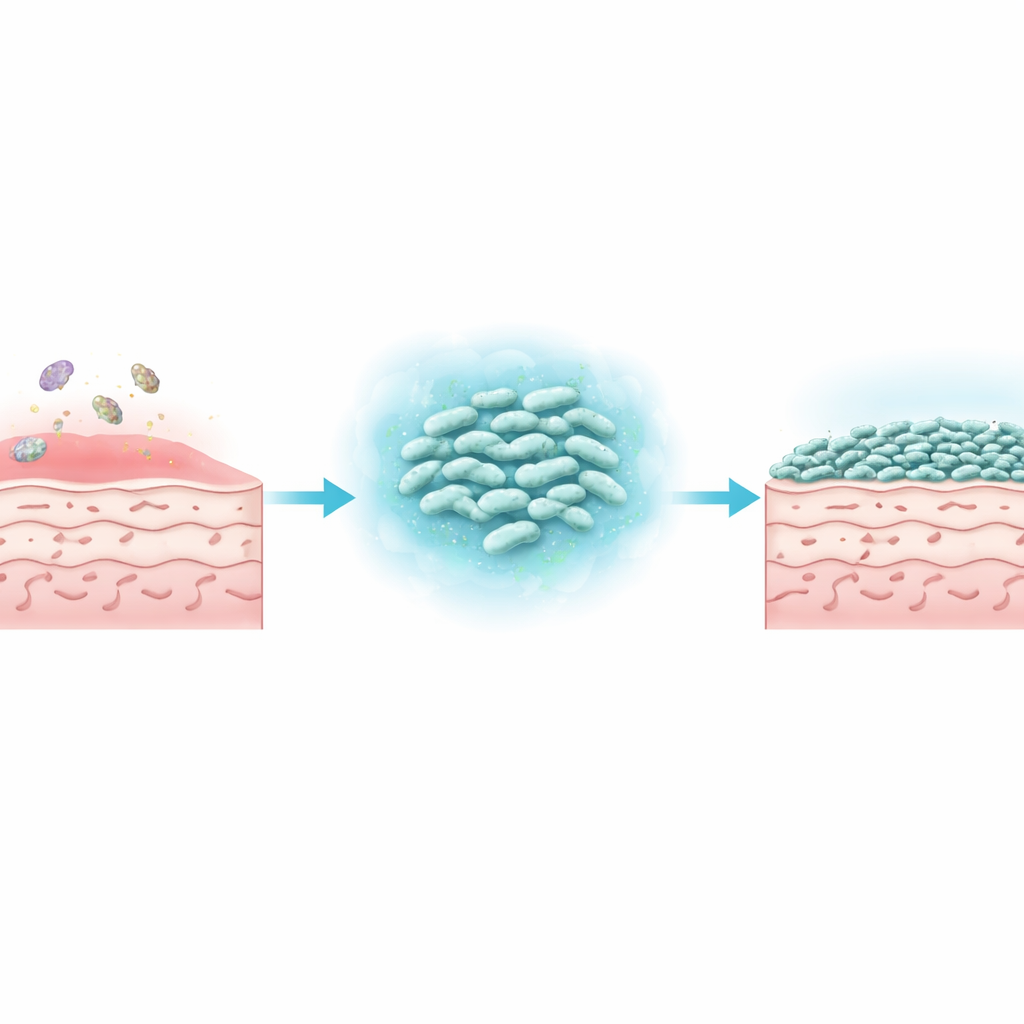
The human vagina is home to trillions of microbes that quietly help protect against infections, support fertility, and maintain comfort. Among these microbes, one bacterial species, Lactobacillus crispatus, is strongly linked with good vaginal health. This study explores how a sugary coat on the surface of L. crispatus helps the bacteria live in harmony with the vaginal lining and keep the local immune system in balance.
A Protective Partner in the Vaginal Ecosystem
Women whose vaginas are dominated by L. crispatus tend to have fewer infections and better reproductive outcomes. However, it has not been clear which features of this bacterium make it such a good partner. The researchers focused on exopolysaccharides, or EPS—chains of sugar molecules that form a soft outer layer around the bacterial cell. Using genetic data from many Lactobacillus strains, they found that L. crispatus carries a conserved group of genes that build this sugary coat. One gene in particular, called epsE, stood out as a key starter switch for EPS production and was often active in vaginal samples from healthy women, suggesting it plays an important role in real-life conditions.
What Happens When the Sugary Coat Is Removed
To test the function of this coat, the team engineered a mutant version of L. crispatus that lacked epsE and therefore could no longer make its normal EPS layer. Under the microscope, the wild-type bacteria showed a thick, smooth outer shell, while the mutant cells looked rough and had far less surface sugar. Chemically, the EPS from the wild-type strain contained a mix of nine different building blocks, especially the sugars D-glucosamine and D-galactose. Removing epsE sharply reduced the total amount of these sugars, confirming that this gene is central to building the characteristic EPS of this vaginal strain.
Sticking, Coating, and Living on the Vaginal Surface
The researchers then examined how the sugary coat affected the bacteria’s behavior on different surfaces. On plastic, the full EPS layer helped L. crispatus form thicker biofilms—cooperative communities that can act as a protective carpet. Surprisingly, the EPS-free mutant actually clung more tightly to human vaginal cells, in both simple flat cell layers and a complex three-dimensional model that mimics real tissue. This suggests that the EPS layer makes the bacterial surface smoother and hides some of the sticky molecules, favoring a gentle coating of the vaginal surface rather than aggressive attachment to individual cells.
Quieting Inflammation While Keeping Watch
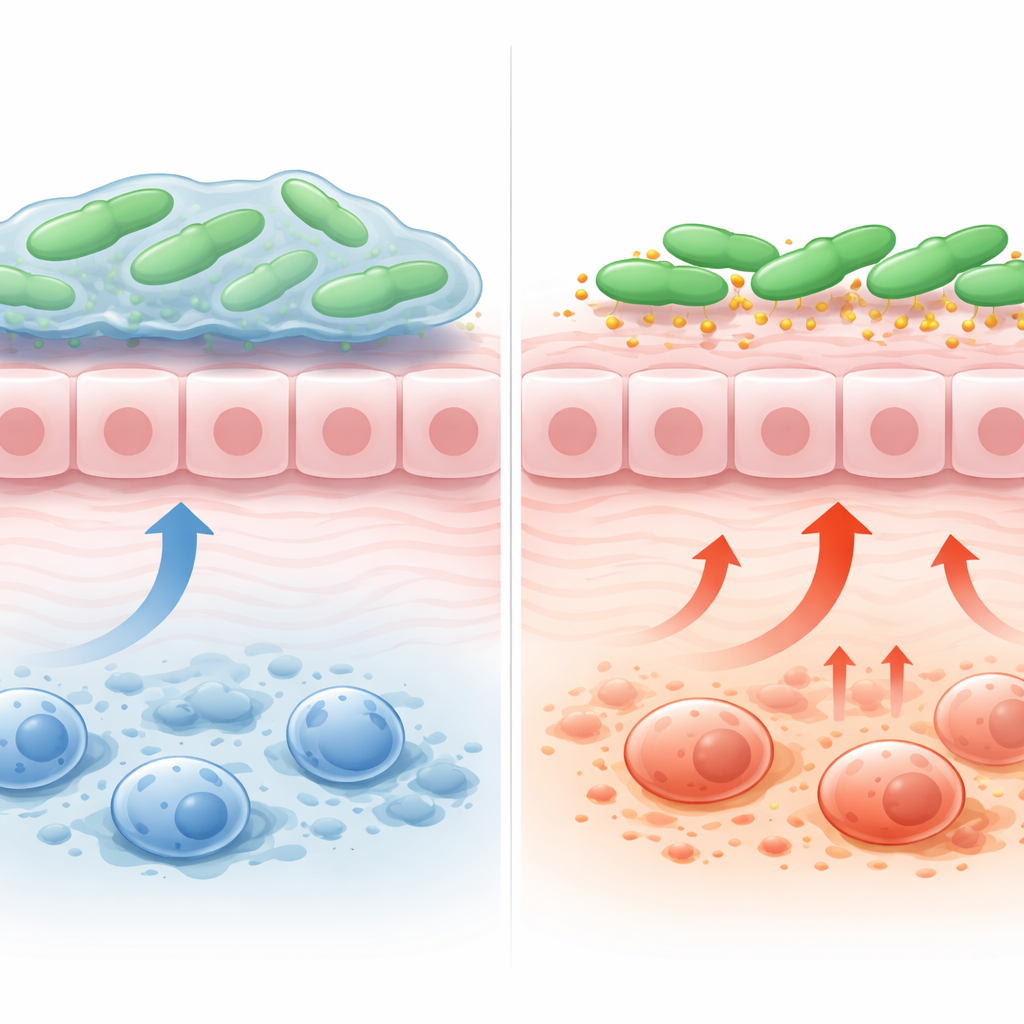
Because the vaginal lining must tolerate friendly microbes while still defending against pathogens, the team investigated how the EPS layer affected immune responses. Using immune cells and vaginal cell models, they found that both wild-type and mutant L. crispatus activated basic defense pathways, but the mutant without EPS triggered stronger antiviral signaling in monocytes and higher levels of pro-inflammatory messengers such as IL-1β, IL-6, and IL-8 in vaginal cells. In contrast, the EPS-coated wild-type strain encouraged production of markers linked to immune regulation and tissue protection, including LAP TGF-beta-1 and CST5, and boosted certain chemokines that guide immune surveillance in a three-dimensional vaginal model. Many of these same markers were also detected in vaginal fluid from healthy women, showing that the in vitro findings reflect real-life biology.
What This Means for Vaginal Health
Overall, the study reveals that the sugary coat of L. crispatus is more than a passive shield; it is an active mediator that reduces excessive inflammation, encourages protective signaling, and shapes how the bacteria interact with the vaginal surface. By promoting a stable biofilm and dampening aggressive immune reactions, EPS helps maintain a balanced environment that is resilient yet watchful against threats. These insights deepen our understanding of how “good” bacteria support vaginal health and point toward future microbiome-based strategies—such as better probiotics or targeted therapies—that could harness or mimic this natural protective coating.
Citation: Croatti, V., Dricot, C., Eilers, T. et al. Exopolysaccharides of Lactobacillus crispatus mediate key balancing interactions with the vaginal mucosa. npj Biofilms Microbiomes 12, 70 (2026). https://doi.org/10.1038/s41522-026-00937-5
Keywords: vaginal microbiome, Lactobacillus crispatus, exopolysaccharides, mucosal immunity, women's health