Clear Sky Science · en
Classification of the tongue microbiota and its associations with lifestyle factors and health status
Why the Bacteria on Your Tongue Matter
Your tongue is home to a bustling community of microbes that quietly influence both your mouth and the rest of your body. While many people think of brushing teeth and gums as the key to oral health, this study shows that the mix of bacteria on the tongue itself can reveal patterns linked to diet, smoking, weight, liver health, and more. By sorting these tiny residents into a few easy-to-understand groupings, the researchers suggest we might someday gauge health risks from a simple tongue swab.
Three Main Tongue Bacteria Patterns
Working with 729 adults in northern Japan, the researchers analyzed tongue-coating samples and grouped people according to which bacterial genus was most common. They found three clear types, which they called orotypes: one dominated by Neisseria (N type), one by Prevotella (P type), and one by Streptococcus (S type). Nearly half of participants had the P type, a little over a third had the N type, and one fifth had the S type. Each type showed different levels of bacterial variety, with the N type having the richest and most even mix of species, and the S type the poorest diversity. 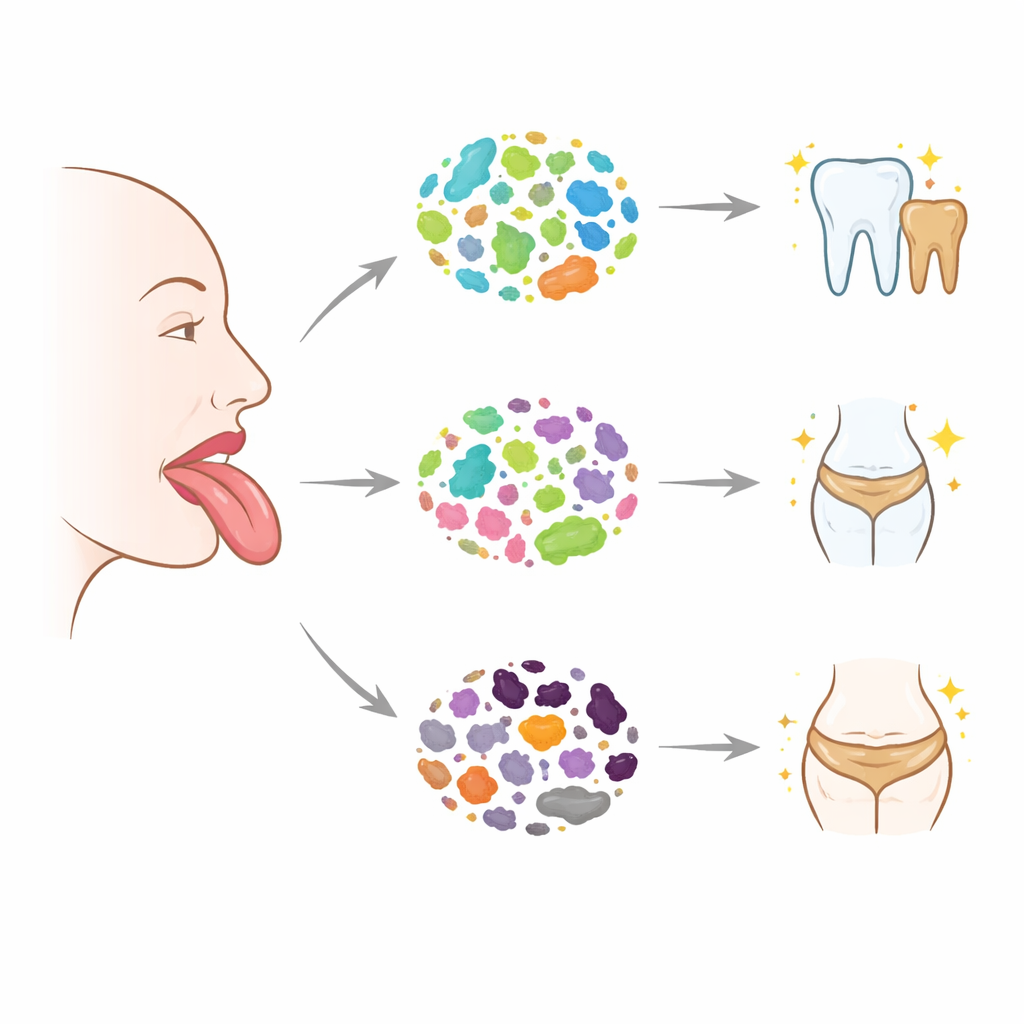
Hidden Microbial Neighborhoods
To look beyond single species, the team built “co-occurrence networks” that map which bacteria tend to appear together. This revealed several tight-knit microbial neighborhoods, or communities, that aligned with the three orotypes. For instance, the N type community included species that were especially common or rare in N-type tongues, while separate communities were linked to the P and S types. Interestingly, some minor genera, present in low amounts, occupied central positions in these networks, hinting that even rare microbes may help organize the broader tongue ecosystem.
Links to Daily Habits and Body Health
The researchers then examined how these tongue types related to lifestyle and health in 644 participants with full data. Even after adjusting for multiple factors, clear patterns emerged. The N type was more common in non-smokers, people who brushed their teeth more often, and those who ate more vegetables and fewer sugary foods and snacks. The P type tended to appear in smokers and people who ate more sugar, sweetened foods, fruits, and snacks but fewer vegetables. The S type was linked to frequent intake of sweetened or discretionary drinks, lower mushroom intake, and less frequent brushing. Health measures mirrored these habits: compared with the N type, the S type was associated with fewer teeth, more cavities and periodontal disease, worse scores on an oral-health quality-of-life survey, larger waistlines, and elevated liver enzymes—markers often tied to metabolic syndrome. The P type showed milder associations, including fewer teeth and lower “good” HDL cholesterol.
Stable Tongue Types and a Simple Classifier
To test whether these tongue types were fleeting or persistent, the team used data from 403 people who took part in health checks in 2016, 2019, and 2022. About half of those with N or P types kept the same orotype over six years, and about one third of S-type individuals remained in that group, suggesting that tongue patterns are fairly stable over time. The scientists also trained computer models to predict a person’s orotype from their tongue bacteria profile. Several methods, including multinomial logistic regression, correctly classified orotypes with very high accuracy (area under the ROC curve above 0.95). Strikingly, a simplified model using just two genera—Rothia and Neisseria—still achieved strong performance, raising the possibility of low-cost tests. 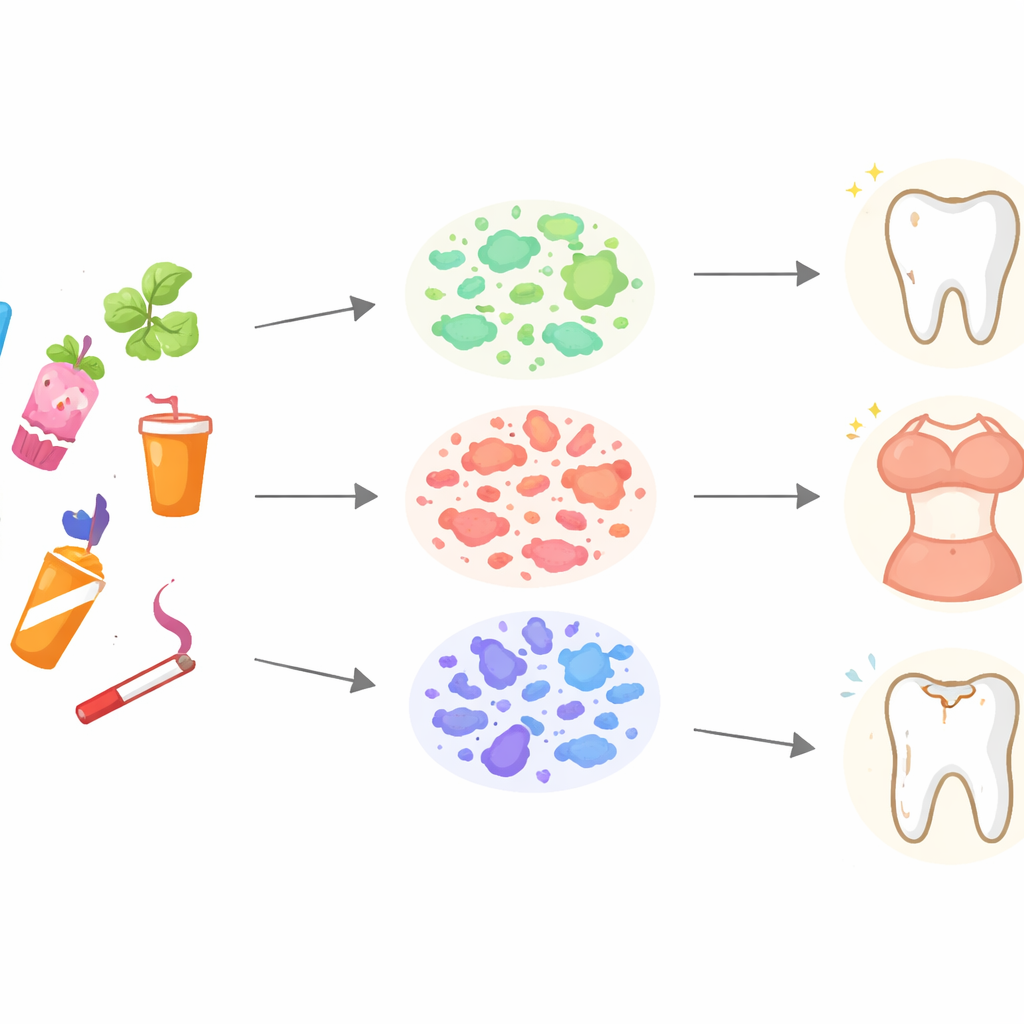
What This Means for Everyday Health
In simple terms, this study shows that the microbes coating your tongue can be grouped into three main patterns that reflect your lifestyle and are tied to both oral problems and broader metabolic markers. The Streptococcus-heavy S type, in particular, tracks with less favorable habits and a higher chance of signs linked to metabolic syndrome, while the Neisseria-heavy N type aligns with more health-conscious behavior and better oral findings. Although the exact biological mechanisms remain to be worked out, classifying people by tongue orotype could become a convenient way to monitor oral microbial communities and flag health risks early—perhaps one day turning a quick tongue swab into a window on your overall well-being.
Citation: Yamauchi, T., Waki, N., Suzuki, S. et al. Classification of the tongue microbiota and its associations with lifestyle factors and health status. npj Biofilms Microbiomes 12, 75 (2026). https://doi.org/10.1038/s41522-026-00936-6
Keywords: oral microbiome, tongue bacteria, lifestyle factors, metabolic health, microbiome typing