Clear Sky Science · en
Protein intake and its interaction with dietary patterns on clinical outcomes among older adults
Why protein matters as we grow older
Getting older often means worrying about staying steady on our feet, avoiding falls, and keeping up with daily tasks. This study looks at how much protein older adults eat, what kinds they choose, and how these habits fit into overall healthy eating patterns. The researchers wanted to know whether protein can help older people stay mobile, independent, and alive for longer, and how it works together with well known eating styles like the Mediterranean diet.
Who was studied and what they ate
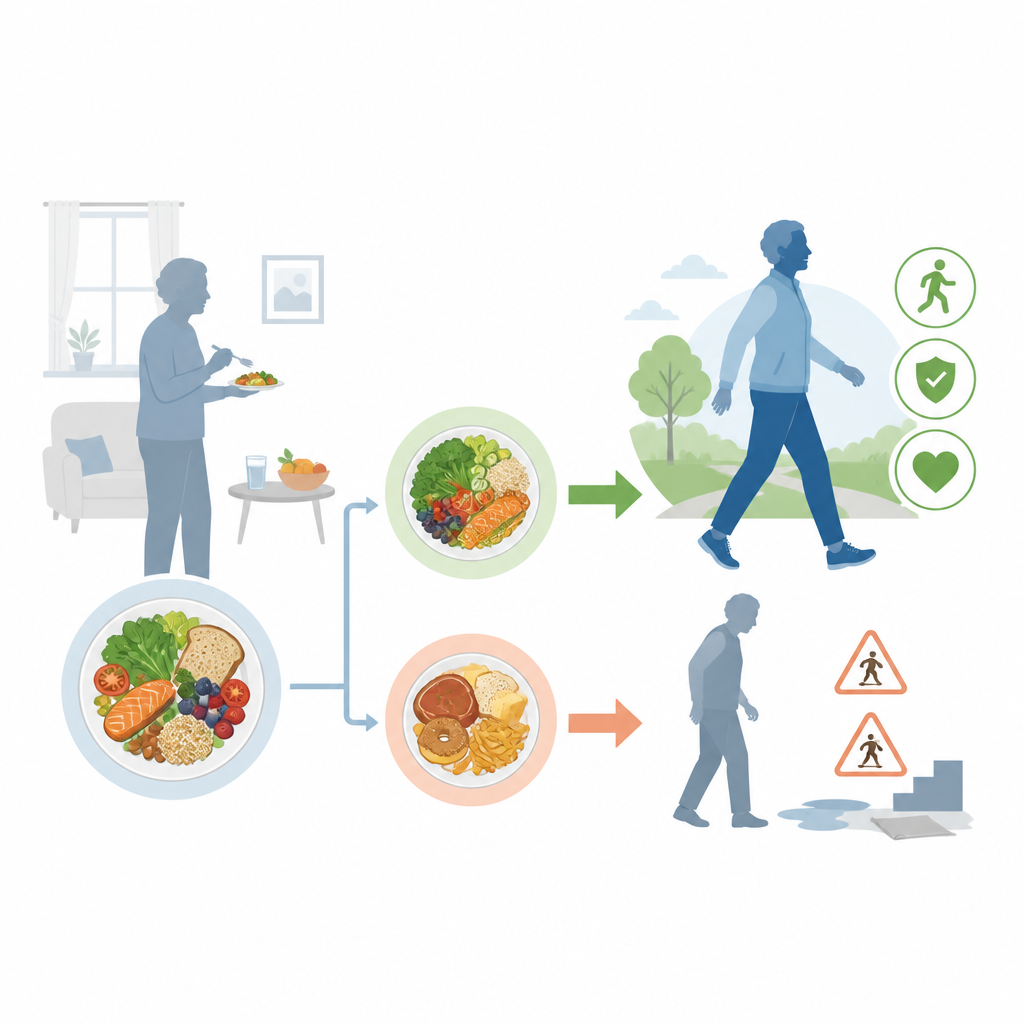
The team used data from more than 500 adults in England who were at least 65 years old. These volunteers reported what they usually ate using a detailed food questionnaire. From this, the researchers calculated total protein intake, protein per kilogram of body weight, and the share of calories coming from protein. They also estimated how much protein came from animal foods, such as meat, fish, eggs, and dairy, versus plant foods like beans, grains, nuts, and seeds. In addition, they measured how closely people followed two healthy eating patterns: the Mediterranean diet, rich in fruits, vegetables, whole grains, and olive oil, and a World Health Organization diet score that reflects general healthy eating advice.
Tracking movement, daily tasks, and survival
At the beginning of the study and again about six years later, participants answered questions about their ability to walk, climb stairs, dress, bathe, shop, and handle money. Researchers grouped these into simple measures of mobility problems, basic and more complex daily activities, and a broader concept of frailty. They also timed how fast people could walk a short distance, and recorded whether they had fallen and whether they died during the follow up period. This allowed the team to see how protein intake related not just to current health, but also to later changes in function and survival.
Higher protein linked to better function
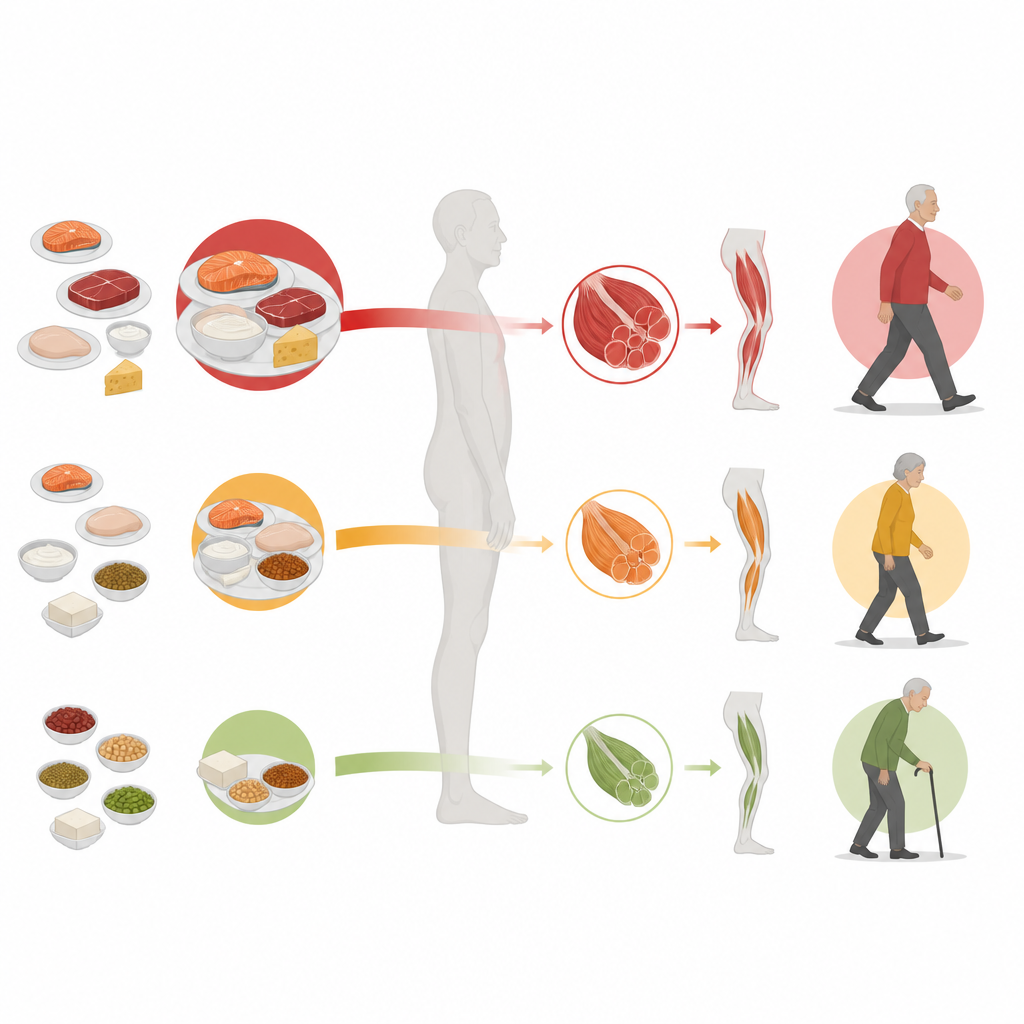
Older adults who ate more protein for their body weight were less likely to report mobility problems and difficulties with basic daily activities at the start of the study. Over time, those with higher protein intake, especially at or above around 0.8 to 1.0 grams per kilogram of body weight per day, had a lower risk of new or worsening disability, falls, and slowing walking speed. When protein made up a larger share of total calories, particularly above about 18 percent, people were less likely to slide toward pre frailty and had smaller declines in how fast they walked. Importantly, even after considering age, sex, physical activity, total calories, and other nutrients, older adults who reached at least 0.8 grams of protein per kilogram per day were less likely to die during the follow up period.
How protein and healthy diets work together
The study also asked whether protein changes the impact of broader eating patterns on health. Both the Mediterranean style diet and the World Health Organization diet score were tied to better movement and walking speed, but their benefits were stronger in people who also ate more protein. Protein from animal sources played a notable role. A higher balance of animal to plant protein strengthened the link between Mediterranean style eating and better mobility. In several tests, animal protein appeared to help explain why people who ate in line with these healthy patterns moved better, possibly because animal foods tend to supply more of the amino acids that older muscles need to stay strong.
What this means for aging well
For a general reader, the message is that how much protein older adults eat, and where it comes from, may make a real difference in how well they move and function. In this group of relatively healthy older adults, protein intake above current basic recommendations was associated with fewer falls, slower decline in walking speed, less disability, and lower risk of death over several years. Protein rich eating also seemed to boost the positive effects of broadly healthy diets. While this type of study cannot prove cause and effect, it suggests that aiming for at least about 1 gram of protein per kilogram of body weight per day, with substantial contributions from high quality animal sources within an overall balanced diet, may support more active and independent aging.
Citation: Coelho-Júnior, H.J., Marzetti, E. Protein intake and its interaction with dietary patterns on clinical outcomes among older adults. npj Aging 12, 68 (2026). https://doi.org/10.1038/s41514-026-00368-8
Keywords: protein intake, healthy aging, older adults, Mediterranean diet, mobility