Clear Sky Science · en
Dietary metabolomic determinants of frailty through inflammation in the Canadian Longitudinal Study on Aging
Why Food and Aging Are Closely Linked
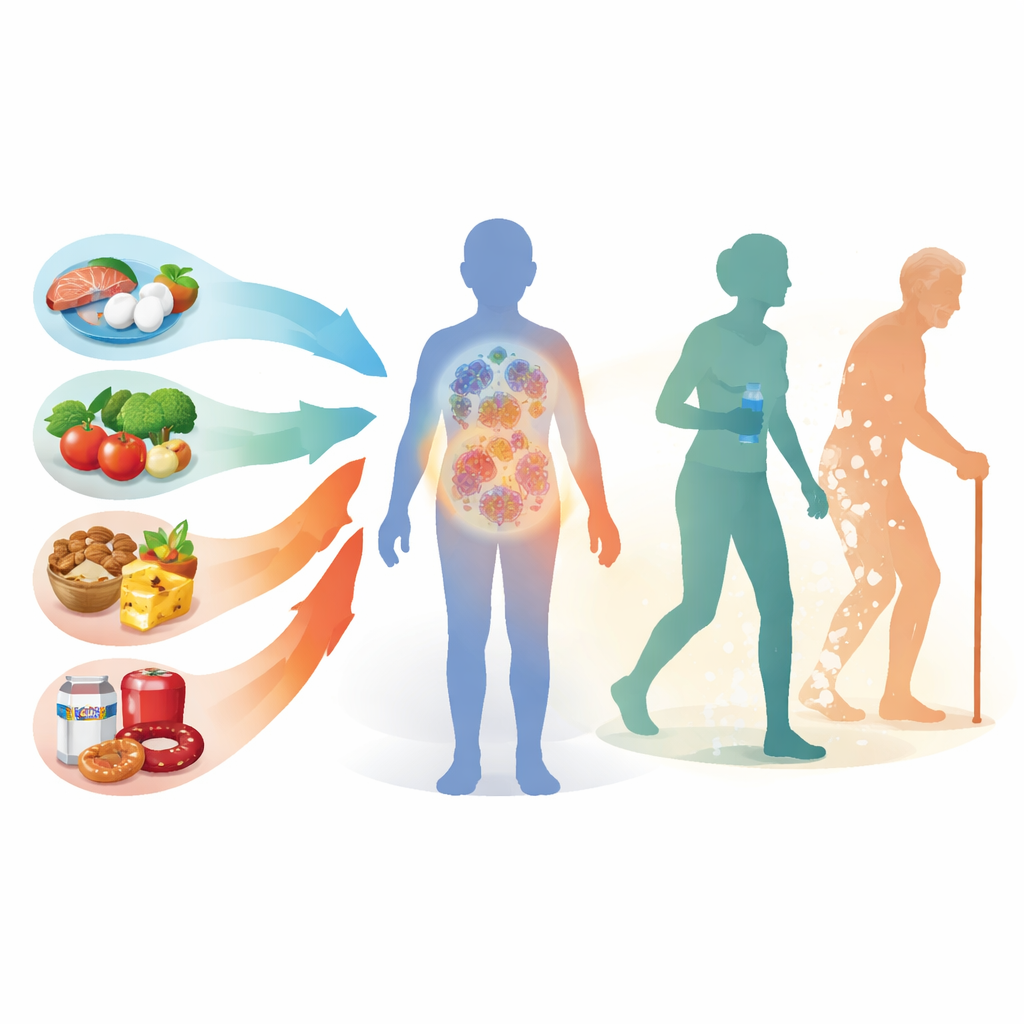
As people grow older, many worry about losing strength, energy, and independence. Scientists call this state "frailty"—a condition where the body becomes less resilient and more vulnerable to illness or injury. This study explores how what we eat is reflected in tiny molecules in our blood, and how those molecules, in turn, influence inflammation in the body and the risk of becoming frail. By tracking thousands of Canadian adults over several years, the researchers show that certain dietary patterns leave a chemical “fingerprint” that can either protect against frailty or help drive it.
How Everyday Meals Leave Chemical Traces
The researchers used data from nearly 10,000 middle-aged and older adults in the Canadian Longitudinal Study on Aging. Participants answered questions about how often they ate common foods such as fish, eggs, fruits, vegetables, meat, dairy, nuts, sweets, and processed snacks. At the same time, blood samples were collected and screened for more than 800 small molecules, known as metabolites, that are produced when the body processes food. Using advanced statistical methods, the team identified clusters of metabolites that tended to appear together and could be traced back to broad food groups and shared biological functions.
Inflammation as the Middleman
To understand how these metabolite patterns connect diet to frailty, the study focused on three well-known blood markers of inflammation: tumor necrosis factor alpha, interleukin-6, and C-reactive protein. The scientists built models that followed a chain from food-related metabolites, to these inflammatory markers, and finally to changes in frailty over three years. They found that many of the metabolite clusters influenced frailty both directly and indirectly through inflammation. In other words, certain diets appeared to shape the body’s inflammatory set point, which then helped determine whether people became more or less frail over time.
Helpful Fats, Plant Compounds, and Protective Foods
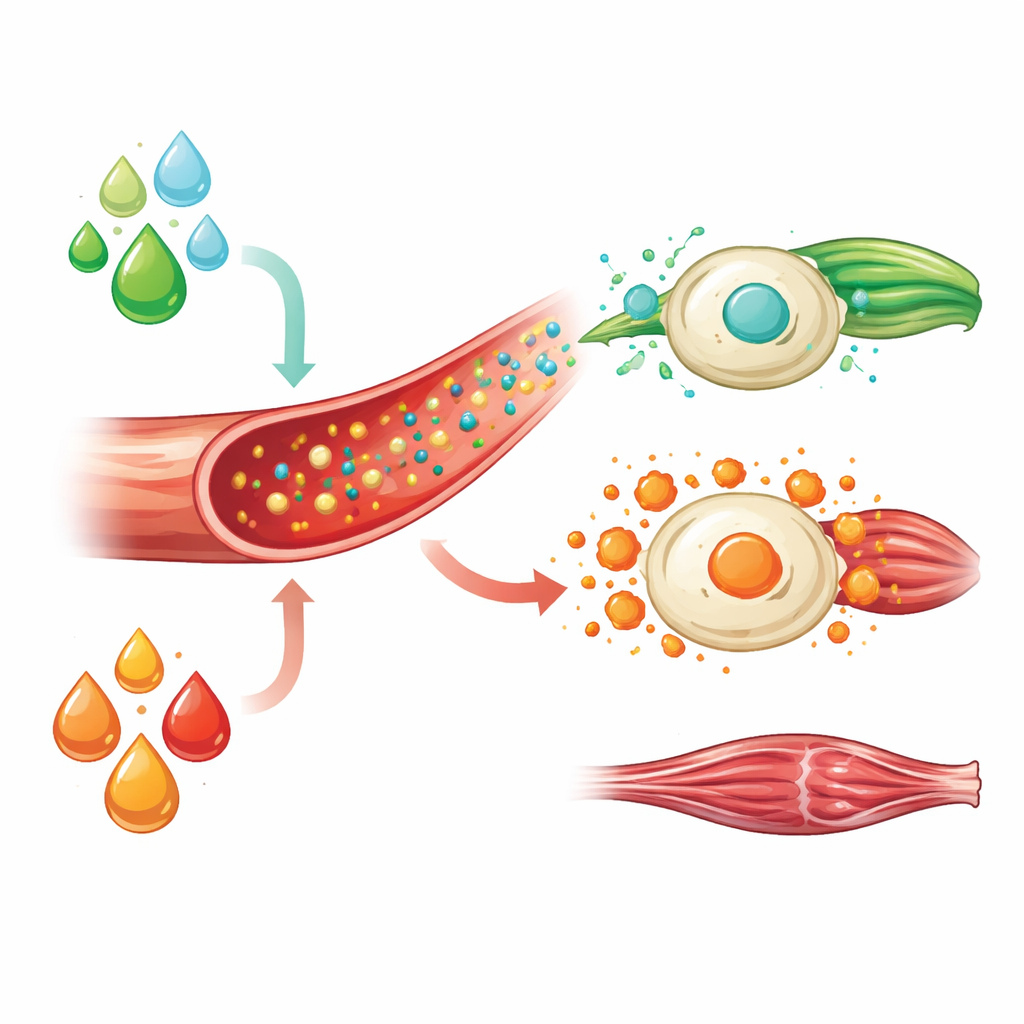
Some metabolites were clearly linked to better aging outcomes. Molecules tied to omega-3 fats from fish and eggs were associated with lower inflammation and reduced frailty risk, while omega-6 fats, when high relative to omega-3s, showed the opposite pattern and were linked to more inflammation and higher frailty risk. Specialized lipids called plasmalogens, largely coming from meats and eggs, and certain sphingomyelins from dairy and meat, were tied to lower frailty, partly by dampening inflammation. Metabolites originating from fruits, vegetables, nuts, and legumes—many with antioxidant and anti-inflammatory properties—also predicted a lower chance of becoming frail. These plant-derived compounds appear to help neutralize harmful reactive molecules, support muscle function, and keep inflammatory signals in check.
When Foods Push the Body Toward Harm
Other metabolite patterns pointed to increased risk. A three-molecule panel related to dairy, sugary foods, and high-fiber foods (TMAVA, gulonate, and cystathionine) was linked to higher frailty risk, in part through greater inflammation, although the exact biological roles of these compounds remain uncertain. Metabolites that reflect processed meat intake, such as trans-4-hydroxyproline, were associated with greater frailty and have been tied to bone loss and poorer muscle function. Creatine, which can be abundant in overcooked or heavily processed meat, unexpectedly tracked with higher inflammation and frailty risk, suggesting that how meat is prepared and combined with other foods may be as important as the total amount eaten.
Differences by Age and Sex
The study also found that these diet–metabolite–inflammation pathways do not look exactly the same for everyone. Among adults aged 45–64, beneficial and harmful metabolites often showed both direct and inflammation-related links to frailty, and effects were generally stronger. In people aged 65 and older, associations tended to be weaker and more strongly driven by inflammation, hinting that older bodies may be especially sensitive to chronic low-grade inflammatory signals. Men showed stronger protective associations for lipid-related metabolites such as plasmalogens, while women showed clearer links for metabolites tied to high-fiber foods and certain compounds found in sweets, revealing sex-specific nuances in how diet interacts with biology.
What This Means for Healthy Aging
Overall, the study argues that frailty is not just an unavoidable part of getting older but a condition shaped by a lifelong conversation between diet and the body’s chemistry. Blood metabolites serve as messengers that translate what we eat into either calming or aggravating signals for the immune system. Patterns rich in omega-3 fats and plant-based compounds, with a balanced intake of animal proteins and fewer processed meats and sugary foods, appear to foster lower inflammation and stronger resilience. While the work is observational and cannot prove cause and effect, it supports the idea that more personalized nutrition—guided by how our bodies actually respond to foods—could become a powerful tool to help people stay stronger and more independent as they age.
Citation: Rafiq, T., Ma, J., Joshi, D. et al. Dietary metabolomic determinants of frailty through inflammation in the Canadian Longitudinal Study on Aging. npj Aging 12, 57 (2026). https://doi.org/10.1038/s41514-026-00367-9
Keywords: frailty, inflammation, diet, metabolomics, healthy aging