Clear Sky Science · en
Soluble uric acid suppresses neutrophil-mediated host defense in sepsis
When a Common Waste Molecule Turns Against Us
People with kidney disease often struggle with severe infections, yet the reasons their immune systems falter have remained murky. This study explores how a familiar blood waste product, uric acid, can quietly sabotage front-line immune cells during sepsis, helping explain why these patients are so vulnerable to life-threatening infections and pointing to a possible way to help them fight back.
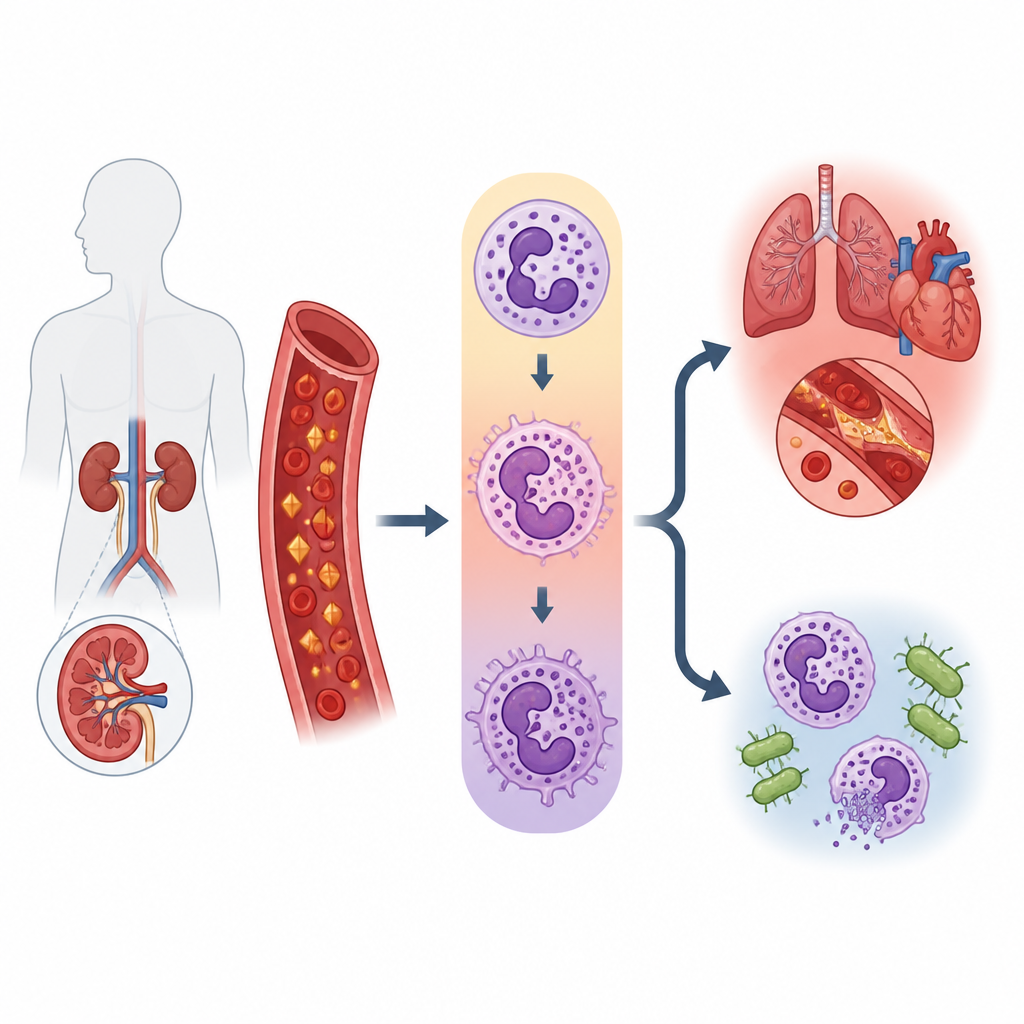
The Hidden Burden of High Uric Acid
Uric acid is best known for its role in gout, where sharp crystals cause painful joint flares. But long before crystals form, uric acid circulates in the blood in a soluble form. People with chronic kidney disease often have chronically elevated levels of this soluble uric acid because their kidneys cannot clear it well. At the same time, they are at high risk of serious infections such as sepsis, in which a runaway immune response and failing organs can quickly become fatal. The authors asked whether this excess uric acid might be quietly rewiring key immune cells in ways that both worsen inflammation and weaken infection control.
How Mice Revealed a Double-Edged Effect
The researchers used mouse models that mimic people with high uric acid, with or without chronic kidney damage. They triggered sepsis-like illness using bacterial products or surgery that releases gut bacteria into the abdomen. In mice with elevated uric acid, the inflammatory response surged: levels of inflammatory messengers rose, more immune cells flooded the blood and organs, and the kidneys developed tiny clots and damage. Yet despite this apparent “hyper-alert” state, these mice cleared bacteria less efficiently and carried higher bacterial loads in the abdomen. When the team gave the drug febuxostat, which lowers uric acid, inflammation eased, kidney injury lessened, and bacteria were cleared more effectively, suggesting that excess uric acid itself was a key driver of this harmful imbalance.
Immune Cells Pushed to React but Not to Protect
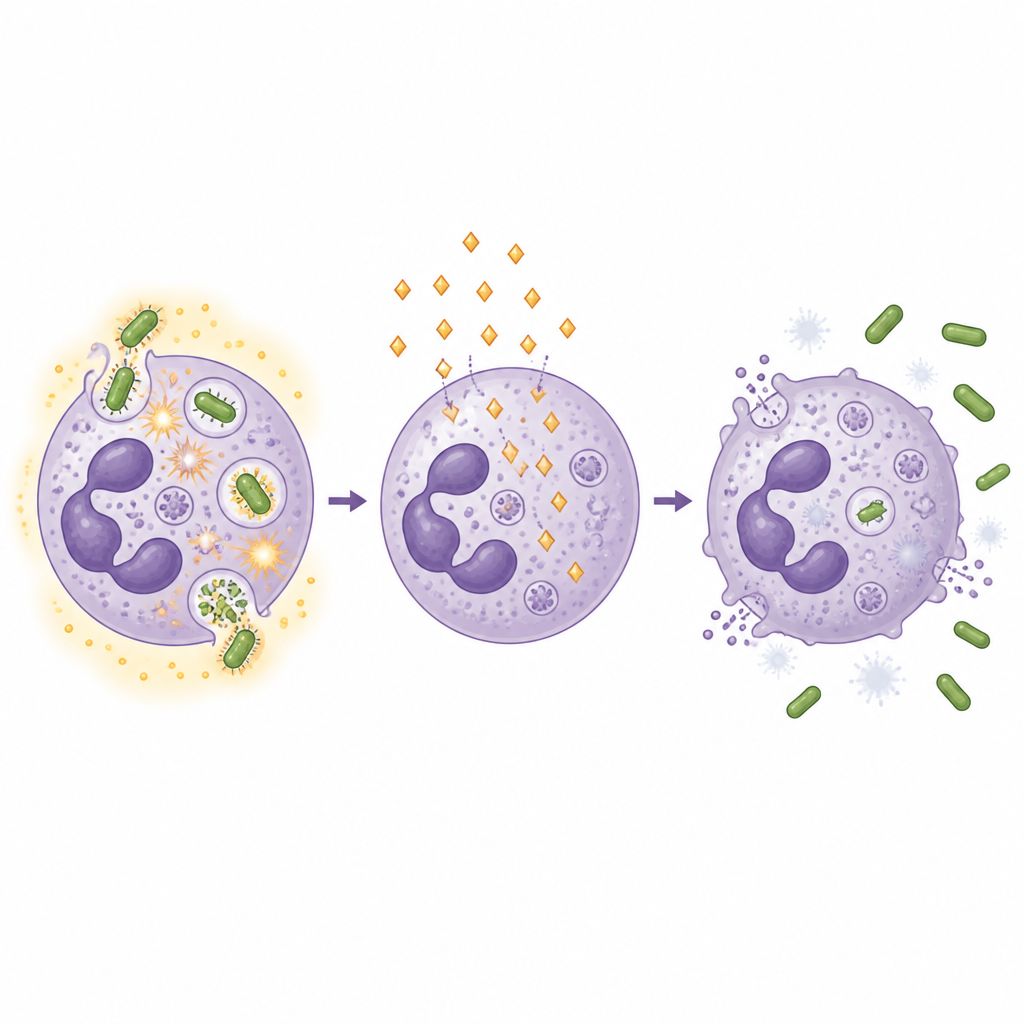
To uncover what happens inside human immune cells, the team isolated neutrophils, the body’s rapid-response white blood cells, from healthy volunteers. When they bathed these cells in soluble uric acid at levels typical of kidney disease, the cells changed in telling ways. Their surface markers shifted toward a more “aged” and activated appearance, and they released granules packed with enzymes, signs of a primed, restless state. Yet when challenged with fluorescent particles or live E. coli bacteria, these uric-acid–exposed neutrophils swallowed and killed far fewer microbes. Detailed gene activity analyses showed broad reprogramming: signals for energy production and inflammatory communication went up, while components needed for gripping and engulfing targets went down.
Why Bacterial Killing Fails
The study also probed the chemical burst neutrophils normally unleash to kill invaders. Under the influence of soluble uric acid, these cells produced less of the reactive oxygen molecules that are crucial for destroying bacteria, even though an early step of this process remained intact. Key machinery for this oxidative burst, including a protein complex called NOX2 and a receptor that senses bacterial components, was dialed down. Importantly, this did not simply reflect clogged granules or reduced levels of the enzyme myeloperoxidase. Instead, soluble uric acid appeared to disconnect the chain from sensing bacteria, to engulfing them, to generating a full-strength chemical attack. When uric acid was removed with a degrading enzyme in the lab, neutrophils regained much of their lost phagocytic power and ability to generate reactive molecules.
Evidence from Patients with Kidney Disease
Finally, the researchers turned to people living with chronic kidney disease, many of whom had high uric acid levels. Neutrophils taken from these patients already showed the same hallmarks seen in the lab: signs of activation and degranulation, but a reduced capacity to ingest test particles and to generate reactive oxygen. When serum from these patients was applied to neutrophils from healthy volunteers, the healthy cells quickly became sluggish at phagocytosis and chemical killing. Removing uric acid from the patient serum largely reversed these defects, strongly implicating soluble uric acid as a major culprit in real-world immune weakness.
What This Means for People at Risk
Taken together, the findings paint soluble uric acid as a quiet saboteur in sepsis: it stokes inflammation and clots in organs while at the same time weakening neutrophils’ ability to grab and kill bacteria. For people with kidney disease, who often carry high uric acid levels, this helps explain why infections can become so dangerous even when their immune systems look highly activated. While more clinical work is needed, the study suggests that carefully lowering uric acid could one day become part of strategies to strengthen host defense and reduce infection-related complications in chronic kidney disease.
Citation: Li, Q., Anders, J., Flora, K. et al. Soluble uric acid suppresses neutrophil-mediated host defense in sepsis. Nat Commun 17, 4453 (2026). https://doi.org/10.1038/s41467-026-73090-4
Keywords: uric acid, neutrophils, sepsis, kidney disease, immune dysfunction