Clear Sky Science · en
Glucose-dependent acidification strategy by nectar-dwelling bacteria mediates pollen tube burst
Flower sugar as a hidden battleground
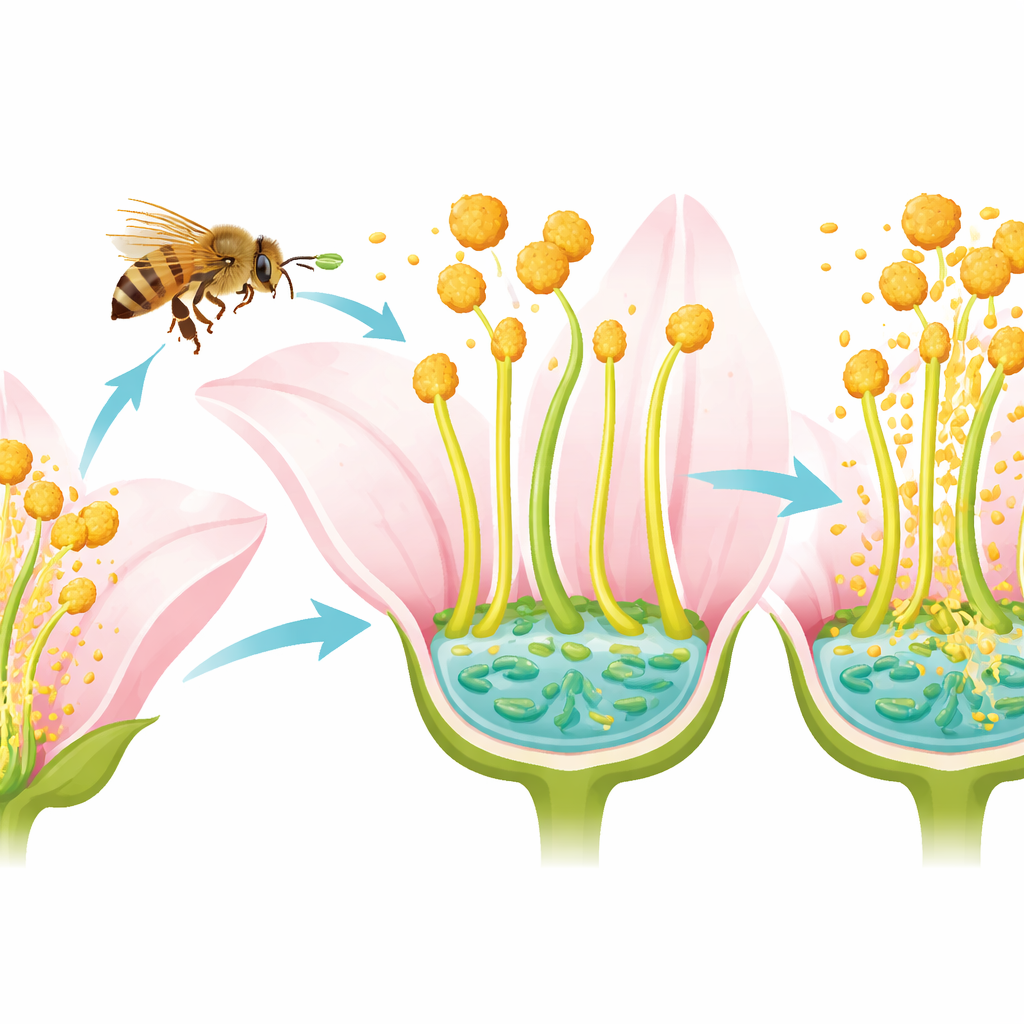
Flower nectar is usually thought of as a simple sweet reward for pollinators, but it is also a crowded habitat where microbes compete fiercely. This study reveals how some nectar‑dwelling bacteria use the sugar in nectar to change its chemistry, break open plant pollen tubes, and tap into a rich food source that was previously locked away, reshaping a tiny but important corner of the natural world.
Sugary nectar with a missing ingredient
Nectar is loaded with sugars that attract bees, butterflies, and other visitors, yet it is poor in nitrogen, a key ingredient needed to build proteins and grow. Bacteria that arrive in the nectar with pollinators can quickly multiply, turning this sugary pool into a miniature ecosystem. Earlier work showed that certain bacteria associated with flowers can somehow cause pollen grains to germinate and then burst, spilling their nutritious contents into the nectar. That hinted at a clever strategy: use the flower’s own pollen as a fertilizer source. The current study set out to discover the exact substance these bacteria produce to trigger pollen tube bursting and how this trick is wired into their biology.
Turning sugar into acid to crack pollen
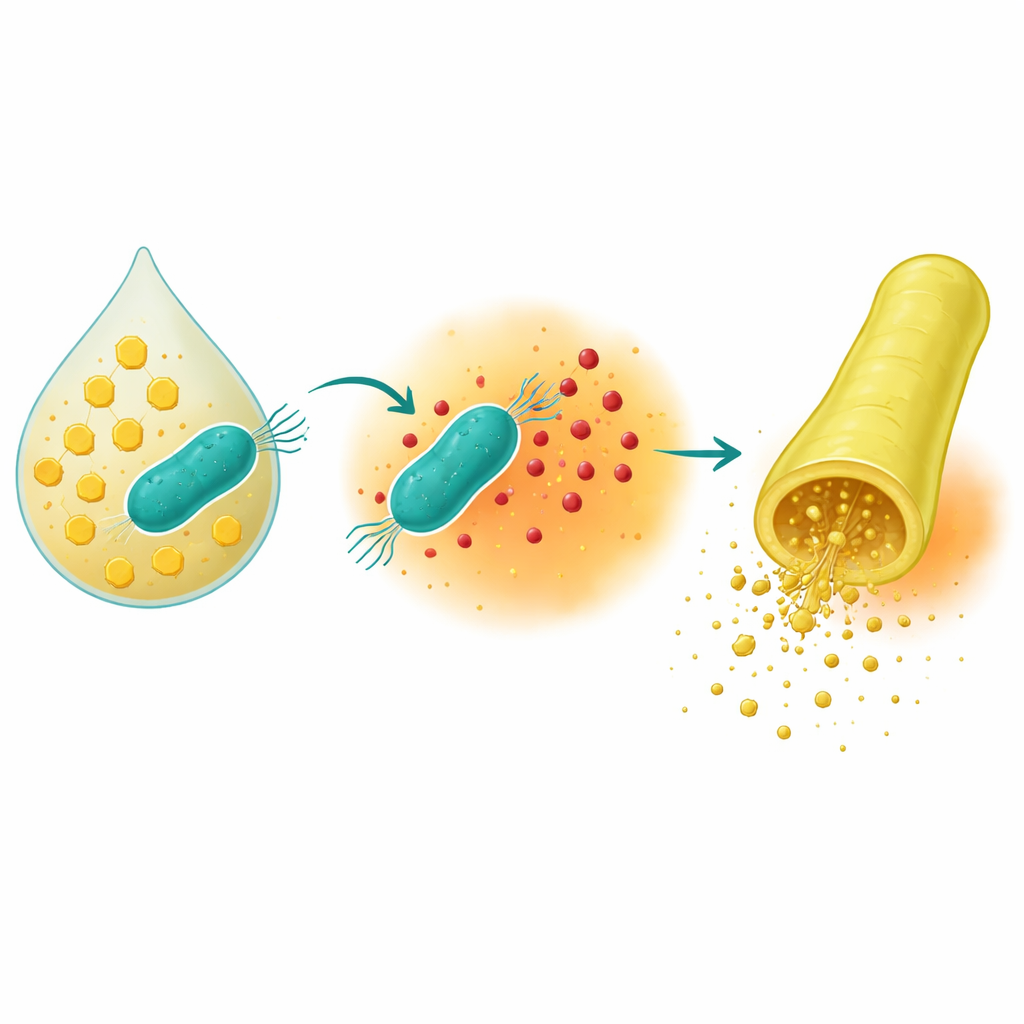
The researchers isolated strains of Acinetobacter bacteria from the nectar glands of ornamental flowers and mixed the bacterial culture liquid with germinating pollen from several plant species. When the bacteria had grown in solutions containing sucrose or glucose, the added liquid caused pollen tubes to rupture dramatically, while solutions without sugar or with fructose did not. Measurements showed that the sugar‑fed bacteria had driven the surrounding fluid to a very acidic state, with a pH around 3, and that simply neutralizing this acidity stopped the bursting. Using gas chromatography–mass spectrometry, the team identified gluconic acid as the major acid present only when glucose or sucrose were available. Adding purified gluconic acid alone, at doses that lowered pH below about 3.8, was enough to make pollen tubes burst, confirming that this acid‑driven drop in pH is the key trigger.
A built‑in molecular machine for making acid
To uncover how the bacteria manufacture gluconic acid, the authors sequenced the full genome of one Acinetobacter nectaris strain. They focused on genes that encode pyrroloquinoline quinone (PQQ)‑dependent dehydrogenases, a family of enzymes known in other microbes to oxidize glucose at the cell surface. By moving candidate genes into a laboratory strain of Escherichia coli that normally cannot make gluconic acid without help, they found that one A. nectaris gene restored the ability to convert glucose into gluconic acid and acidify the medium, but only when the cofactor PQQ was supplied. This showed that the nectar bacterium carries a working PQQ‑dependent glucose dehydrogenase that directly links nectar glucose to acid production. Further genome comparisons revealed that many Acinetobacter species possess related enzymes, but nectar‑dwelling strains consistently also carry a full set of PQQ‑making genes, suggesting strong evolutionary pressure to keep this acid‑production pathway intact.
Rapid response to sugar in a competitive world
The team then asked whether the bacteria adjust this system depending on the sugars they encounter. Using RNA sequencing, they measured how strongly the PQQ‑related genes were switched on in A. nectaris grown with different sugars or no sugar at all. While most genes in the pathway changed little, the gene encoding the tiny PQQ precursor peptide, called pqqA, was turned on much more strongly when glucose or sucrose were present, and most strongly with glucose. This pattern implies that, as soon as these bacteria enter a nectar pool rich in simple sugars, they quickly ramp up PQQ production, enabling the glucose dehydrogenase enzyme to start churning out gluconic acid. The resulting acidification not only unlocks nitrogen and other nutrients from pollen by bursting its tubes but may also slow the growth of competing microbes, giving these bacteria a head start in the race to dominate the nectar.
Why this tiny drama matters
In plain terms, this study shows that some nectar‑inhabiting bacteria have evolved a fast chemical trick: they use the flower’s sugar to make acid, the acid pops open pollen tubes, and the spilled pollen contents feed the bacteria while reshaping the nectar environment. Because nectar chemistry can influence which pollinators visit and how they behave, and because similar acid‑making microbes may be widespread, this microscopic tug‑of‑war could ripple outward to affect plant reproduction, pollinator diets, and even the composition of honey. What looks like simple flower sweetness is, in fact, the stage for a sophisticated bacterial strategy finely tuned to survive and thrive in a drop of nectar.
Citation: Kato, Y., Miura, H., Takayama, S. et al. Glucose-dependent acidification strategy by nectar-dwelling bacteria mediates pollen tube burst. Nat Commun 17, 4105 (2026). https://doi.org/10.1038/s41467-026-72617-z
Keywords: nectar microbes, pollen tube burst, gluconic acid, Acinetobacter bacteria, flower microbiome