Clear Sky Science · en
Acute sleep rebound following sleep restriction is associated with reduced mortality risk
Why catching up on sleep matters
Many of us skimp on sleep during busy days and hope to make up for it later. But does catching up actually protect our health, or is the damage already done? This study followed tens of thousands of adults wearing wrist sensors to track how real-world patterns of short nights and catch-up sleep relate to the risk of dying over the next several years. The findings suggest that what happens on the nights after we cut sleep short may be just as important as how little we sleep in the first place.
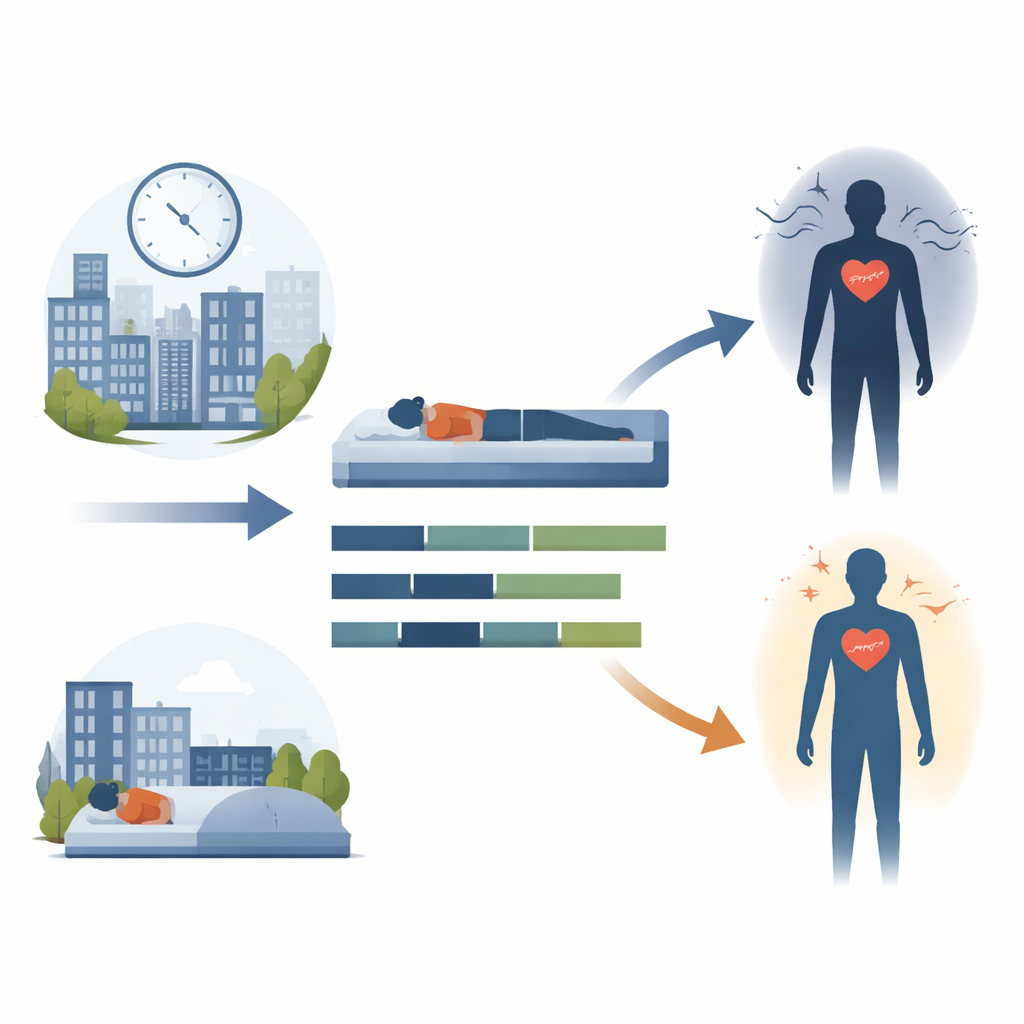
Different ways people fall behind on sleep
Instead of simply comparing weekday and weekend sleep, the researchers looked at day-by-day changes in sleep over about a week in more than 85,000 adults in the UK. Using accelerometers worn on the wrist, they estimated each person’s usual sleep need and then identified "restriction" nights when people slept at least two and a half hours less than that. They also marked the very next night as a potential "rebound" night, when people might sleep longer to recover. From these patterns, they grouped people into five categories: those with regular sleep, those with mild or severe sleep restriction without catch-up, and those with mild or severe restriction followed by longer sleep.
Who restricted sleep, and when
Most participants (about seven in ten) showed regular sleep with no clear restriction or rebound. The rest had at least one short-sleep episode, and in nearly half of these, it was followed by a longer rebound night. Short-sleep nights happened more often on weekdays than weekends, reflecting work and social demands, but catch-up nights also frequently occurred during the week rather than being limited to Saturdays and Sundays. People with severe restriction without rebound tended to be older, more often male, less physically active, and more likely to have obesity and to smoke, showing that sleep loss often clusters with other health risks.
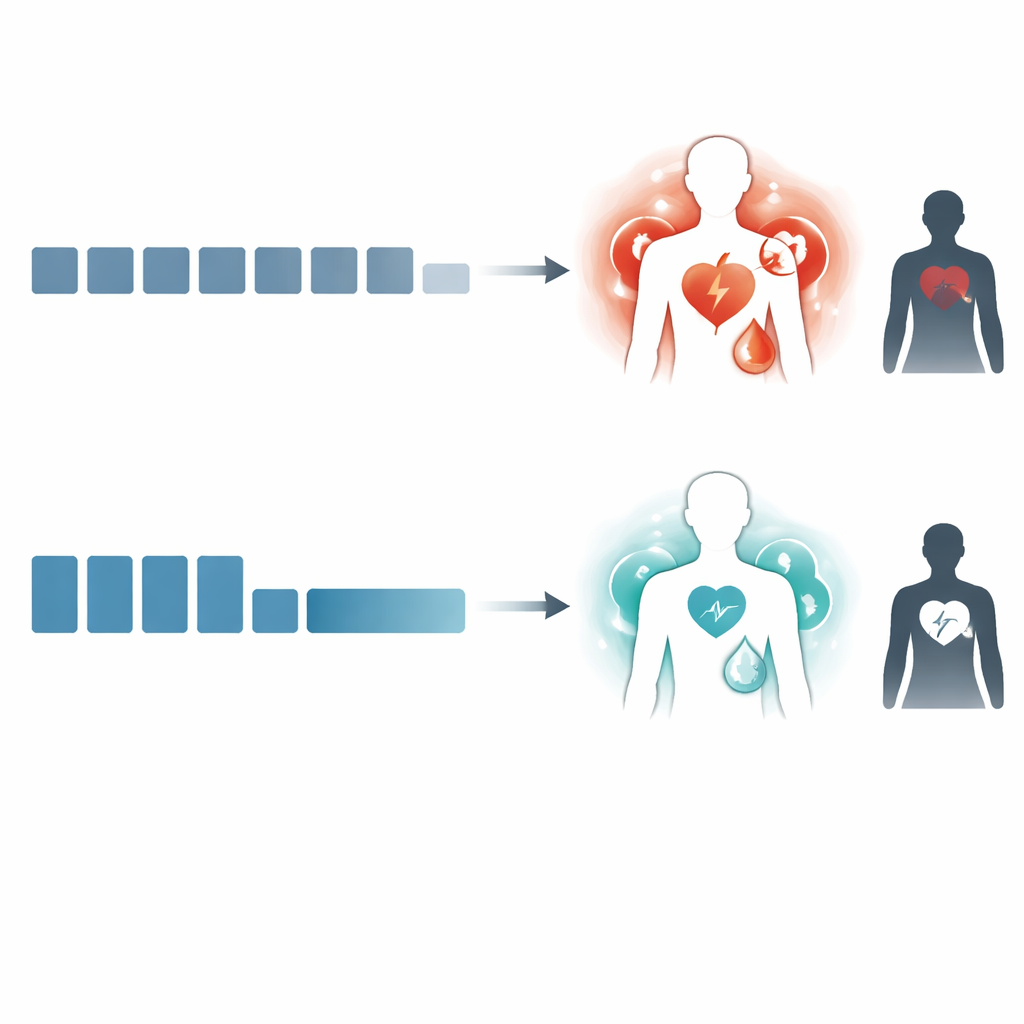
Short sleep without recovery and the risk of dying
Participants were then followed for a median of eight years to see who died from any cause. After accounting for age, sex, lifestyle, and baseline sleep length, those who experienced sleep restriction without rebound had a higher risk of dying than those with regular sleep. The risk was especially high for people with severe restriction and no rebound. By contrast, when short-sleep episodes were followed by longer recovery sleep, the link with mortality was no longer statistically clear, even though the risk estimates were slightly above average. Short sleepers—people whose usual nights were already relatively brief—were the most vulnerable when they added further restriction without catch-up sleep.
How often you miss sleep also counts
The team also counted how many times each person went through a cycle of short sleep, with or without recovery, during the monitoring period. Having one episode of restriction without recovery raised mortality risk, and having two or more episodes raised it further, suggesting a dose–response pattern. In contrast, the number of restriction episodes followed by rebound sleep did not show a significant association with death risk. These overall patterns held up in a separate U.S. sample from the National Health and Nutrition Examination Survey, strengthening the case that they are not a fluke of one dataset.
What this means for everyday sleep habits
To a lay reader, the take-home message is that repeatedly cutting sleep short and never paying back the sleep debt may be particularly harmful, especially for people who already sleep less than average. In this study, brief catch-up sleep—taking a longer night soon after a short one—seemed to soften or even erase the added risk of dying that came from short-term sleep loss. This does not mean that chronically poor sleep is safe as long as you occasionally catch up, but it does suggest two practical goals: avoid short nights when possible, and if you must cut sleep, prioritize an earlier recovery night rather than delaying rest indefinitely.
Citation: Li, X., Zhang, M., Li, Z. et al. Acute sleep rebound following sleep restriction is associated with reduced mortality risk. Nat Commun 17, 3820 (2026). https://doi.org/10.1038/s41467-026-72461-1
Keywords: sleep restriction, catch-up sleep, sleep rebound, mortality risk, wearable sleep tracking