Clear Sky Science · en
Potent acridone antimalarial against all three life stages of Plasmodium
Why this new malaria research matters
Malaria still sickens hundreds of millions of people and kills hundreds of thousands every year, especially young children. Today’s drugs mainly tackle the form of the parasite that causes fever in the blood, but they often miss silent stages hiding in the liver or growing inside mosquitoes. This study describes a new compound, called T111, that aims to hit the parasite at all of its vulnerable points, raising the possibility of simpler treatments that cure infection, stop relapses, and block onward transmission.
A disease with many hiding places
Malaria parasites move through several stages in humans and mosquitoes. After an infected mosquito bites, the parasite first settles in the liver, where it multiplies quietly. In some species, a portion goes dormant, only to reawaken weeks or months later and cause relapsing illness. From the liver, parasites spill into the blood, invading red blood cells and triggering fever, anemia, and sometimes severe complications. A fraction of these blood forms turn into sexual cells that can infect new mosquitoes. Because each stage looks and behaves differently, most existing drugs only work well against one part of this cycle, leaving gaps that let the disease persist and drug resistance spread. 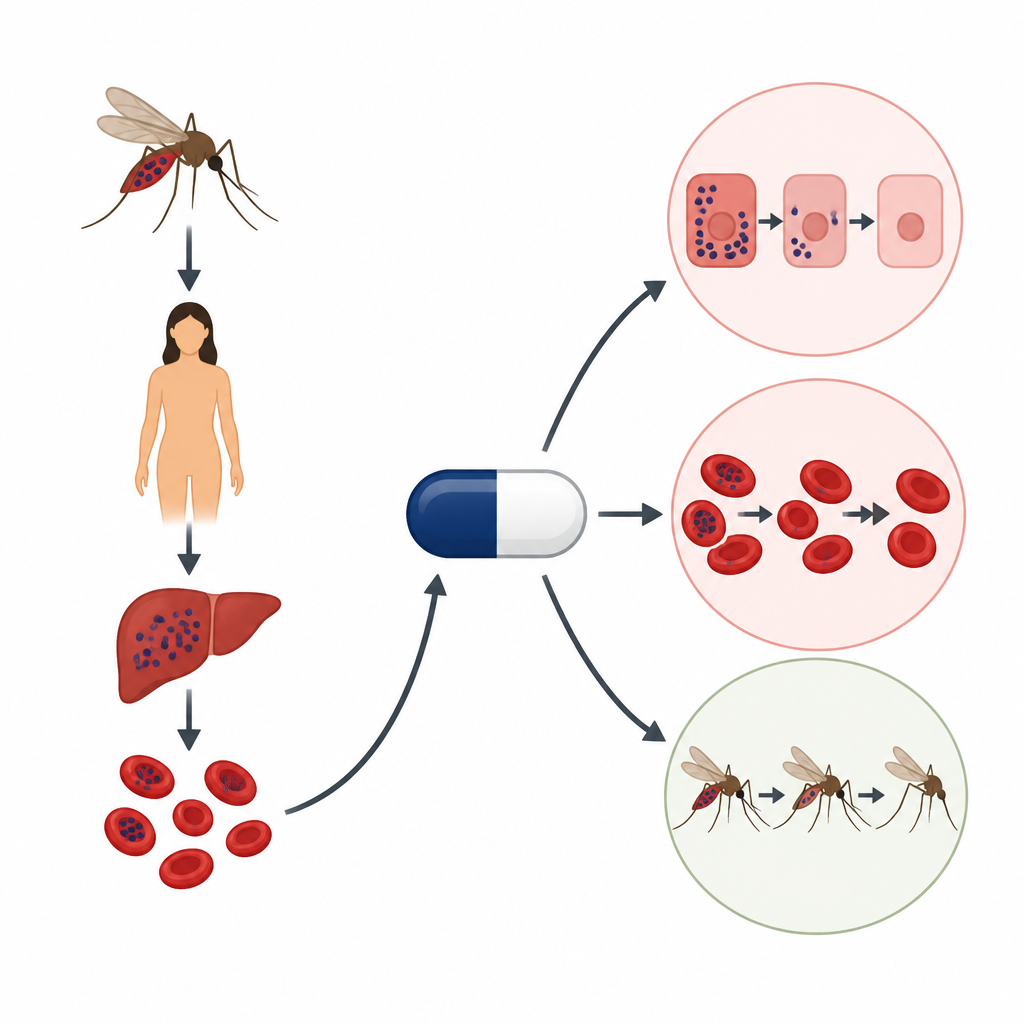
A single compound with wide reach
The researchers built on earlier chemistry work to refine T111, a member of a class called acridones. In lab tests, T111 killed blood-stage parasites at extremely low concentrations, including strains that had already evolved resistance to frontline artemisinin drugs. It remained highly active against parasites taken directly from patients in Africa, suggesting that natural infections are also sensitive. In mice, a short course of T111 cleared blood infections, and a single higher oral dose cured most animals and fully protected some, with no detectable parasites for four weeks.
Targeting the silent liver and the mosquito
A key advance is that T111 also attacked the parasite’s hidden stages. Using liver cells from nonhuman primates infected with a model species that mimics relapsing human malaria, T111 prevented the initial establishment of liver infection and killed both actively growing liver forms and dormant “sleeper” forms. It did so more potently than the reference drug tafenoquine, one of the few existing medicines that can clear dormant liver parasites but that can damage red blood cells in many people. T111 also showed strong activity against sexual blood stages and against parasite development inside mosquitoes, both when mixed into a lab “blood meal” and when applied as a thin film that mosquitoes walked on, hinting at possible use in tools like treated bed nets.
How the compound seems to work
To understand how T111 harms the parasite, the team grew malaria parasites in gradually increasing amounts of the drug until resistant lines emerged. Genetic sequencing revealed stepwise changes in a mitochondrial protein called cytochrome b, a core part of the parasite’s energy factory. Follow-up tests showed that these changes made parasites less sensitive to T111 and altered their response to other compounds that act on the same energy pathway, pointing to disruption of the parasite’s internal power supply as a likely mode of action. Computer modeling suggested that specific mutations may weaken the fit of T111 in its binding pocket, explaining why several changes are needed before high-level resistance appears. 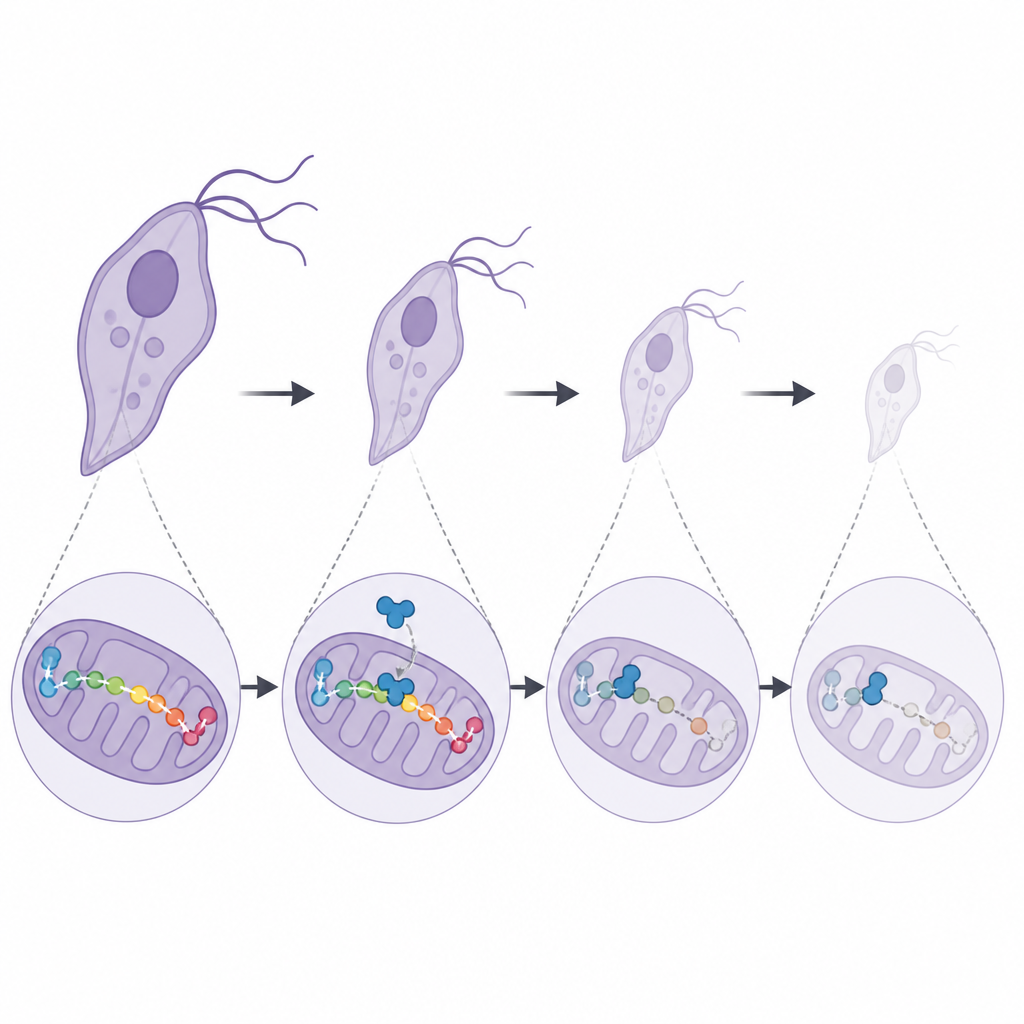
Safety and smart combinations
The investigators also examined how T111 behaves in animals and human cells. The compound was stable in liver enzymes from several species and stayed in mouse liver tissue at high levels for many hours after dosing. Human liver cell tests showed little toxicity, heart rhythm tests suggested low risk of cardiac side effects, and bacterial mutagenicity assays were negative. In rats given repeated high oral doses, researchers observed only mild clinical signs without organ damage. Importantly, when T111 was combined with tafenoquine, the two drugs enhanced each other’s effects in both cell cultures and mouse models, allowing lower doses of tafenoquine to cure blood infections and block liver infection, which might one day lessen the risk of red blood cell damage in susceptible patients.
What this could mean for future malaria control
Taken together, the results position T111 as a rare example of a single compound that can attack malaria parasites in the blood, in the liver, and in mosquitoes, while showing a favorable safety profile in early testing. The work is still at the preclinical stage, and T111 itself has practical limitations such as modest solubility, so improved “prodrug” versions are being developed and tested in animal models that better mimic human relapse. If future studies confirm its effectiveness and safety, medicines based on this acridone design could help simplify malaria treatment into shorter, possibly single-dose regimens that both cure the infection and reduce its spread, bringing the goal of malaria elimination a step closer.
Citation: Kancharla, P., Dodean, R.A., Li, Y. et al. Potent acridone antimalarial against all three life stages of Plasmodium. Nat Commun 17, 4230 (2026). https://doi.org/10.1038/s41467-026-71708-1
Keywords: malaria, antimalarial drug, Plasmodium, liver-stage parasites, mosquito transmission