Clear Sky Science · en
Tim-3 agonist restrains ILC2 function and attenuates airway hyperreactivity via NLK pathway
Why calming overactive lungs matters
For millions of people with asthma, even a short walk or a bout of laughter can trigger tight, wheezing lungs. Many modern drugs help, but a large group of patients still struggles with symptoms that resist standard treatments. This study explores a natural braking system on certain immune cells in the lungs and shows how switching that brake on could ease airway tightening in both mice and human cells.
The troublemakers inside asthmatic airways
Asthma is driven by an overactive type of immune response that floods the airways with signaling proteins that call in more cells, thicken the airway wall, and spur mucus production. Among the key players are group 2 innate lymphoid cells, or ILC2s, which sit in lung tissue and quickly respond to allergens or viral damage. When stimulated, they release large amounts of molecules that narrow the airways and attract other inflammatory cells, especially in more severe or steroid resistant asthma. Because of this central role, researchers are searching for ways to safely tone down ILC2 activity without shutting down the entire immune system.
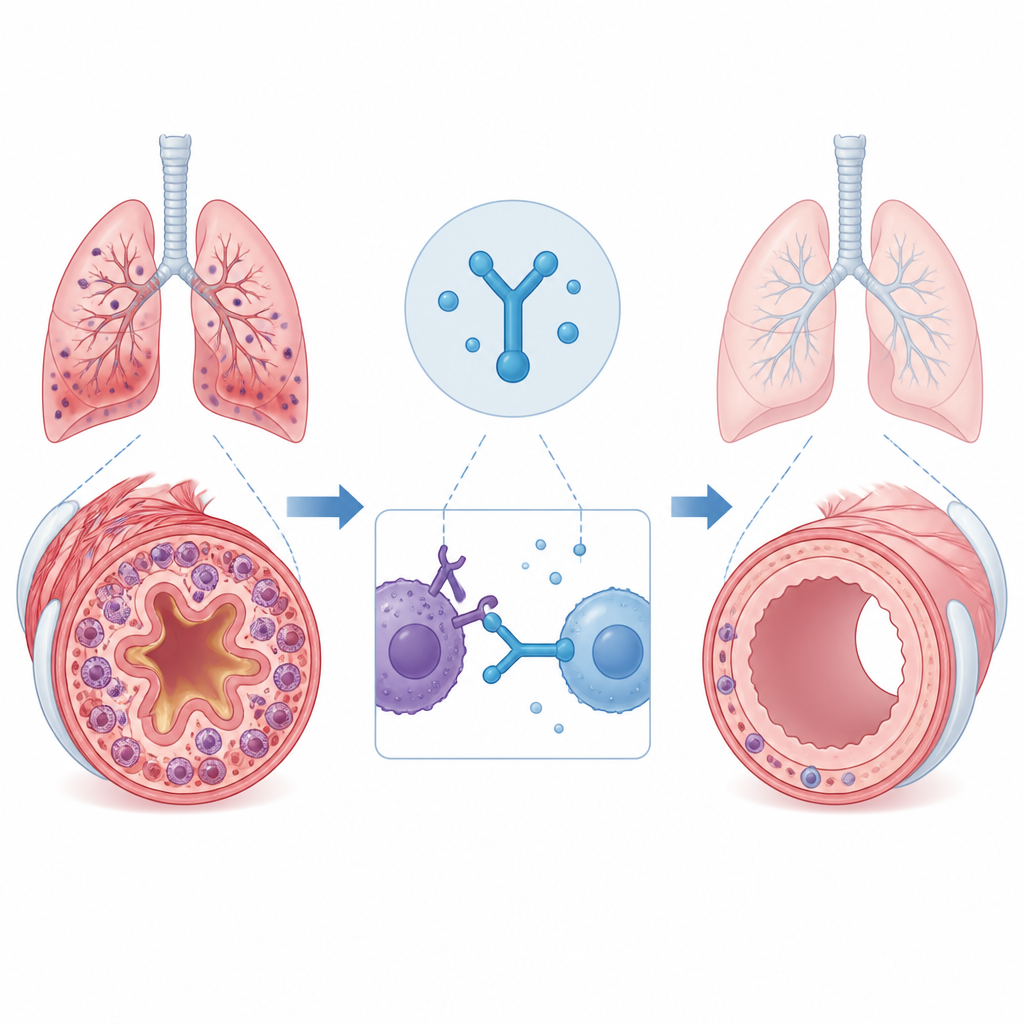
A built in brake on lung immune cells
The researchers focused on a surface protein called Tim 3, known in cancer work as a checkpoint that can slow T cells. They discovered that Tim 3 is also strongly switched on when ILC2s in the mouse lung are activated by a danger signal called IL 33 or by a common mold allergen. ILC2s carrying Tim 3 showed higher signs of activation, suggesting this brake appears when the cells are most aggressive. When the team stimulated Tim 3 with a specific antibody that acts like a key, these ILC2s produced far less of the asthma driving molecules and divided less, all without signs of cell death. This indicated that Tim 3 can act as an internal switch that reins in ILC2 behavior.
How the brake works deep inside the cell
Diving into gene activity, the scientists found that turning on Tim 3 in ILC2s boosted a protein called NLK, which is known to tone down a major alarm pathway inside immune cells. At the same time, the usual alarm signal, controlled by a factor called NF kappa B, was reduced. The team showed that if they blocked NLK, the calming effect of Tim 3 on ILC2s largely disappeared, tying these pieces together. They also discovered that Tim 3 signaling dampened the tiny power plants inside cells, the mitochondria. After Tim 3 was engaged, genes for energy generation dropped, spare energy capacity and fuel production fell, and mitochondrial content shrank, while other fuel pathways stayed mostly unchanged. In short, Tim 3 pushes ILC2s into a lower energy, less inflammatory state.
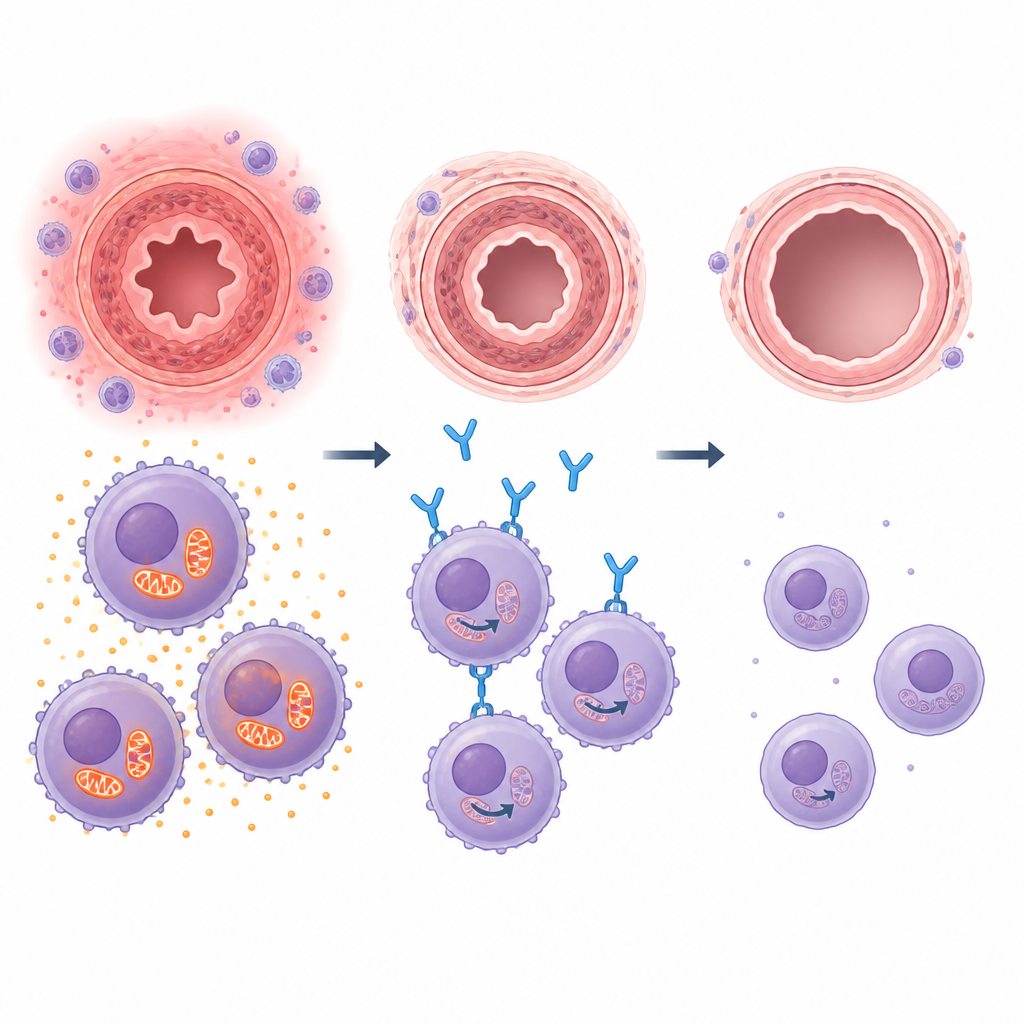
From mouse lungs to human cells
To see whether this brake could actually ease asthma like symptoms, the team treated mice exposed to IL 33 or to the Alternaria mold with the Tim 3 activating antibody. Compared with control animals, treated mice had looser airways, fewer ILC2s, less invasion by inflammatory cells, and lower levels of the key airway tightening molecules in lung fluid. When Tim 3 was removed only from ILC2s, the opposite happened: airways became tighter, and inflammation worsened. Importantly, similar patterns appeared in human ILC2s taken from blood. Stimulating Tim 3 on these cells from several donors curbed their growth, reduced their inflammatory products, increased NLK, lowered NF kappa B activity, and weakened mitochondrial output. In a humanized mouse model given human ILC2s, Tim 3 activation again softened airway responses and cut lung inflammation.
What this could mean for people with asthma
Together, these findings reveal that Tim 3 functions as a natural checkpoint that keeps ILC2s from driving run away inflammation in the airways. By activating Tim 3, researchers were able to quiet these cells, reduce their energy supply, and ease airway tightening in several mouse models, including ones using human cells. While much work remains before such an approach could be tested in patients, the study suggests that carefully boosting this built in brake on ILC2s might one day offer a new way to treat difficult forms of asthma and other allergic lung conditions.
Citation: Sakano, Y., Sakano, K., Kokubo, K. et al. Tim-3 agonist restrains ILC2 function and attenuates airway hyperreactivity via NLK pathway. Nat Commun 17, 4698 (2026). https://doi.org/10.1038/s41467-026-71336-9
Keywords: asthma, innate lymphoid cells, immune checkpoints, airway inflammation, Tim-3