Clear Sky Science · en
Mitochondrial vulnerability underlies myocarditis from COVID-19 mRNA vaccine
Why this matters for everyday readers
Millions of people worldwide have received COVID-19 mRNA vaccines, which have greatly reduced severe illness and death. Yet a very small number, especially young men, developed inflammation of the heart muscle called myocarditis. This study asks a simple but important question: why are a few hearts so sensitive, and what inside heart cells might make certain people more vulnerable while most remain completely safe?
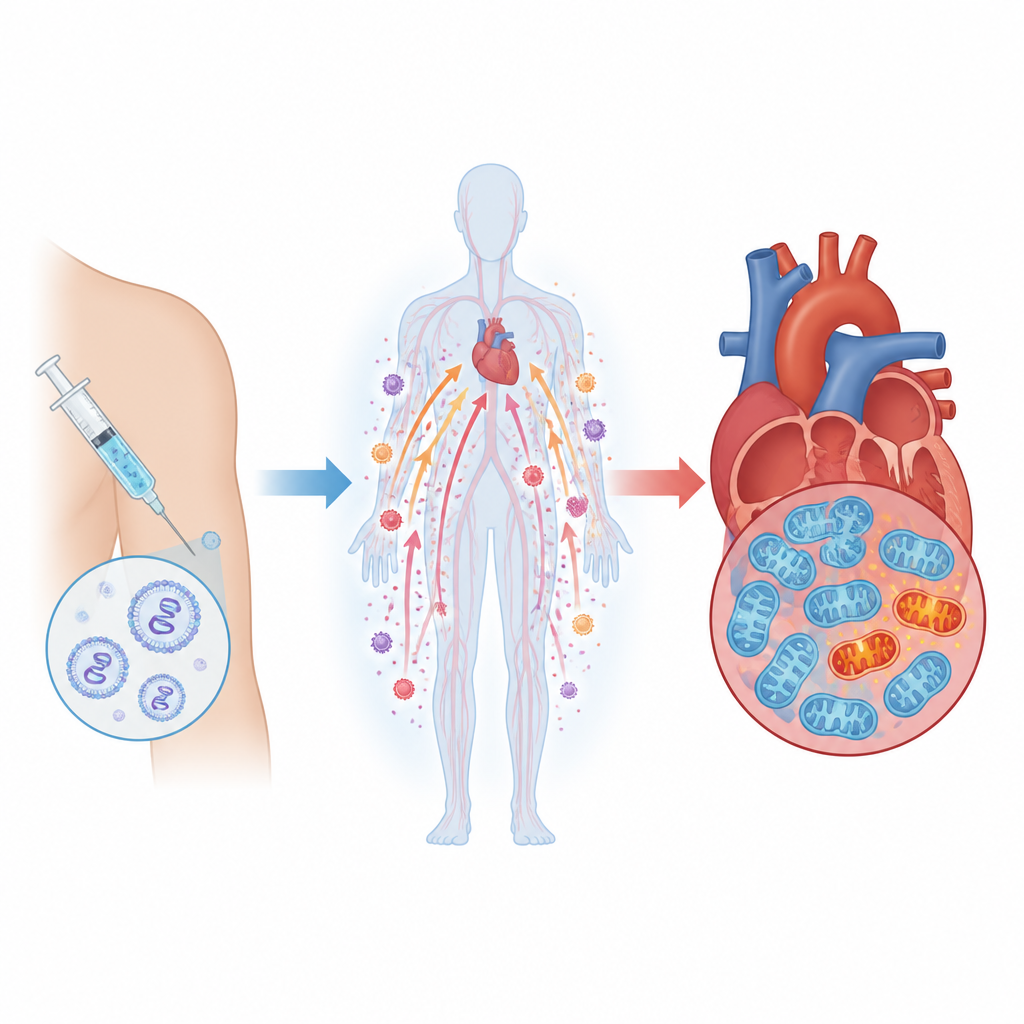
Looking inside the heart’s power plants
The researchers began by studying heart biopsy samples from six patients who developed myocarditis after mRNA vaccination. Compared with other heart conditions, these samples showed lower activity of many genes related to mitochondria, the tiny power plants that generate energy inside cells. Under the electron microscope, mitochondria in the most severe cases looked shrunken and damaged, with broken inner membranes and small vesicles budding off, signs that the cell was trying to remove faulty parts. These changes suggested that the heart cells’ energy system was unusually fragile in patients who developed this rare side effect.
A mouse model of hidden weakness
To test whether fragile mitochondria can cause vaccine related heart problems, the team used mice carrying a mutation that quietly increases errors in mitochondrial DNA without causing obvious illness. After receiving a dose of an mRNA COVID-19 vaccine similar to those used in people, these mice showed a clear drop in heart pumping function, while normal mice did not. The vulnerable mice also had more inflammatory immune cells in their hearts and higher levels of the inflammatory signal IL-6 in their blood. Importantly, tests showed that overall energy production by mitochondria remained largely intact, indicating that the problem was not gross power failure but a subtler stress response.
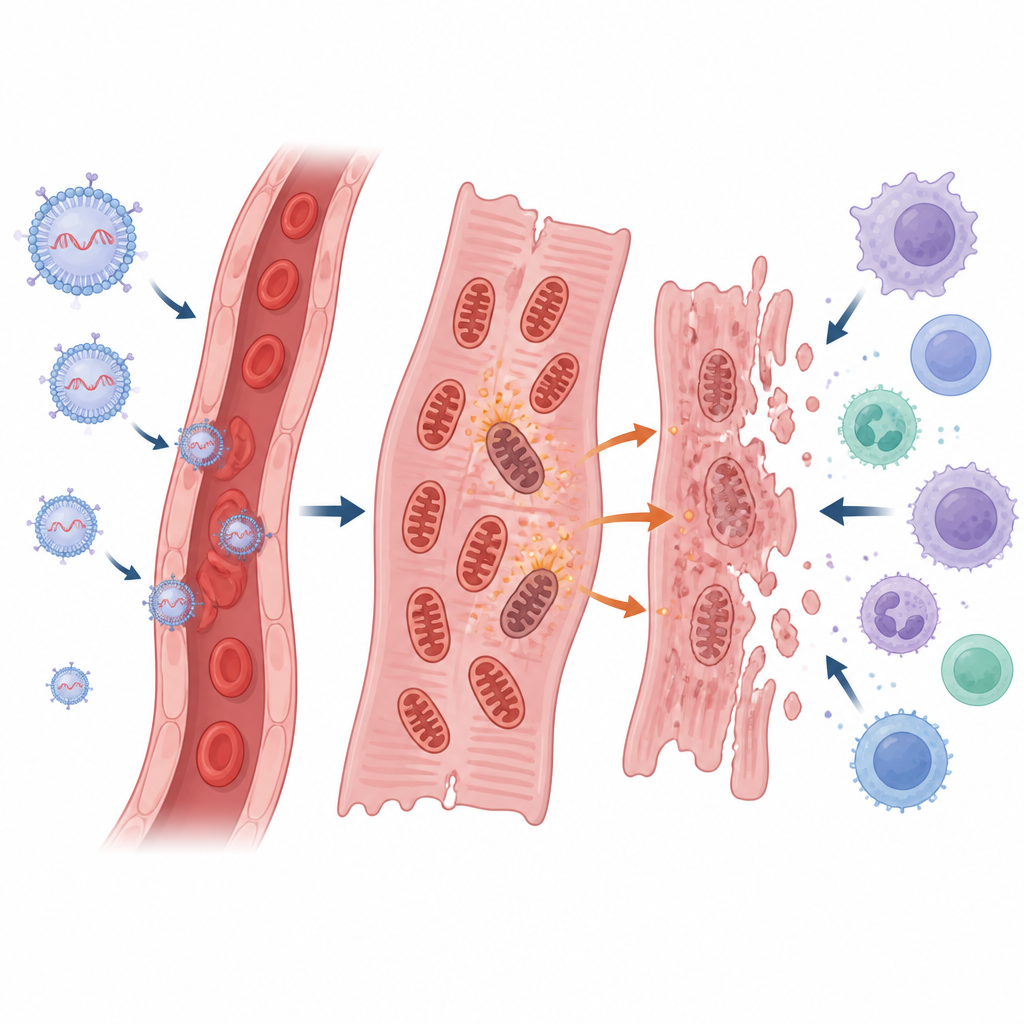
From vaccine particles to oxidative stress and cell death
The authors next asked which part of the vaccine was responsible. They compared full mRNA vaccine, the same lipid nanoparticles without any mRNA, and mRNA alone. Both the complete vaccine and the empty nanoparticles reduced heart function and triggered immune cell infiltration in the vulnerable mice, whereas naked mRNA did not. This pointed to the lipid shell as a key driver of inflammation. In the sensitive hearts, mitochondrial stress led to extra production of reactive oxygen species, chemically aggressive molecules that can damage cellular components. Blocking these reactive molecules with a mitochondria targeted antioxidant prevented the loss of heart function. The study also showed activation of a particular form of inflammatory cell death called necroptosis in heart muscle cells, which attracted more immune cells and amplified damage.
Clues to sex differences and possible protection
Myocarditis after mRNA vaccination is more often seen in young males than in females. To explore this, the researchers boosted hormone signaling in their mouse model. Extra testosterone did not change outcomes, but activating estrogen receptors with a drug called bazedoxifene protected the vulnerable mice from the drop in heart function after vaccination. Estrogen is known to dampen inflammation and to support healthy mitochondrial function, so this result fits the idea that stronger estrogen signaling may buffer heart cells against stress in some individuals.
What the findings mean for vaccine safety
This work suggests that a hidden weakness in mitochondrial health may make a small number of people more likely to develop myocarditis after mRNA vaccination. In the study, the lipid shell of the vaccine set off inflammation, fragile mitochondria produced excess reactive molecules, and this chain of events triggered a specific kind of cell death and heart inflammation. At the same time, the vaccines stayed at the injection site in animals, and most people never experience these problems, underscoring that the overall risk remains very low. Understanding this pathway may help researchers design safer lipid carriers, identify individuals at higher risk, and test protective approaches such as antioxidants or hormone related treatments, without changing the strong overall benefits of vaccination against COVID-19.
Citation: Mori, G., Yamamoto, M., Ishikawa, K. et al. Mitochondrial vulnerability underlies myocarditis from COVID-19 mRNA vaccine. Nat Commun 17, 4716 (2026). https://doi.org/10.1038/s41467-026-71295-1
Keywords: mRNA vaccine, myocarditis, mitochondria, oxidative stress, lipid nanoparticles