Clear Sky Science · en
Genetic architecture of sleep in a genome wide association study of device measured sleep traits
Why our genes may shape how well we sleep
Most of us know that stress, screens, and coffee can steal our sleep. But this study asks a deeper question: how much of our nightly rest is written in our genes, and how does that relate to our long term health? By combining wrist worn sensors with large scale genetic data, the researchers break sleep into its main parts and show that our DNA helps decide not just how long we sleep, but how our nights are divided between light, deep, and dream filled sleep.
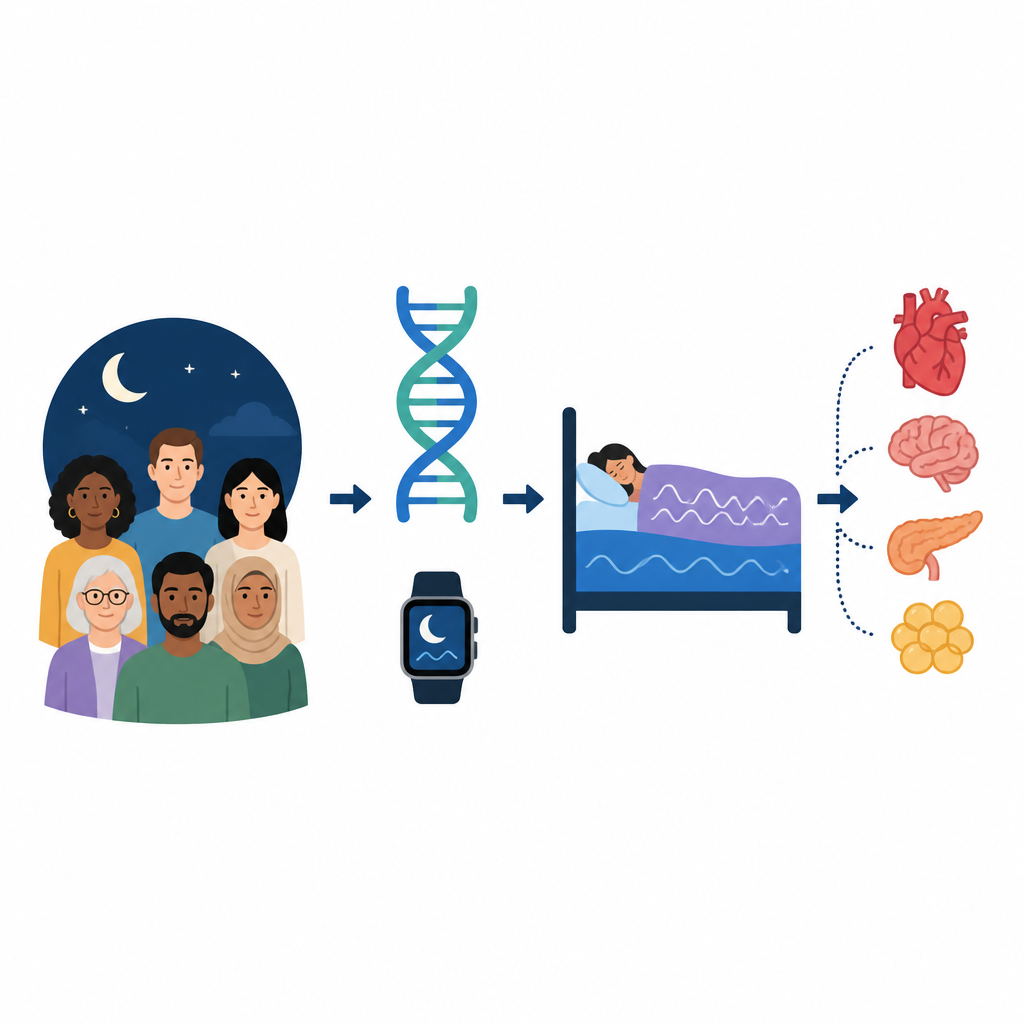
Looking at sleep with digital watches
The team studied more than 80,000 adults from the UK Biobank who wore accelerometers, simple motion sensors similar to fitness trackers, for a week. Using a machine learning model first trained against lab based sleep recordings, they estimated night time sleep duration, how efficiently people stayed asleep, and the time spent in rapid eye movement (REM) sleep and non REM (NREM) sleep. On average, participants slept about 6.8 hours per night, with 1.5 hours of REM and 5.3 hours of NREM sleep, and most had fairly good sleep continuity.
Finding genetic clues in the nightly rhythm
The researchers then scanned the genome, testing nearly 10 million common genetic variants for links with these device measured sleep traits. They uncovered 20 regions of the genome associated with at least one sleep measure, 12 of which had not been tied to these traits before. Some genetic sites related mainly to how long people slept at night, others to how efficiently they slept, and several were specific to REM or NREM sleep. One gene called MEIS1 stood out because different versions of it pushed REM and NREM sleep in opposite directions, hinting that it helps balance time spent in dream sleep versus more restorative stages.
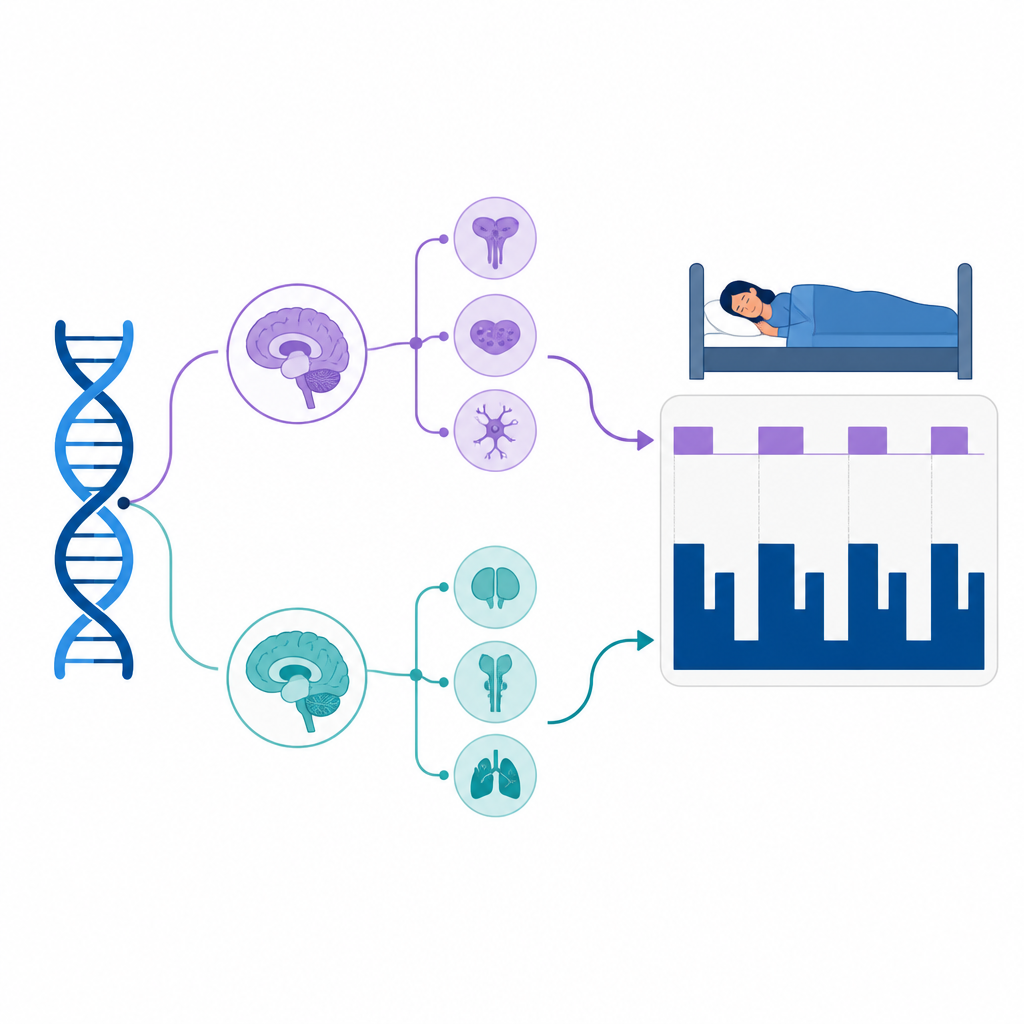
Different wiring for men and women
When the team ran the same genetic analyses separately in men and women, they saw both shared patterns and key differences. Overall, the broad genetic influence on sleep looked similar between sexes, but certain regions seemed to matter more in one group than the other. In women, genetic changes near genes such as FOXP2 and NRXN3 were tied to night time sleep and NREM sleep, while in men, variants in genes including LRP1B, NPBWR2, and PABPC4 were linked to REM sleep. Many of these genes are involved in brain development, hormone signaling, or nerve cell communication, suggesting that sex hormones and brain circuits may shape sleep in subtly different ways.
Connections between sleep, body chemistry, and disease
Beyond single genes, the study looked for biological pathways enriched in the sleep related regions. Signals pointed to systems that handle how DNA is packaged, how the body manages metals such as iron and copper, and how it processes fats. Because iron balance is important in restless legs syndrome and magnesium is often used informally to aid sleep, the metal findings are especially intriguing. Using genetic techniques that mimic randomized trials, the authors also found that people who are genetically inclined to shorter night time sleep tend to have higher body mass index, higher blood sugar, and greater risk of type 2 diabetes, while higher body weight in turn appears to shorten and disrupt sleep. Certain genetic patterns linked REM sleep to heart and blood vessel disease, and overall, the strongest results suggested a web of two way links between sleep and cardiometabolic health.
What this means for our nights and our health
For a general reader, the message is twofold. First, sleep is not a simple on off state; our nights are built from different stages, and our genes help decide how these stages are arranged. Second, those genetic patterns connect sleep to conditions such as obesity, diabetes, and heart disease, supporting the idea that both sleep duration and quality matter for long term health. While no single gene determines whether you are a good or bad sleeper, this study maps out many small genetic nudges that, together with lifestyle and environment, shape how we sleep and how healthy we stay.
Citation: Portas, L., Yuan, H., Cai, L. et al. Genetic architecture of sleep in a genome wide association study of device measured sleep traits. Nat Commun 17, 4715 (2026). https://doi.org/10.1038/s41467-026-71252-y
Keywords: sleep genetics, REM sleep, NREM sleep, wearable devices, cardiometabolic health