Clear Sky Science · en
Potassium fertilization enhances both cereal yield and soil organic carbon: a meta-analysis
Why this matters for food and climate
Feeding a growing world while caring for the climate depends on two things: raising crop yields and storing more carbon in soils. This study asks a simple question with big consequences for both goals: when farmers add potassium fertilizer to grain crops, how much does it boost harvests, and can it also help lock more carbon in the ground?
What the researchers set out to test
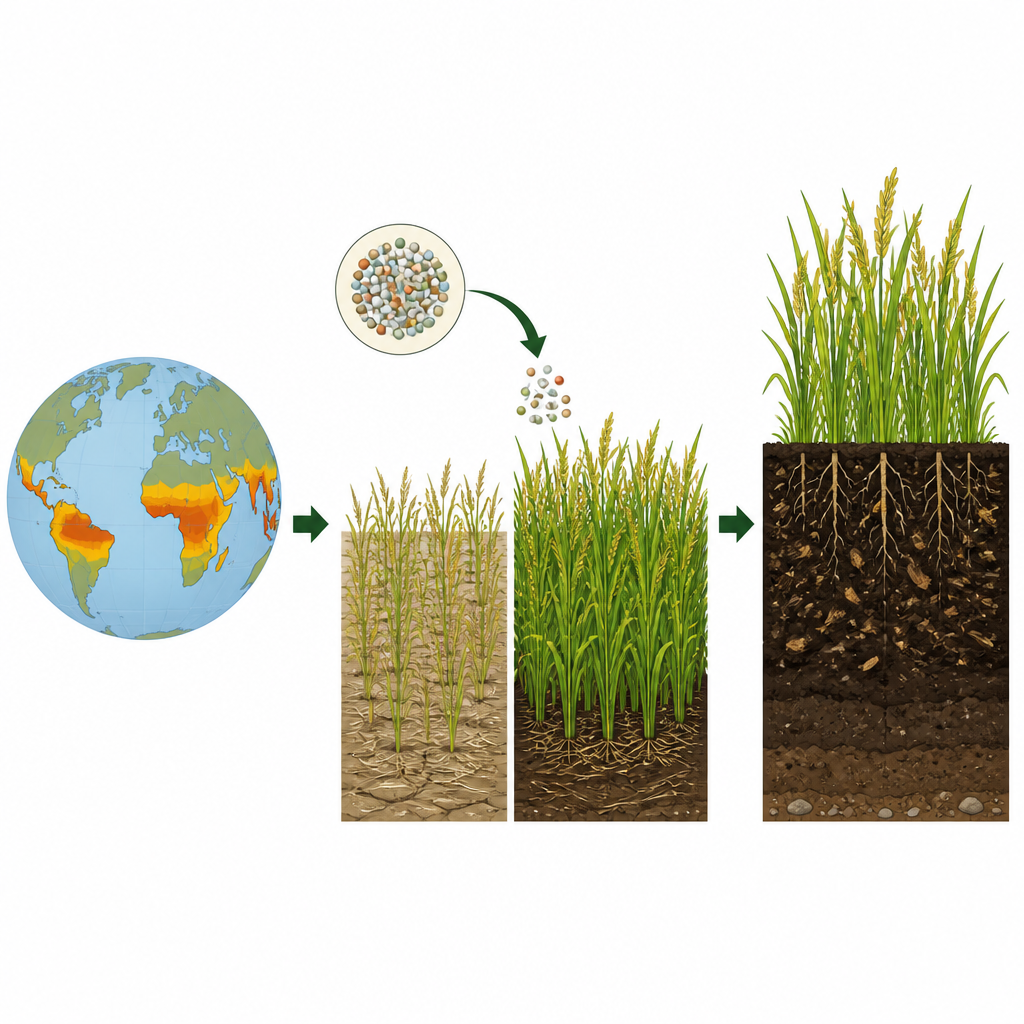
Potassium is a basic nutrient for plants, but it often plays second fiddle to nitrogen and phosphorus in fertilizer plans. The authors gathered results from 1185 field observations across 163 sites where cereals such as wheat, rice, and maize were grown with and without added potassium. They were especially interested in regions where soils are poor in potassium, including parts of South and Southeast Asia and East Asia. Using a meta analysis, they combined these scattered trials to see overall patterns in grain yield and in soil organic carbon, the fraction of soil that stores carbon from dead roots and crop remains.
How potassium changed harvests
The combined data show that potassium fertilization increased cereal yields by about one fifth on average. Gains were strongest where potassium was applied together with nitrogen, or with both nitrogen and phosphorus, confirming that crops perform best when all major nutrients are balanced. The type of potassium fertilizer also mattered: the common forms potassium chloride and potassium sulfate consistently improved yields, while mixed types did not show clear benefits. Yield boosts were greater in crop rotations than in single crop systems, and were found for barley, maize, rice, and wheat, but not for millet and sorghum.
Climate and soil conditions behind the gains
Not every field responded in the same way. The largest yield increases appeared in warm, wet regions with acidic soils, conditions common in tropical zones. In these climates, heavy rainfall tends to wash potassium out of the soil, so crops are more likely to run short. The study found that yield responses rose with mean annual precipitation and temperature, and with the amount of potassium applied, while they fell as soil pH became less acidic. Together, climate and soil properties explained a large share of the variation in how much extra grain farmers could expect from potassium additions.
What happened to carbon in the soil
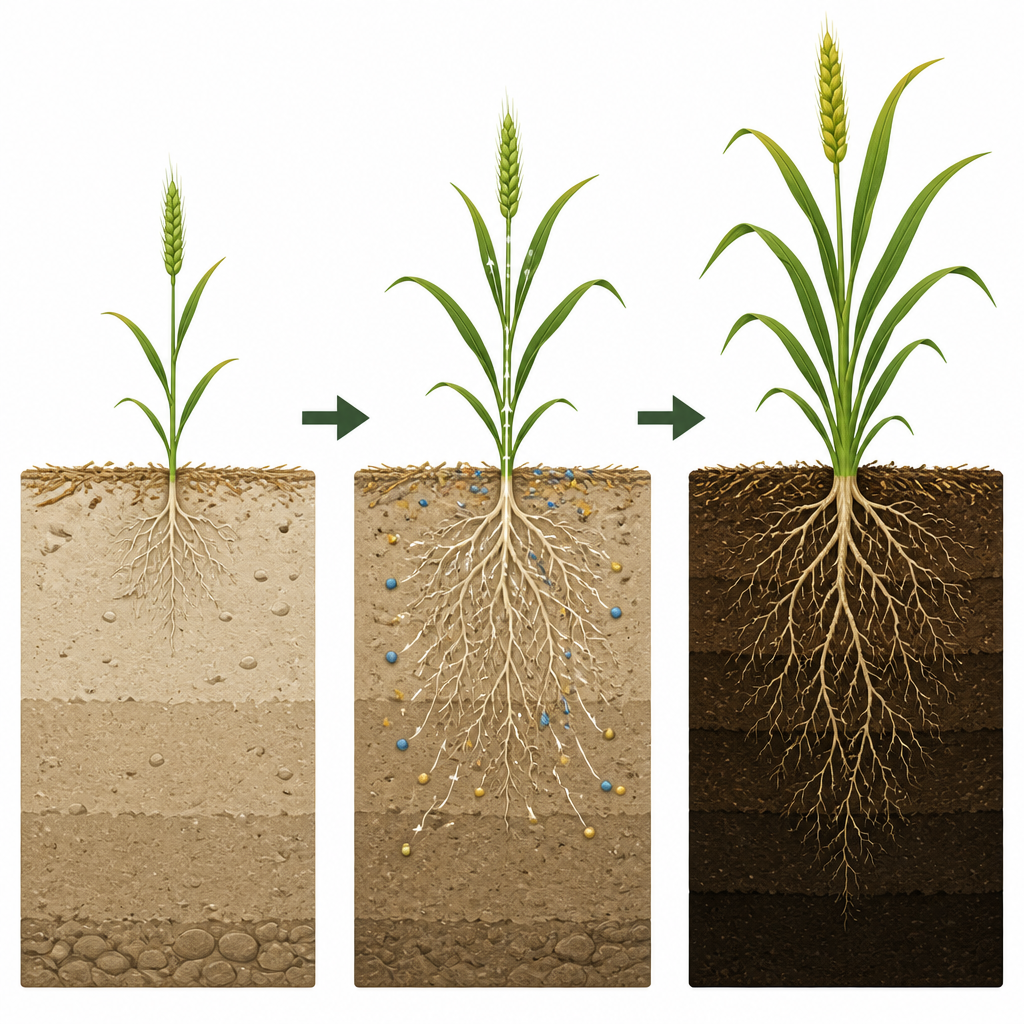
Beyond harvest size, the authors asked if potassium could help soils store more carbon, an important buffer against climate change and a key measure of soil health. Across 288 observations from 75 sites, potassium raised soil organic carbon by about 4 percent on average. This increase was modest and slow to appear. It became clearly detectable only after more than 20 years of continued potassium use. The effect was strongest when potassium was applied along with both nitrogen and phosphorus, in crop rotations, and in fields fertilized with potassium chloride. The results support the idea that potassium boosts carbon storage indirectly, by stimulating root growth and leaving more plant material to be turned into soil carbon over time.
What this means for farmers and policy
Taken together, the findings suggest that potassium deserves a more central place in fertilizer planning, especially in regions where soils are known to be deficient. Well targeted potassium use can raise cereal yields in many warm, wet areas while also contributing, slowly but steadily, to the buildup of soil organic carbon. For decision makers, the message is that balancing nitrogen, phosphorus, and potassium is vital both for short term food production and for long term soil stewardship, with the climate benefits of extra soil carbon emerging only after decades of consistent management.
Citation: Liang, G., Schlesinger, W.H. Potassium fertilization enhances both cereal yield and soil organic carbon: a meta-analysis. Nat Commun 17, 4521 (2026). https://doi.org/10.1038/s41467-026-71154-z
Keywords: potassium fertilization, cereal yield, soil organic carbon, soil nutrients, climate mitigation