Clear Sky Science · en
Lipidomic analyses of large cohort studies define the role of lipid metabolism in bridging diet and cardio-metabolic health
Why Your Blood Fats Care What You Eat
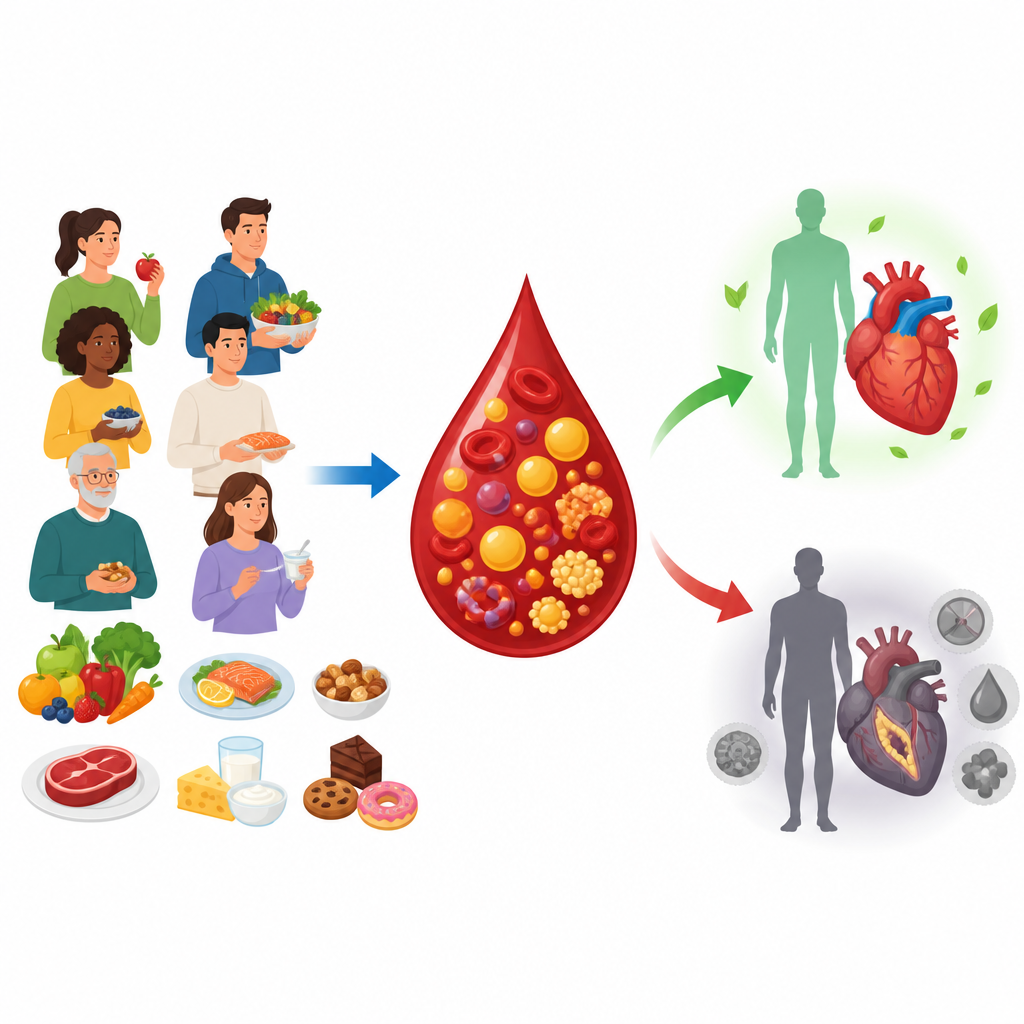
We often hear that diet is linked to heart disease and diabetes, but what actually happens inside the body when we eat different foods is harder to see. This study followed over 13,000 Australian adults and used advanced tests to map hundreds of types of fats circulating in their blood. By matching these detailed fat patterns to what people ate and how healthy they were years later, the researchers show how daily food choices leave a chemical fingerprint in the bloodstream that relates to heart and metabolic health.
Looking Inside the Body’s Fat Traffic
Instead of relying only on food questionnaires, the team measured more than 700 distinct blood fats from two large long running studies. These fats, known collectively as the lipidome, include many molecules that carry energy, build cell walls, and send signals in the body. The scientists compared people’s usual intake of major foods and overall diet quality scores with their blood fat profiles, and then tracked who developed cardiovascular disease or died over more than two decades of follow up.
Different Foods, Different Fat Fingerprints
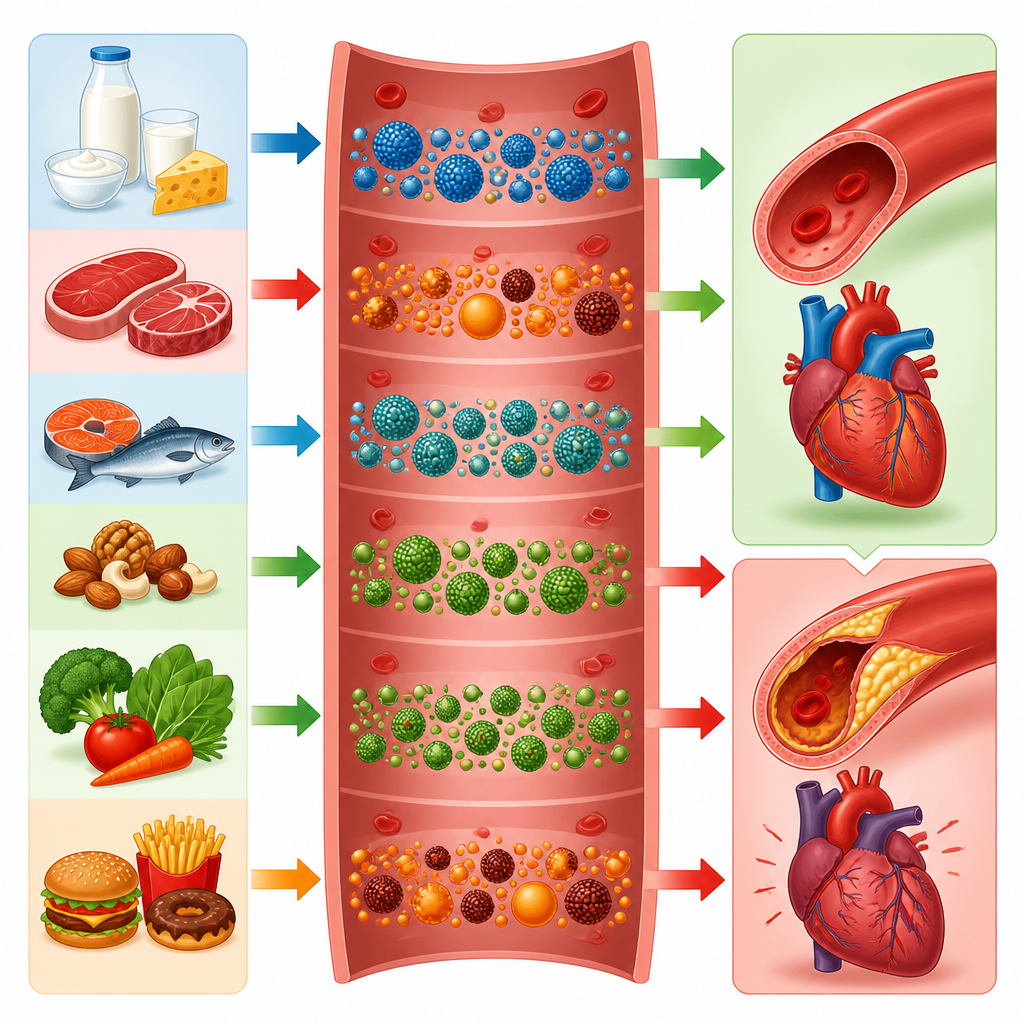
The researchers found that specific foods were linked to characteristic patterns of blood fats. Dairy intake was tied to higher levels of certain odd chain fats and a group of molecules called sphingomyelins, and to lower levels of many common storage fats. Red meat intake was linked to ether like fats and plasmalogens that often carry arachidonic acid, a building block for some inflammatory compounds. Fish intake showed a strong signal for fats containing omega 3 components, especially DHA, and lower levels of some omega 6 fats that can feed inflammation. Alcohol intake produced yet another pattern, including rises in some unusual ceramides that have been linked to metabolic disease.
Scoring Diet Quality from Blood
Beyond single foods, the team asked whether the mix of blood fats could be used to score how healthy a person’s overall diet was. Using machine learning, they built “metabolic” versions of common diet quality scores, such as the Australian Dietary Guideline Index, the Global Diet Quality Score, and the MIND score that emphasizes plant foods and healthy fats. These blood based scores lined up reasonably well with the questionnaire based scores, but also captured extra information, likely reflecting how each person’s body processes food based on their genes, lifestyle, and gut microbes. Importantly, these metabolic scores were more strongly linked to markers of metabolic stress, such as an adverse lipid risk score for heart disease.
Links to Heart Risk and Long Life
When the researchers followed participants over time, people whose blood fat patterns matched healthier diet scores tended to have lower risk of cardiovascular death and lower overall death rates. For example, higher metabolic scores for the MIND, Global Diet Quality, and Mediterranean style diets were each associated with roughly 20 to 25 percent lower risk of dying from cardiovascular causes. Eating more nuts, fish, vegetables, and fiber was linked to blood fat signatures that signaled lower cardiometabolic risk, while processed meat and some dairy intake were linked to profiles associated with higher risk. In statistical models that included both self reported diet and the metabolic scores, the blood based measures remained strongly related to mortality while most questionnaire scores lost significance.
What This Means for Everyday Eating
For non specialists, the main message is that what you eat leaves a measurable trail in your blood fats, and these patterns are closely tied to future heart and metabolic health. Diets richer in plant foods, fish, and nuts, and lower in processed meats and sugary foods, shape the blood fat mix in ways that are linked to better outcomes and longer life. The study also suggests that, in the future, simple blood tests reading these fat fingerprints could complement food questionnaires to give more objective feedback on diet quality and help tailor nutrition advice for preventing heart disease and diabetes.
Citation: Beyene, H.B., Wang, T., Cinel, M. et al. Lipidomic analyses of large cohort studies define the role of lipid metabolism in bridging diet and cardio-metabolic health. Nat Commun 17, 4611 (2026). https://doi.org/10.1038/s41467-026-71133-4
Keywords: diet quality, lipidomics, cardiometabolic health, cardiovascular risk, blood lipids