Clear Sky Science · en
Polymersomes preventing brain infiltration of CD177+ neutrophils to mitigate hemorrhagic transformation post-tPA thrombolysis
Why safer stroke care matters
Clot busting drugs can save brain tissue after a stroke by quickly reopening blocked blood vessels. But the standard medicine, tissue plasminogen activator (tPA), also raises the risk of dangerous bleeding in the brain, which limits who can receive it and how late it can be given. This study explores a two-part nanomedicine approach that aims to keep the benefits of tPA while sharply cutting its bleeding side effects.
How current clot busting works and where it falls short
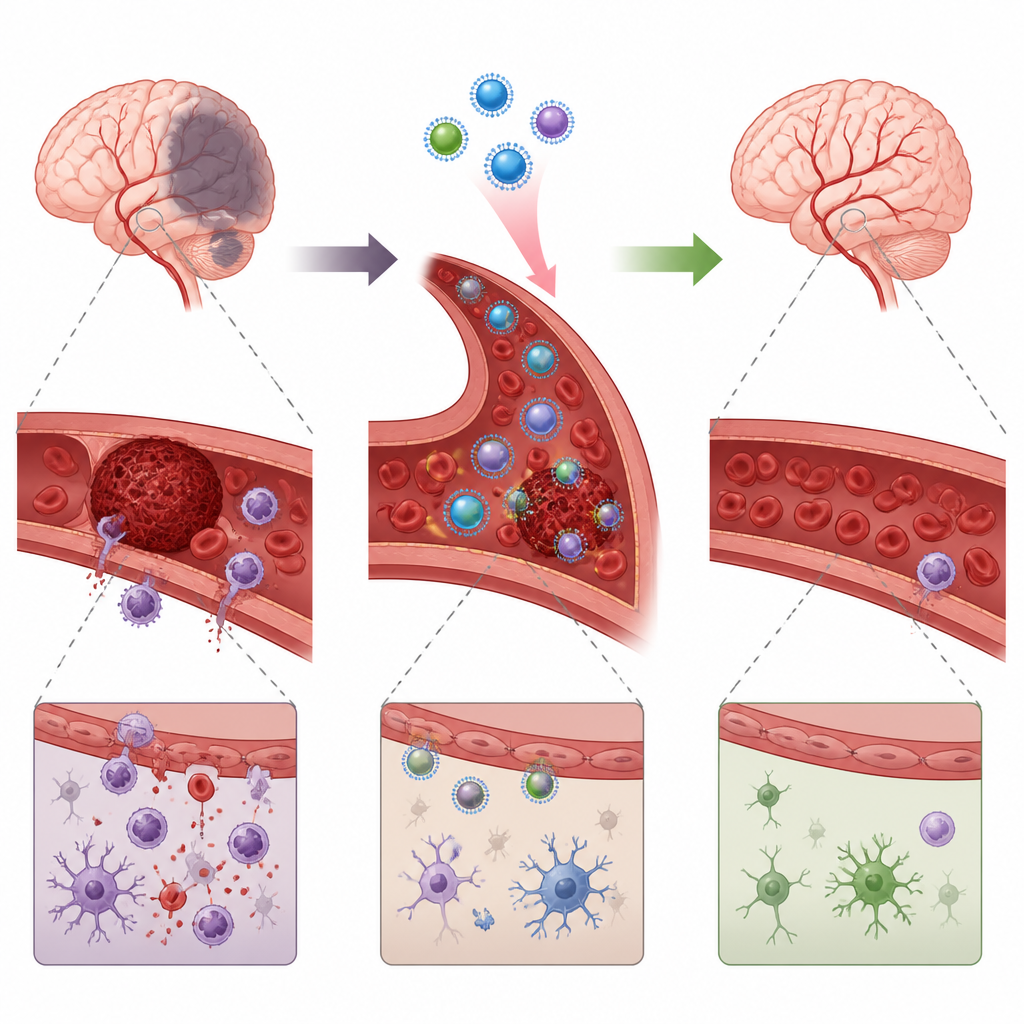
Ischemic stroke happens when a clot blocks blood flow in a brain artery. tPA is the only widely approved drug that dissolves these clots and restores circulation. However, tPA acts throughout the body, has a very short lifetime in the bloodstream, and can weaken the blood brain barrier, the protective lining of brain vessels. When this barrier is damaged, blood can leak into brain tissue in a process called hemorrhagic transformation, which worsens outcomes and increases the risk of death.
A smart delivery vehicle for the clot buster
The researchers designed tiny hollow spheres called polymersomes to act as delivery vehicles for tPA. They decorated the surface of these spheres with a small peptide that recognizes fibrin, a major component of clots, so the particles are drawn to the blockage. They also built in a chemical switch that responds to high levels of reactive oxygen species, which are abundant at clogged and inflamed blood vessels. When the polymersomes reach this harsh environment, they fall apart and release tPA directly where it is needed. In mice, this targeted design increased tPA levels at the clot, extended how long tPA stayed in the blood, and improved restoration of blood flow compared with tPA alone.
Identifying harmful immune cells that drive bleeding
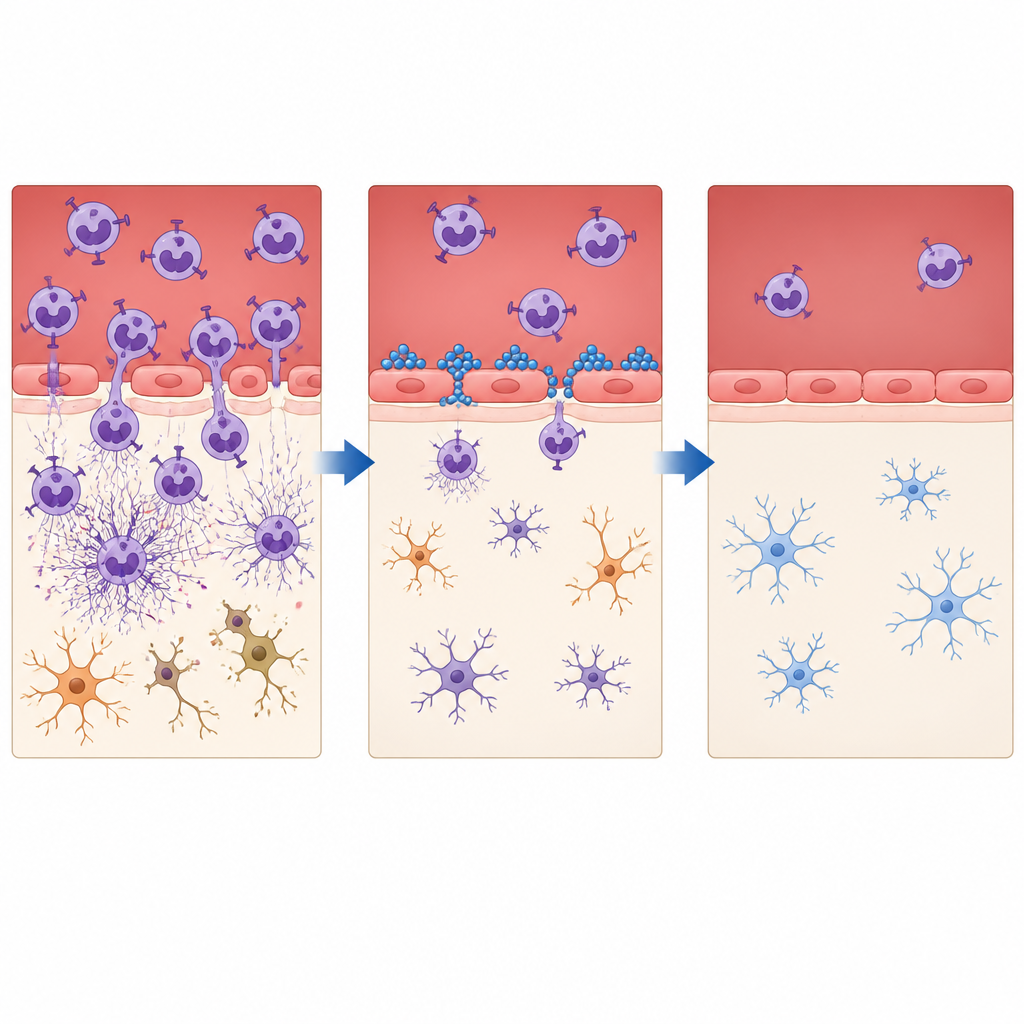
Despite better clot removal, the targeted tPA spheres did not fully prevent bleeding in the brain. To understand why, the team studied blood from stroke patients who developed bleeding after tPA treatment and performed similar experiments in mice. They found a sharp rise in a subset of white blood cells, neutrophils carrying a surface marker called CD177. These cells stick to vessel walls, squeeze into brain tissue, and release web like structures known as neutrophil extracellular traps. The webs, together with toxic enzymes and oxidative molecules, break down the vessel lining, increase leakiness, and stir up inflammation from brain immune cells called microglia.
A shield that blocks damaging immune cell entry
To block this chain of events, the scientists created a second polymersome, this time loaded with a protein fragment called recombinant CD177. This fragment acts as a decoy that binds docking sites on vessel cells and prevents CD177 positive neutrophils from attaching and crossing into the brain. Like the tPA carrier, these particles are triggered by reactive oxygen species, so they release their cargo at diseased vessels. When mice received the CD177 loaded polymersomes shortly before the tPA loaded ones, far fewer harmful neutrophils entered the brain, fewer extracellular traps formed, and the blood brain barrier remained more intact. Bleeding volume dropped, stroke damage shrank, and treated animals had better survival and improved motor and cognitive performance over time.
What this could mean for future stroke treatment
To a layperson, this work can be viewed as combining a smart clot busting package with an equally smart shield against an overactive immune response. The first nanomedicine helps tPA find and clear the clot more efficiently, while the second one stops a specific group of white blood cells from punching new holes in brain vessels. In animal models, this dual strategy preserved the protective lining of brain blood vessels and reduced the dangerous bleeding that has long limited tPA use. Although much more testing is needed before it can be tried in people, the approach points toward stroke treatments that not only reopen blocked arteries but also better protect the brain from the collateral damage of clot busting.
Citation: Wang, Z., Liu, H., Xu, Z. et al. Polymersomes preventing brain infiltration of CD177+ neutrophils to mitigate hemorrhagic transformation post-tPA thrombolysis. Nat Commun 17, 4395 (2026). https://doi.org/10.1038/s41467-026-71076-w
Keywords: ischemic stroke, thrombolysis, nanomedicine, blood brain barrier, neutrophils